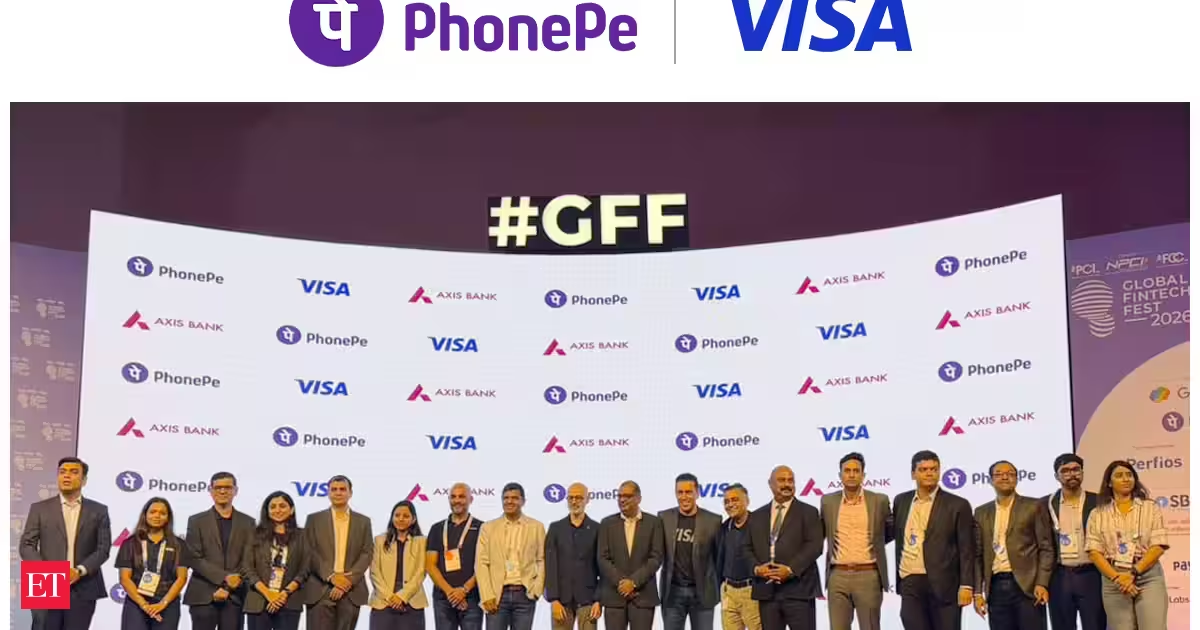
India does not do anything small. The country that built UPI into a two-billion-transaction-per-month machine has now quietly become the most tokenized e-commerce market on the planet for card payments. And Visa is right at the center of it.
As of July 2026, more than 900 million payment tokens are circulating across India’s digital payments ecosystem. Visa accounts for nearly 500 million of those tokens, a figure that reflects both regulatory pressure and a deliberate company strategy to stay competitive in a market where the default payment method for hundreds of millions of people is a QR code, not a card.
Why India went all-in on tokenization
The backstory starts with the Reserve Bank of India. In October 2022, the RBI issued a mandate requiring merchants to stop storing raw card details on their servers. No more saving 16-digit card numbers in databases that become honeypots for hackers. Instead, each card gets replaced by a unique payment token, a randomized string that is useless to anyone who intercepts it.
The regulation forced adoption at scale, and India’s digital payments infrastructure moved fast enough to absorb it. The result: India is now described as 100% tokenized for e-commerce card transactions, meaning every online card payment in the country runs through this token-based system.