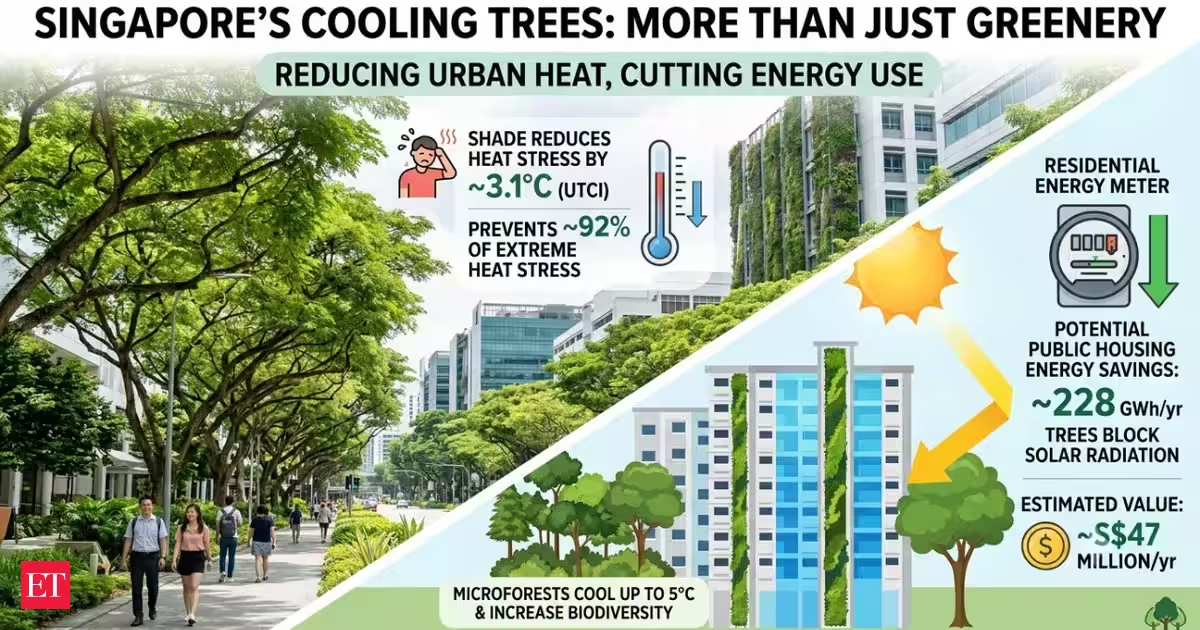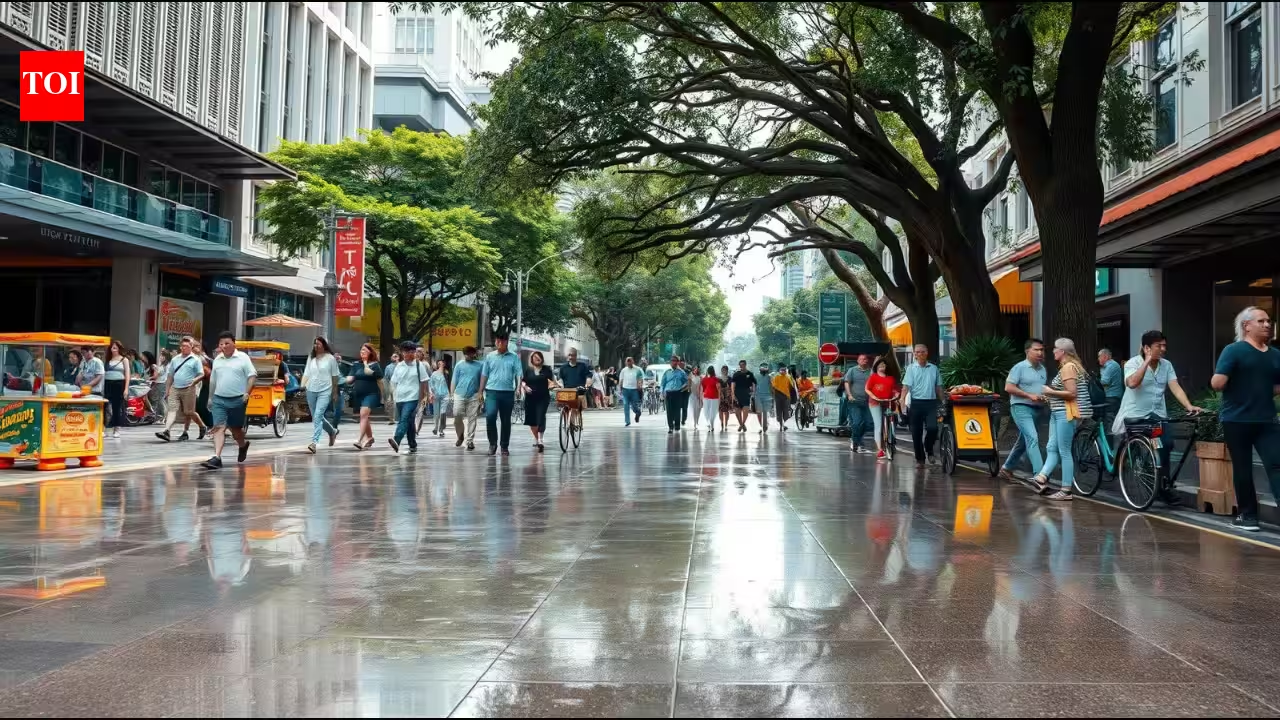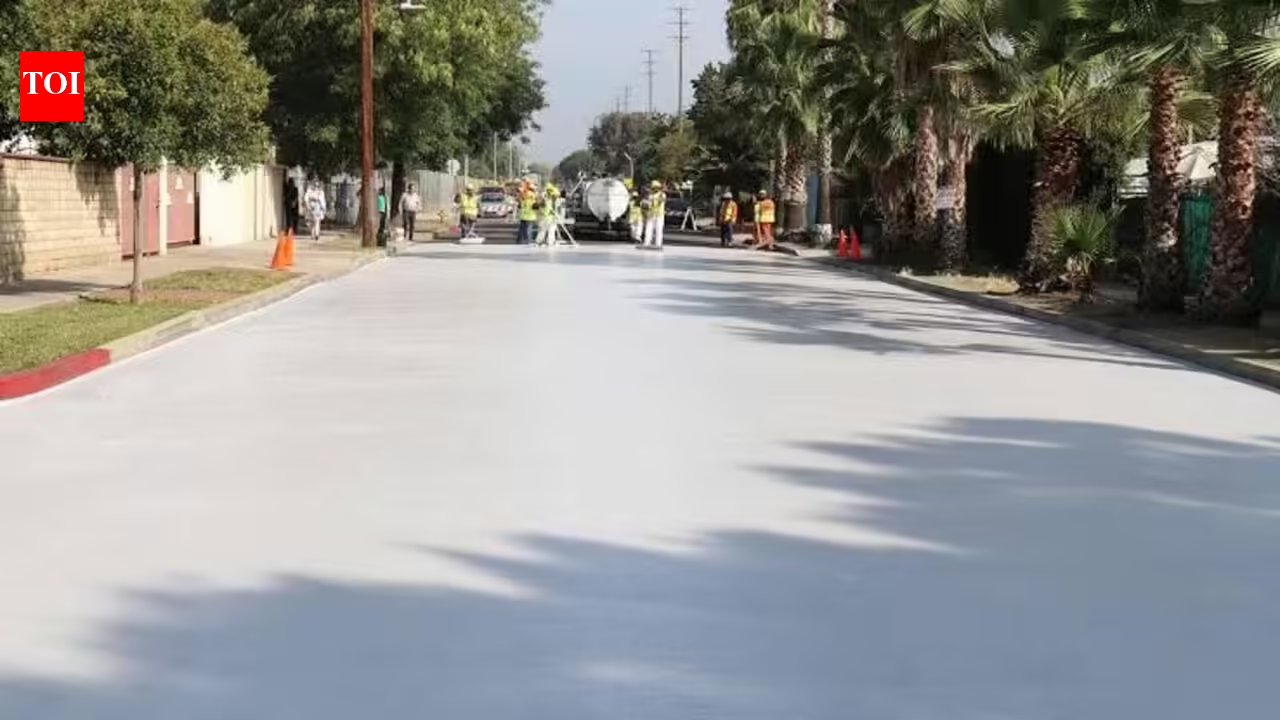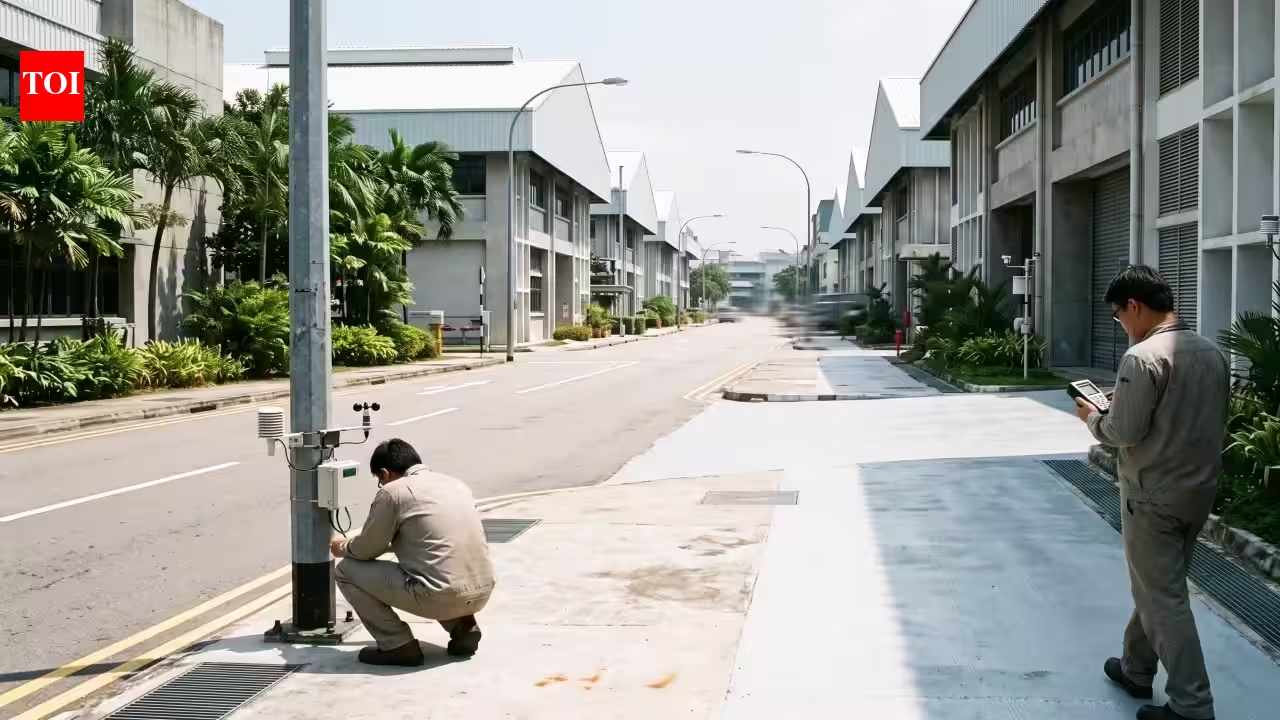
An AI-generated image shows researchers testing reflective coatings on roofs, walls and pavement at a Singapore industrial estate to reduce heat in the surrounding street environment. Credits - Google Gemini The specific type of heat that rises off concrete and asphalt long after the sun has set is familiar to anyone who has strolled through a tropical metropolis in the middle of the afternoon. This phenomenon is known to scientists as the "urban heat island effect." Due to its near-equator location and year-round warmth, Singapore has more incentive than other cities to take that effect seriously. As a result, researchers there opted to test a solution that had, until then, mostly existed in labs and computer models.A team from Nanyang Technological University worked with a JTC Corporation-managed industrial estate in the west of the island to apply specially formulated cool paint and additives meant to reflect a greater portion of incoming sunlight rather than absorb it as heat to the roofs, walls, and road pavement of a portion of the site. Researchers were able to directly compare the two surroundings under identical weather conditions over a prolonged monitoring period by using a nearby, uncoated portion of similar buildings and street layout as the control.Turning two industrial streets into a live experimentWhat set this study apart from earlier research was its scale and setting. According to NTU Singapore, most prior studies of cool paint coatings had relied on computer simulations or small, scaled-down models, leaving a real gap in understanding of how the approach performs in an actual tropical street. The NTU team picked four rectangular buildings that formed two parallel street canyons and small corridors with buildings on either side. They applied the reflective coating to one canyon while leaving the other unpainted as a control. During the study, environmental sensors measured air movement, surface and air temperature, humidity and radiation at both sites, providing a complete picture of how the coating affected circumstances hour by hour.The results, later published in the journal Sustainable Cities and Society, showed that the coated canyon released up to thirty per cent less heat from its surfaces across a full day and night cycle. That reduction meant air temperatures in the covered canyon were up to two degrees Celsius, or about 3.6 degrees Fahrenheit, colder than in the uncoated canyon during the hottest period of the afternoon, usually around 4 o'clock. Pedestrian thermal comfort, assessed with an international benchmark called the Universal Thermal Climate Index, improved by up to 1.5 degrees Celsius, or around 2.7 degrees Fahrenheit, in the treated region.What really made a difference on the groundThe way the coating works is relatively straightforward. The research team said the cool-paint-covered roofs reflected about 50 per cent more sunlight and absorbed up to 40 per cent less heat at the hottest point of the day compared to the untreated roofs, while the painted walls kept much of the solar energy from entering the buildings in the first place. With less heat stored during the day, less heat was radiated back into the street canyon after sunset. “The findings are significant enough to be able to warrant a wider use of cool coatings on built-up surfaces, on a bigger scale,” said Assistant Professor Ng Bing Feng from NTU’s School of Mechanical and Aerospace Engineering, one of the study’s co-authors. Singapore's authorities have moved to expand the approach beyond the original test site, with JTC piloting reflective paint coatings at industrial parks in other parts of the island, a development NTU's Energy Research Institute has tracked as the research moves toward wider application.An AI-generated image shows reflective coatings on Singapore's built surfaces were tested in a real street environment to reduce heat exposure for people at ground level. Credits- Google Gemini Why a coat of paint could matter to cities far beyond SingaporeOne of the attractive features of cool paint coatings is the relatively low disturbance they require compared to other thermal mitigation methods. It will take years to get real cooling from planting mature trees or rebuilding entire streetscapes, but a coating can be applied relatively quickly to existing roofs, walls and pavements at a fraction of the cost of major reconstruction. The Singapore findings give a rare example of a little intrusive solution with an immediate, independently measured effect for densely built, heat-stressed cities across South and Southeast Asia, where land is scarce and adding green cover is often challenging. As more governments seek out pragmatic ways to reduce temperatures at the street level without waiting decades for trees to grow, a fresh layer of reflective paint could prove to be one of the more quietly effective tools in the kit.
In 2021, Singapore tested heat-reflecting coatings on roads, roofs and walls; a field study found afternoon air up to 3.6°F cooler and thermal comfort improved by 2.7°F
The specific type of heat that rises off concrete and asphalt long after the sun has set is familiar to anyone who has strolled through a tropical metropolis in the middle of the afternoon. This phenomenon is known to scientists as the "urban heat island effect." Due to its near-equator location and year-round warmth, Singapore has more incentive than other cities to take that effect seriously.
777 words~4 min read