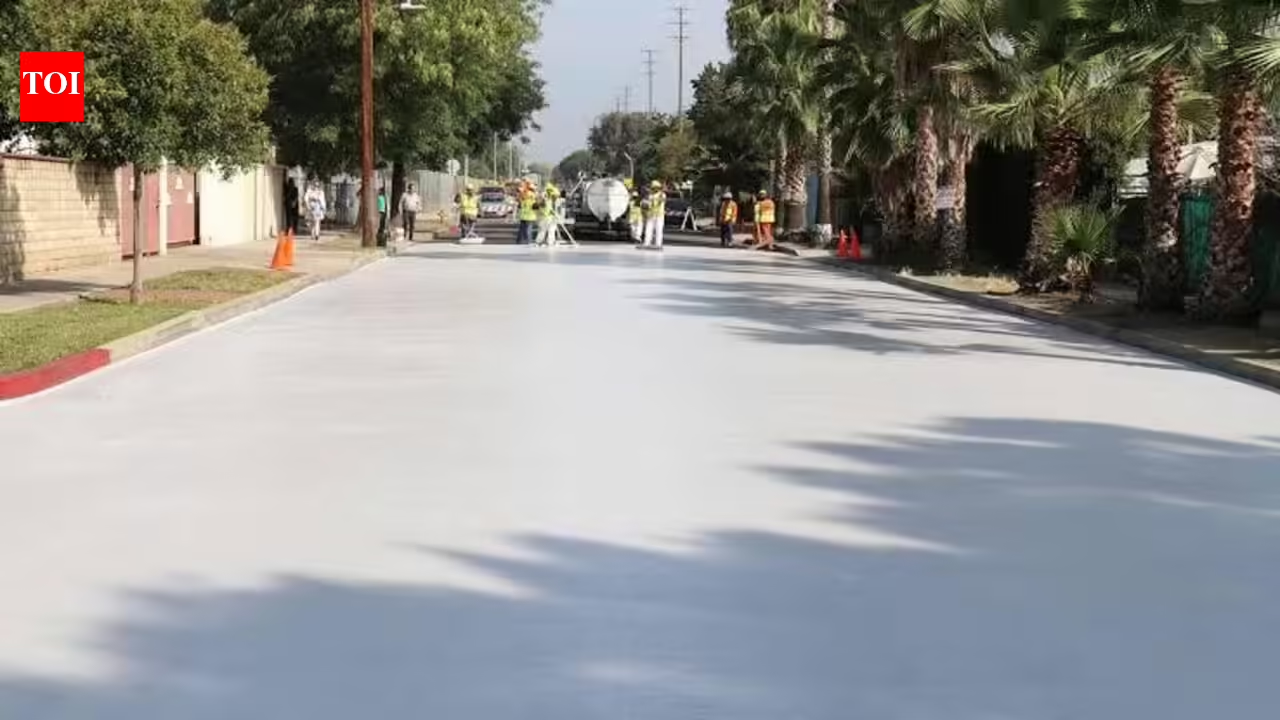
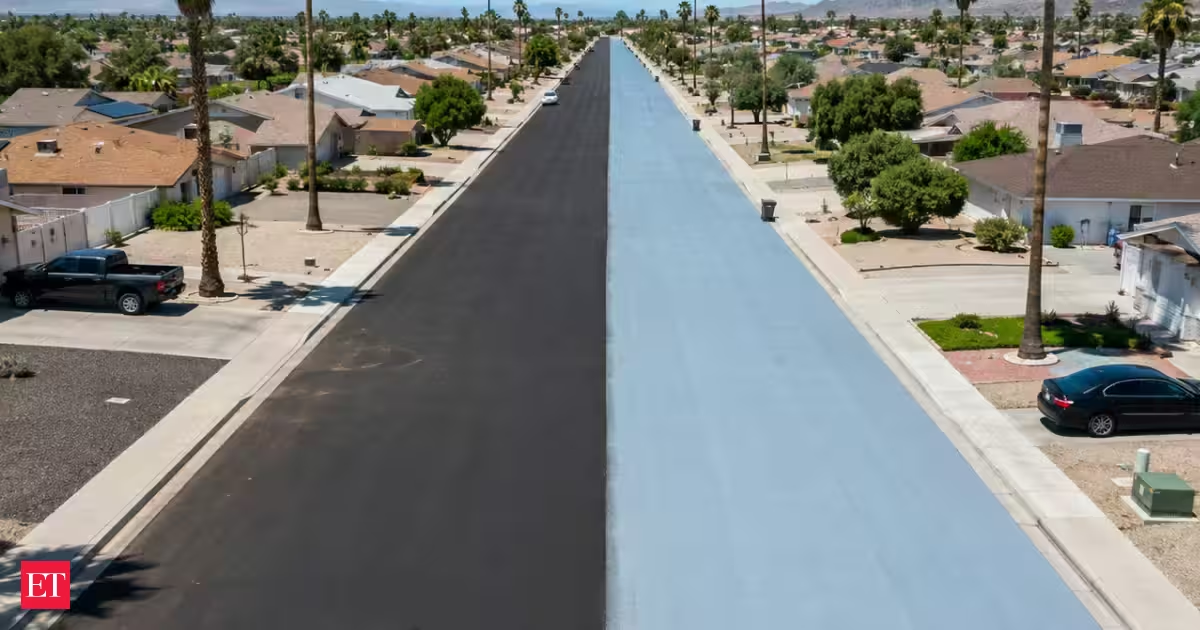
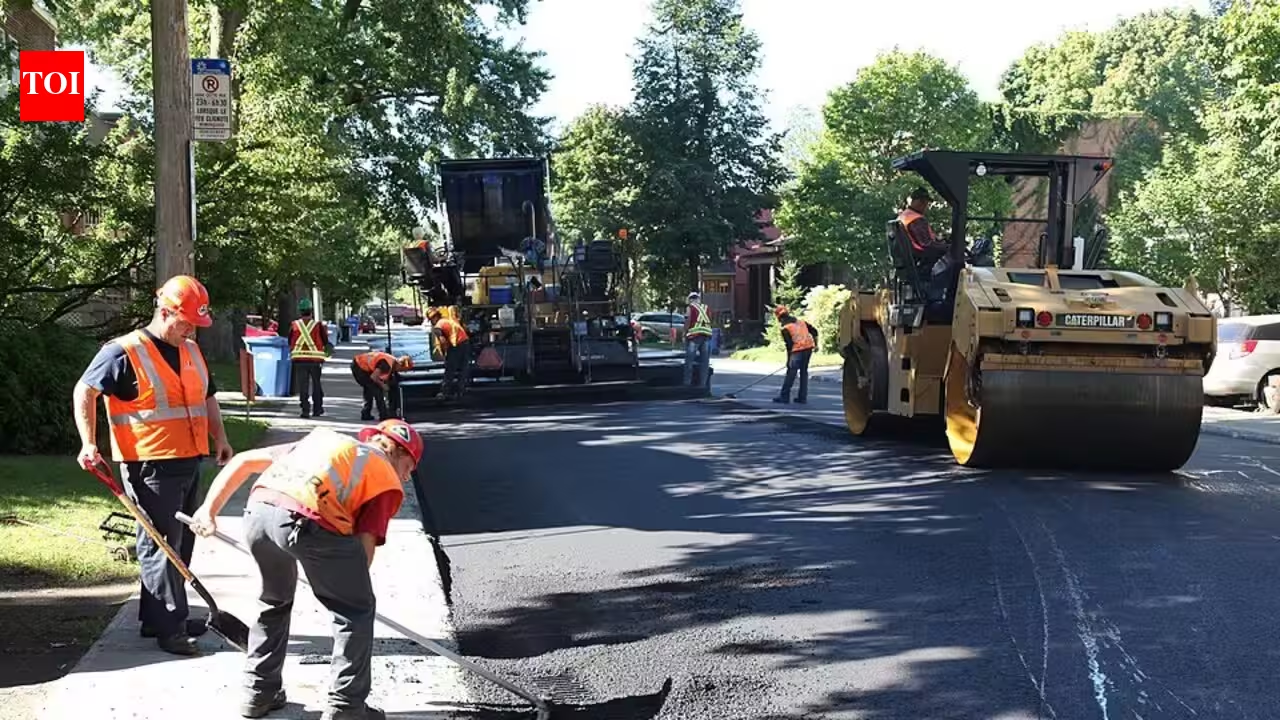
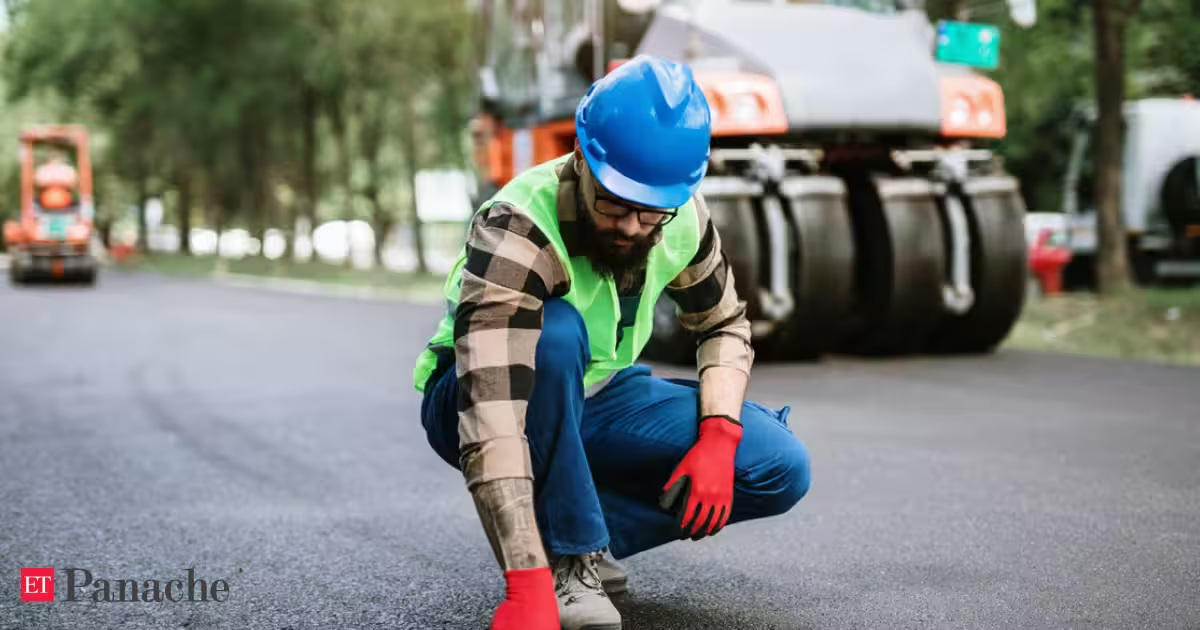
Imagine a street that is about 10 degrees cooler just because someone painted it differently. This isn't some far-fetched theory, but something that happened in Irvine, California, where city crews applied a reflective layer called cool pavement on a half-mile stretch of two connected streets. The temperatures recorded during August and September showed the treated asphalt street was roughly 7 to 10 degrees Fahrenheit cooler than the untreated street immediately next to it.Irvine isn't the only city trying this. Phoenix has already coated more than 200 miles of streets since 2020, while San Antonio has invested a million dollars in testing the same concept in ten different neighborhoods. All three cities are trying to make summer more bearable as temperatures continue rising. According to a 2020 report from the Centers for Disease Control and Prevention, heat has quietly become one of the deadliest weather threats in America, being responsible for an annual average of 702 deaths during the period of 2004 to 2018. This alarming figure is one reason why various cities across the Sun Belt have started testing less expensive and faster means to reduce street temperature. Cool pavement, a light-colored coating sprayed directly onto regular asphalt, is one of the most talked-about fixes on the table right now.One of the reasons why this technology has become widespread so quickly is its relative cost-effectiveness when implemented. CoolSeal, one of the most widely used reflective coatings, costs between $25,000 and $40,000 per mile to apply and is designed to last five to seven years. According to the calculations in Phoenix, a reflective sealant would be $0.60 more expensive per square yard than an ordinary asphalt sealant, which would mean a total cost of about $5 per square yard compared to $4.40 for a regular one. Given that the city was already budgeting for regular road maintenance anyway, that marginal cost is far easier to justify than building new infrastructure from scratch.Why your street gets so hotRegular asphalt behaves like a giant heat sponge, soaking up sunlight all day, then slowly releasing that heat well into the night. This is one of the bigger reasons cities tend to get hotter than the countryside around them, a pattern scientists refer to as the urban heat island effect. Dark pavements, dark roofs, and the absence of shade trees all contribute to it. Cool pavements are designed to break that cycle. Crews apply a reflective layer on top of the current asphalt using spraying or rolling techniques. The result is a surface that reflects more sunlight and stays cooler.It looks like paint but behaves like sunscreen for the street (representative image). Image Credits: ChatGPTThe resultsWhile Irvine's test run was only one half-mile, the statistics spoke volumes. Alex Salazar, the project delivery manager for the Public Works and Sustainability Department of the city, said the temperature drop between 7 and 10 degrees that occurred on the test street was accurate. The city said it was pleased with the results and was preparing to take the next step: applying the same coating to its civic center parking lot.Phoenix, the hottest big city in the country, is running its pilot across every one of its eight council districts. A study from Arizona State University's Urban Climate Research Center found that the treated roadways were, on average, 10.5 degrees cooler in the afternoon and 12 degrees cooler at noon than ordinary roadways. The same report notes that paved surfaces make up about 40 percent of Phoenix's urban land area, which helps explain why the surface itself matters so much for the city's overall heat. San Antonio took a slower path. They experimented with cool pavements on a single road in 2021 before approving their expansion, worth one million dollars in 2023, the same year that the city experienced 75 days with temperatures over 100 degrees. In San Antonio, scientists tested the most efficient coating, which helped to reduce the surface temperature by 3.58 degrees on average, and even up to 18 degrees when compared to a newly paved road.The surprising catchCool pavement isn't automatically better for people walking around at street level, especially near midday. The 2024 study, published in Environmental Research Communications by researcher Haider Taha, looked at a similar cool pavement program in Pacoima, Los Angeles, and found actual comfort benefits for individuals, not just cooler pavements. But separate measurements out of Phoenix told a slightly different story. The researchers found that the mean radiant temperature, a measure of how hot a surface radiates to an individual, was 4.5 to 5.8 degrees higher on cool pavements at midday. It is not a contradiction but more of an illustration of just how specific and dependent on particular sites this cooling effect is. Even Taha himself has warned that radiant-temperature effects tend to "go up and down" from site to site depending on coating reflectivity, the geometry of the street, and shade; Pacoima's setup landed on the cooling side of that range, while Phoenix's didn't. This happens because the reflected sunlight bounces upwards to anyone standing on the surface, though the gap was negligible before sunrise and after sunset. Because of this, urban planners suggest cool pavement is best suited to quiet residential streets with direct sun exposure, rather than sidewalks shaded by buildings.One piece of a bigger puzzleCool pavement alone is not expected to bring down the temperature of any city, according to anyone involved in these experiments. Douglas Melnick, San Antonio's chief sustainability officer, summed it up best, saying that one street barely moves the needle, but once several streets get covered along with other measures like more trees, reflective roofs, and better shade, people actually start noticing a difference. It also has its practical benefits. According to city officials, the coating is designed to make the road last longer, thereby making up for its relatively high initial cost. For readers living through hotter summers than their parents ever did, small pilot projects like Irvine's matter more than they might seem to at first glance. It may seem small, but a cooler walk to your car, bus stop, or morning run can make a difference on the hottest days of the year, and that’s the kind of quiet, unglamorous fix cities need more of.
Irvine coated a half-mile stretch of two connected streets with cool pavement; August and September measurements found the treated asphalt ran about 7-10°F cooler
Discover how Irvine, California, implemented a cool pavement system that reduced street temperatures by 7-10°F. Explore similar initiatives in Phoenix and San Antonio and the impact on urban heat.
1,038 words~5 min read