Soochow University and Longi researchers developed a ZrO₂ interfacial strategy that reduces recombination and leakage while improving charge extraction in perovskite-silicon tandem solar cells. The resulting device achieved 2.014 V open-circuit voltage and retained 84% of its initial efficiency after 2,000 hours.
A group of researchers from China’s Soochow University and Chinese PV manufacturer Longi has developed a perovksite-silicon tandem solar cell through an interfacial strategy that reportedly suppresses non-radiative recombination while preserving efficient charge extraction.
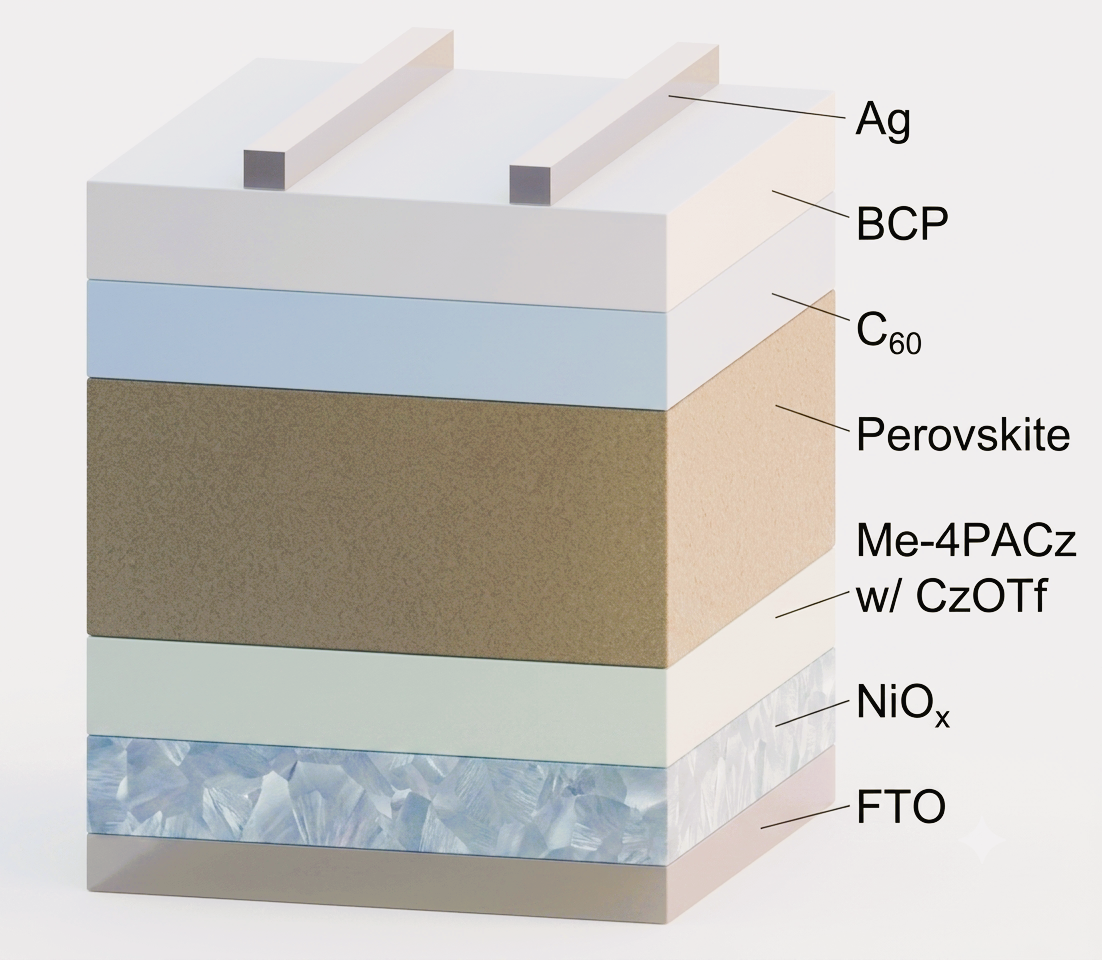
The proposed strategy consists of integrating a discrete monoclinic zirconia (ZrO2) nanoparticle between the cell’s transparent conductive oxide (TCO) and the self-assembled monolayer (SAM) layer. “This modulates the local surface energy to facilitate the growth of void-free, large-grain perovskite films, while simultaneously serving as a nanoscale localized contact,” Longi researcher He Bo told pv magazine. “In contrast to conventional metal oxide dielectrics, ZrO₂ exhibits a high dielectric constant, which mitigates interfacial charge accumulation and suppresses hysteresis.”
The scientists explained that the ZrO₂ interfacial layer acts as a discontinuous, nanoporous buffer between the transparent conductive oxide and the SAM, effectively passivating the buried interface without hindering charge transport. Owing to its wide bandgap of around 5.49 eV, ZrO₂ introduces negligible visible-light absorption, while its porous structure reduces direct contact between the perovskite and defective conductive oxide, thereby suppressing leakage pathways and interfacial recombination.