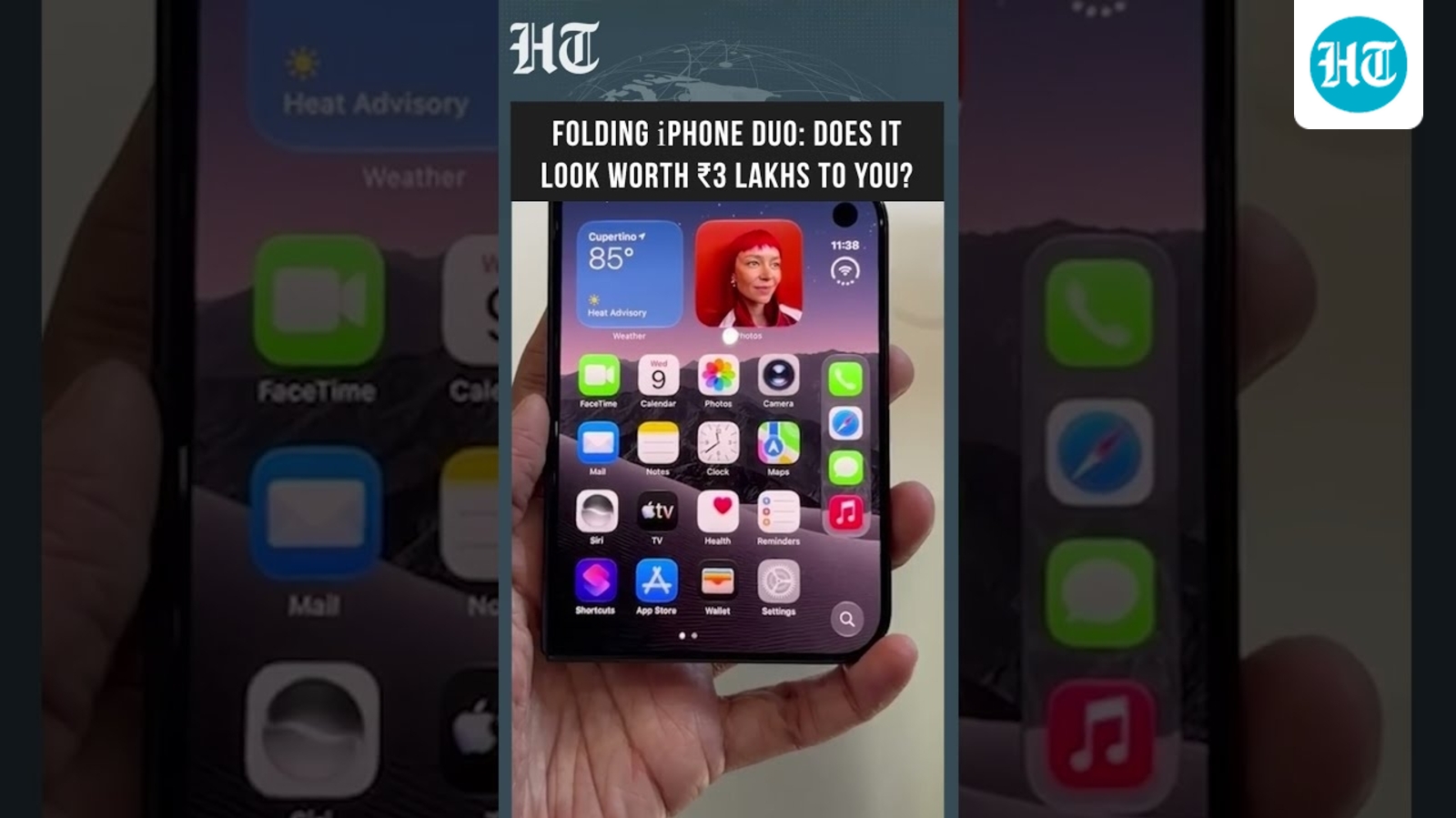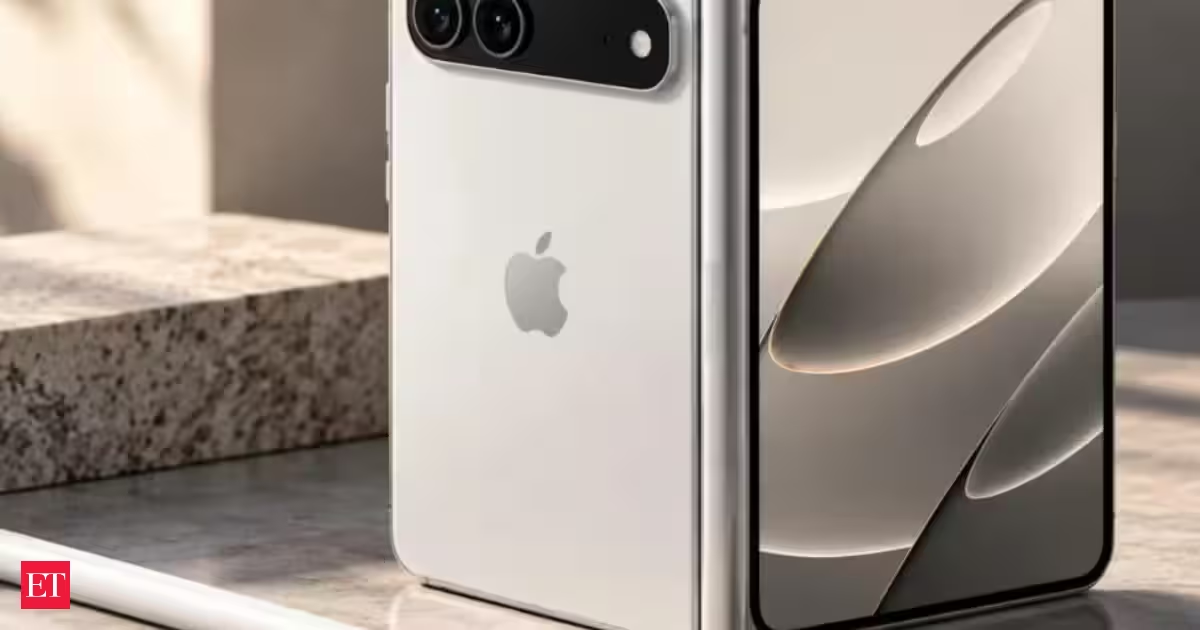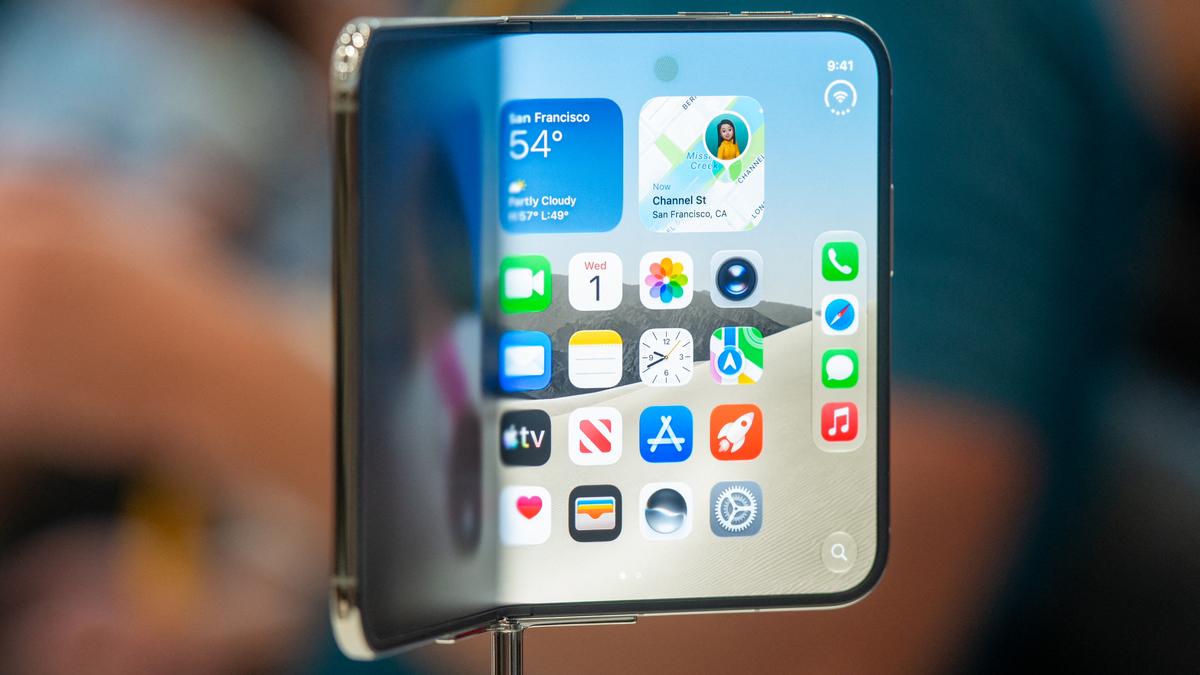
Apple’s Indian customers will be paying more for the iPhone Duo than customers in America [File]
| Photo Credit: AFP
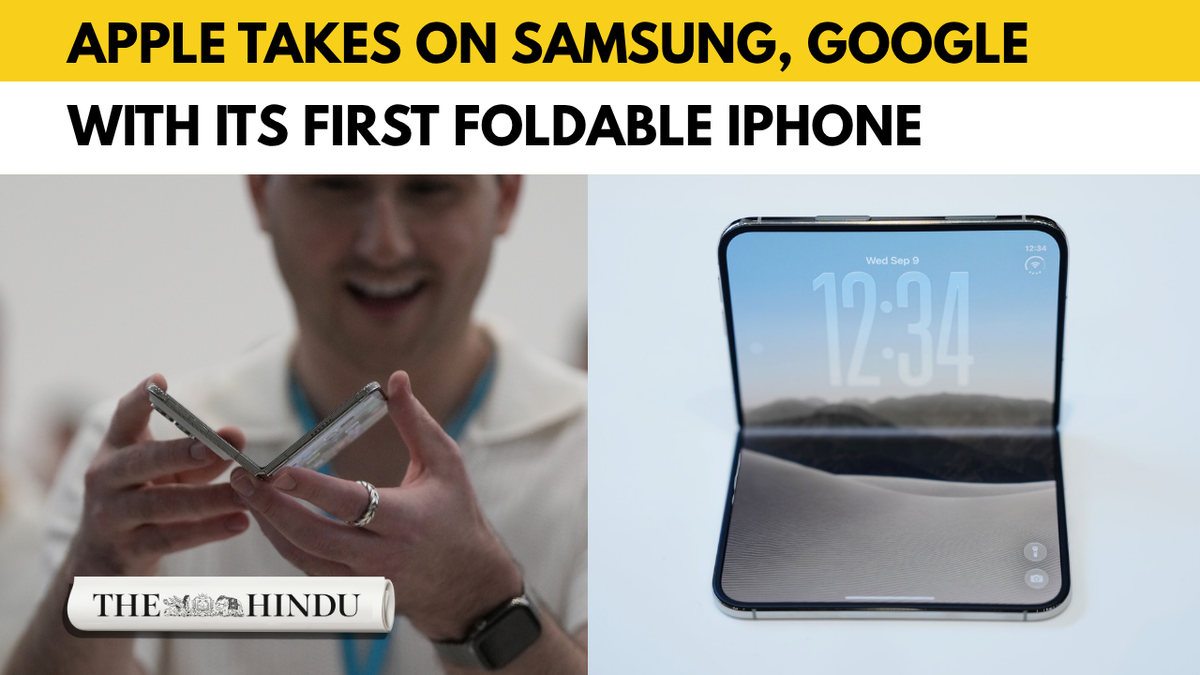
On September 9, 2026, Apple unveiled its first foldable iPhone, the iPhone Duo, in Cupertino, California. In India, the phone starts at ₹2,99,900 for the 256GB variant. But in the U.S., the device is priced at $1,999.At today’s exchange rate of roughly ₹95 to the dollar, a straight currency conversion of $1,999 works out to about ₹1,90,000. Instead, Indian buyers will pay nearly ₹3,00,000. That’s a gap of over ₹1,00,000, or close to 50% above the “fair” converted price.The rupee has weakened over the past year, but it’s still trading at around ₹95 against the dollar. If the exchange rate were the only factor at play, the iPhone Duo should cost meaningfully less in India than it does. The fact that it costs more than a simple conversion suggests there’s something more to how the iPhone is priced in India.Even with local assembly, a large share of a foldable iPhone’s most expensive parts like the OLED panels, the hinge mechanism, high-end camera modules, and the A-series chip are still imported. India’s customs duty regime taxes these components before they ever reach an assembly line, and that cost is baked into the final price. On top of this, India applies 18% GST on smartphones, inflating the price of the final product.And even though Apple has expanded its assembly operations in India through partners, some models have the U.S. as their country of origin on the labels. While assembling in India helped Apple sidestep some duties on finished phones and gave the company a hedge against global supply chain disruptions and geopolitical risks, it hasn’t translated to “priced like it’s made in India.”The savings from local assembly appear to be absorbed by Apple’s margins and India’s import-duty structure, rather than being passed on to buyers.As far back as the iPhone 6s, India got the highest iPhone prices of any market where the phones launched. And Apple has historically treated India as a market where the brand can sell at a premium.The Duo’s pricing has already become a talking point as the 2TB variant costs almost as much as a hatchback Maruti car. The company’s pricing signals it is not chasing volumes with this device, but chasing margins from a smaller base of buyers who will pay regardless.Until India’s import-duty structure on high-value components changes, or Apple starts sourcing those parts locally, the gap between the dollar price and the rupee price is likely to persist. Published - September 10, 2026 02:47 pm IST