The Bank of Korea said the semiconductor export boom’s effect on inflation will help determine whether it raises rates further, while keeping additional tightening open. It said solid growth and above-target inflation may persist, and it will watch Middle East tensions, household debt, housing prices, and exchange-rate volatility. The BOK also said back-to-back 25-basis-point hikes in July and August brought the policy rate to 3 percent.
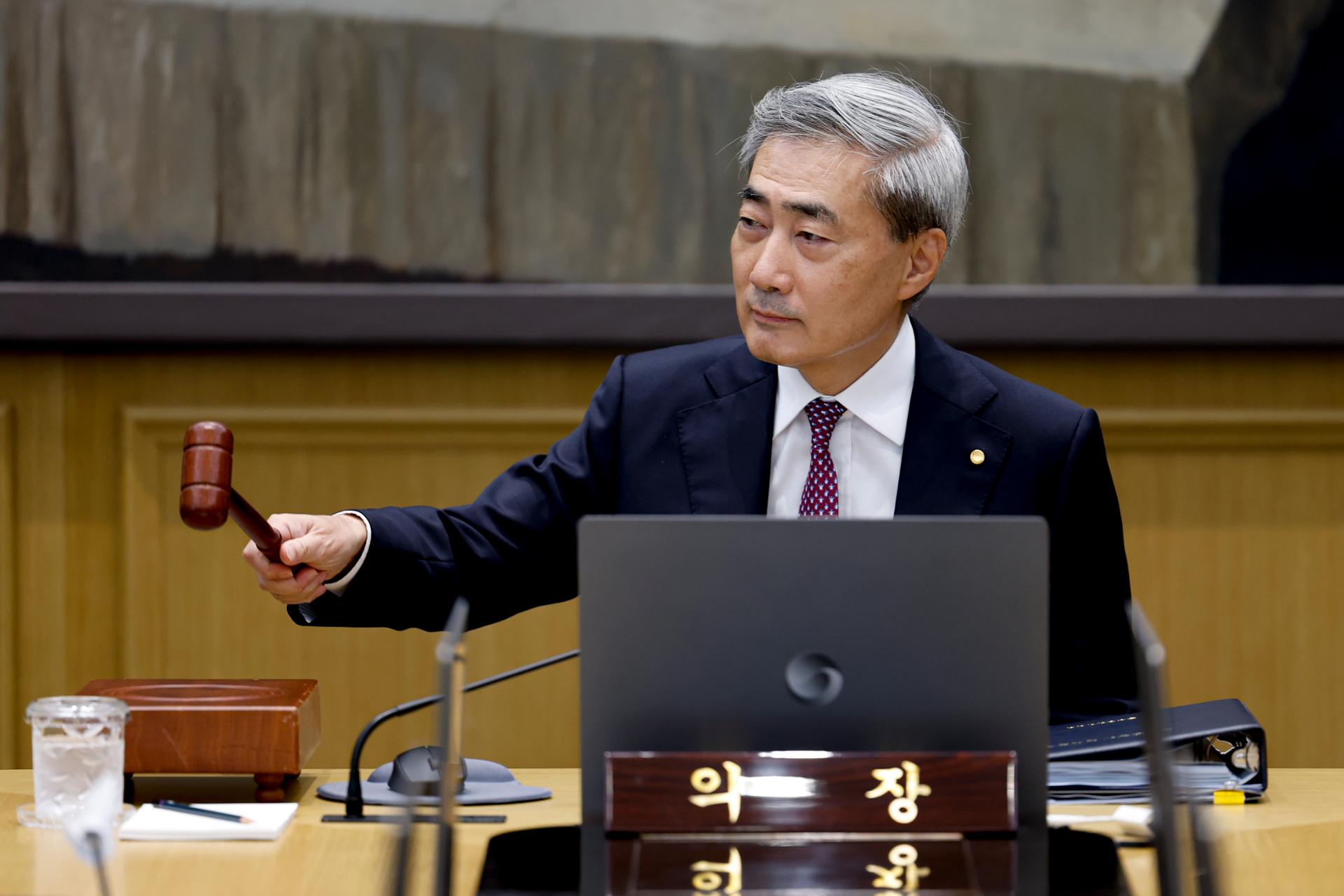
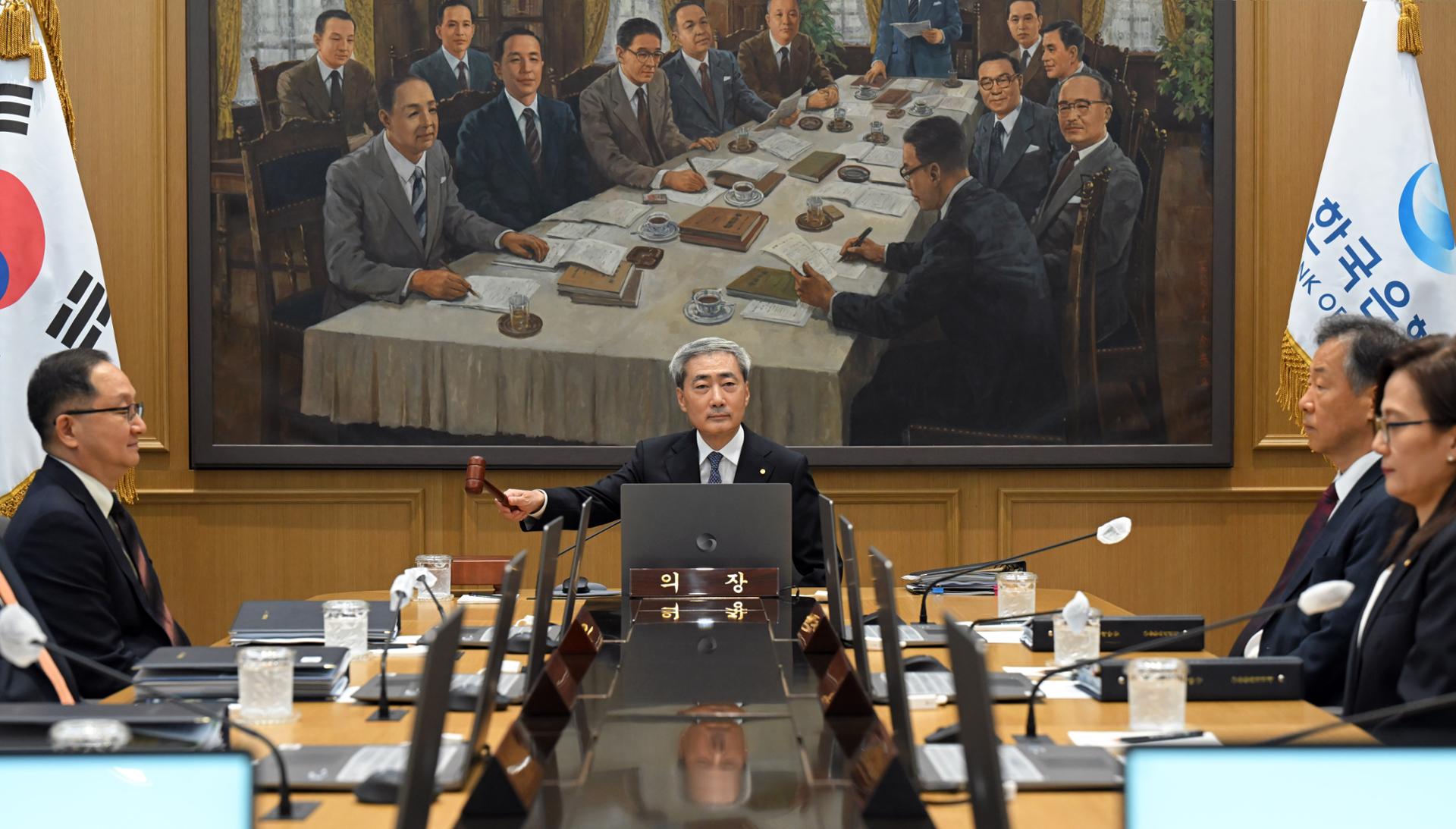
Bank of Korea Gov. Shin Hyun-song bangs the gavel during a Monetary Policy Board meeting at the central bank’s headquarters in Seoul, Aug. 27. Joint Press Corps
The Bank of Korea (BOK) on Thursday said the impact of the semiconductor export boom on inflation will be one of the key factors in deciding whether to raise interest rates further, keeping the door open to additional monetary tightening.
In its September Monetary Policy Report, the central bank said it will need to closely monitor changes in domestic and external conditions before determining the timing and pace of additional rate hikes, given that solid growth and above-target inflation are expected to persist for some time.
"From the perspective of the real economy, the key considerations are whether renewed tensions in the Middle East will push up cost pressures again, and how much and how quickly the strength of semiconductor exports will spill over into domestic demand and demand-side inflation," the report said.