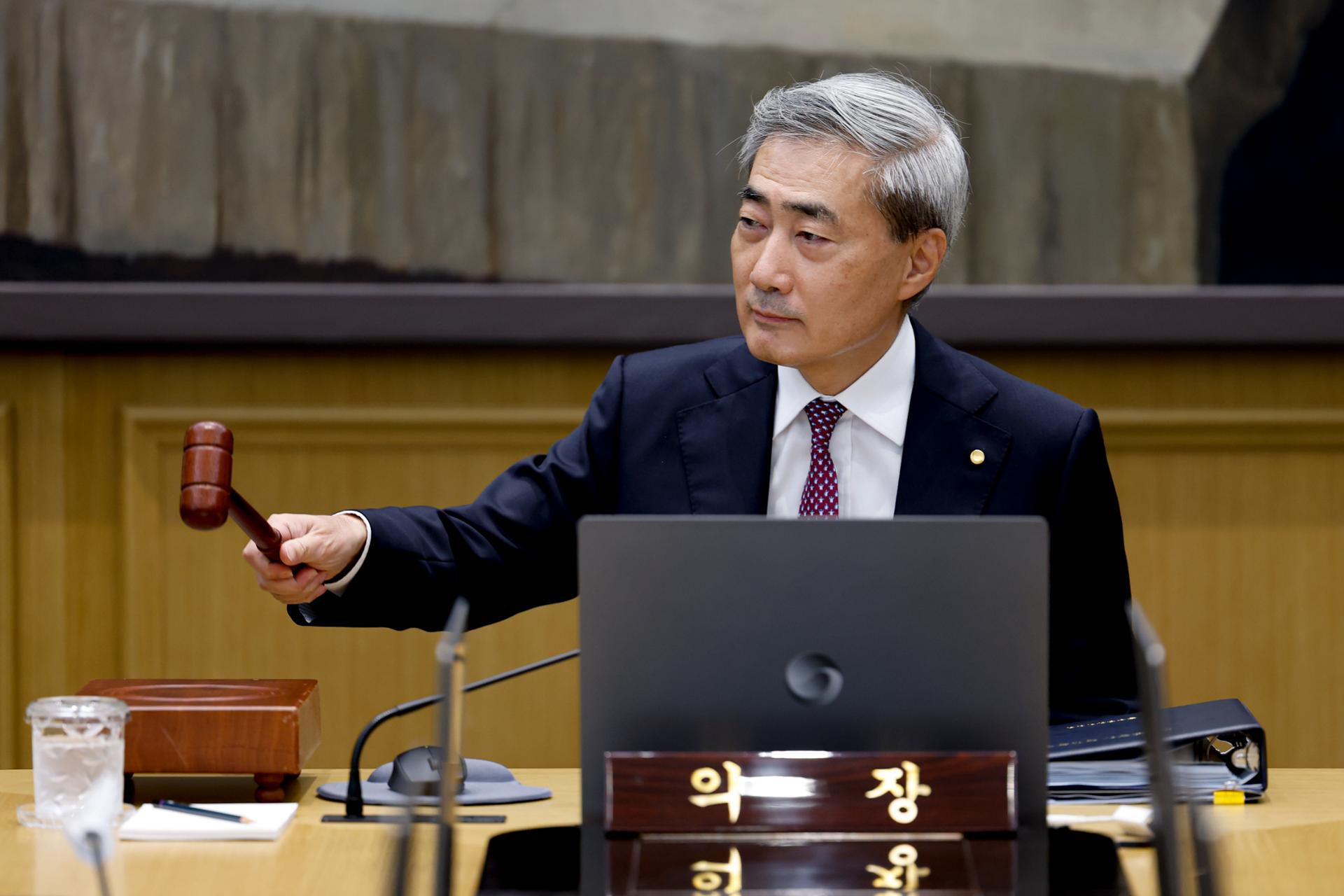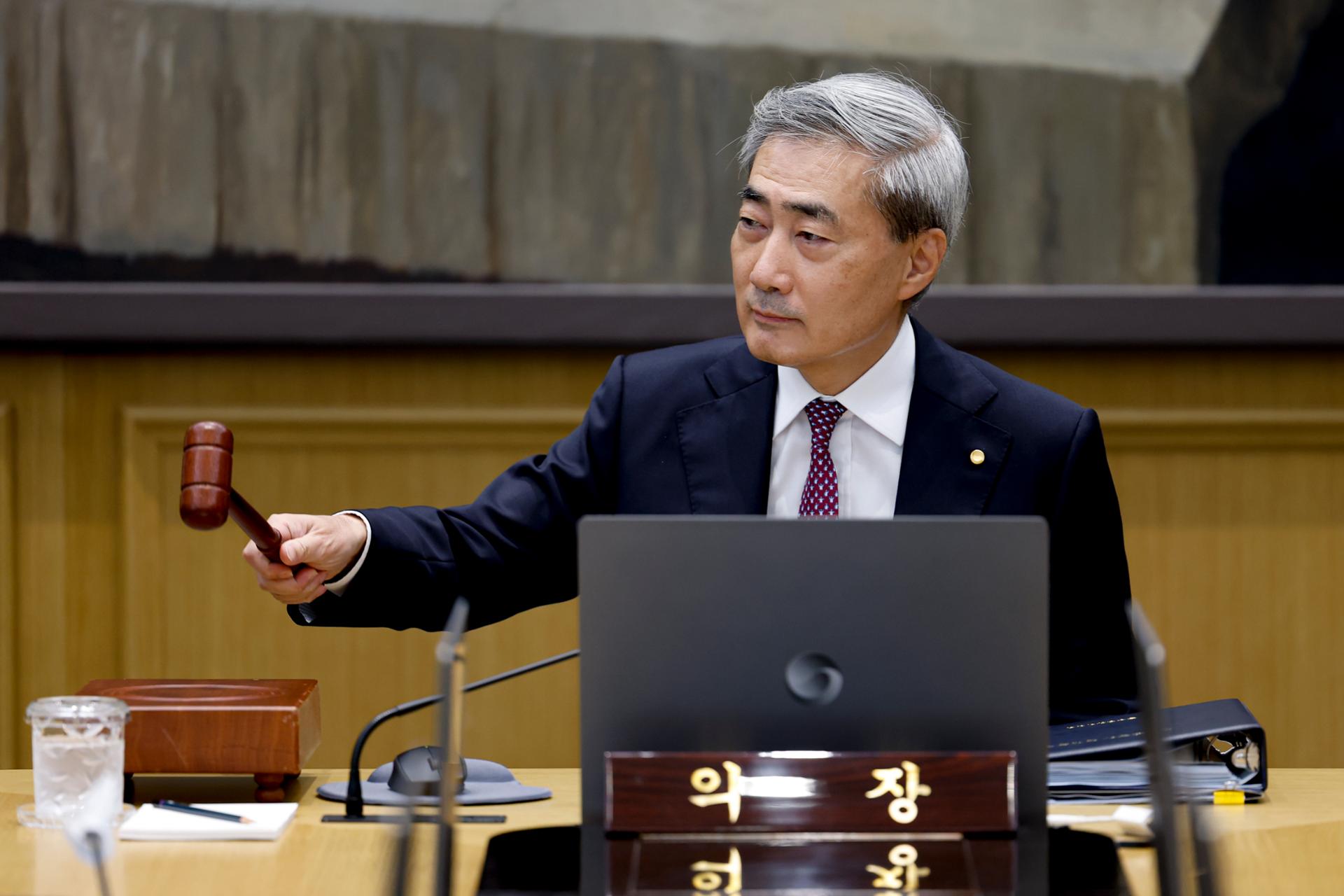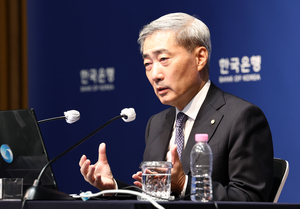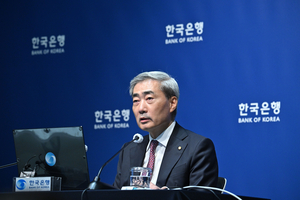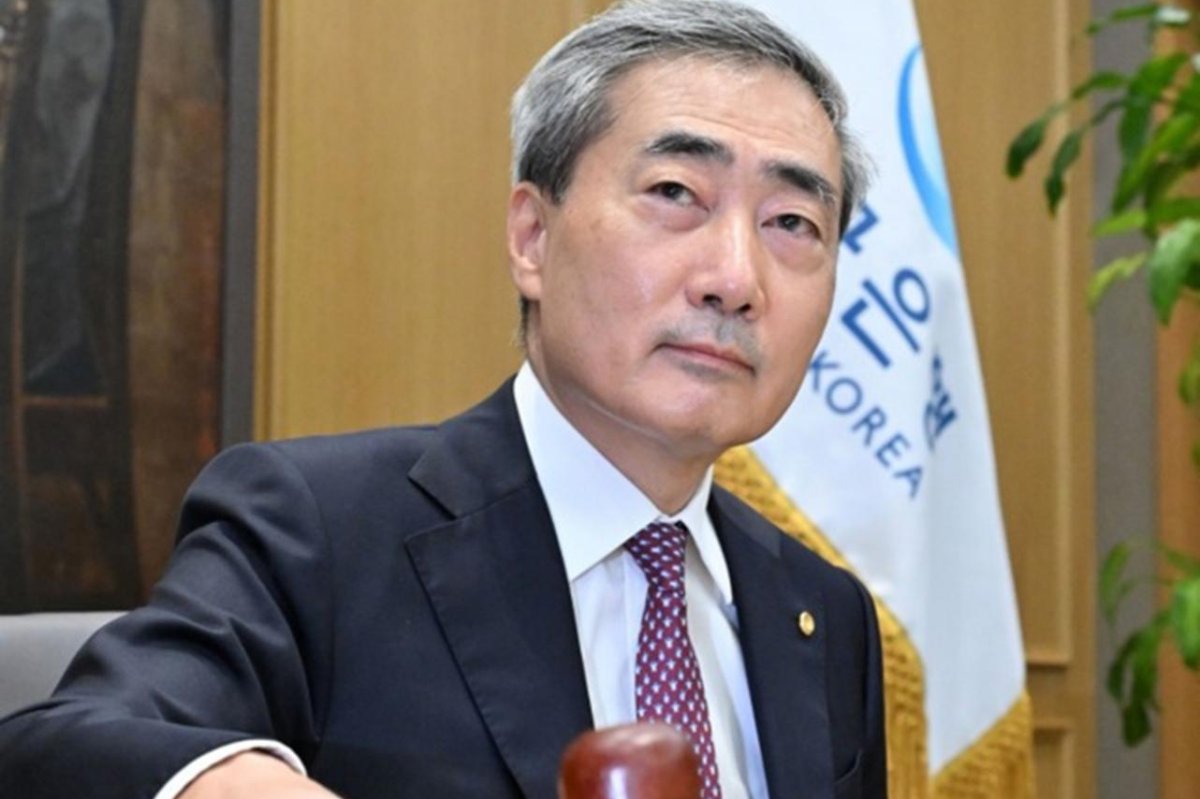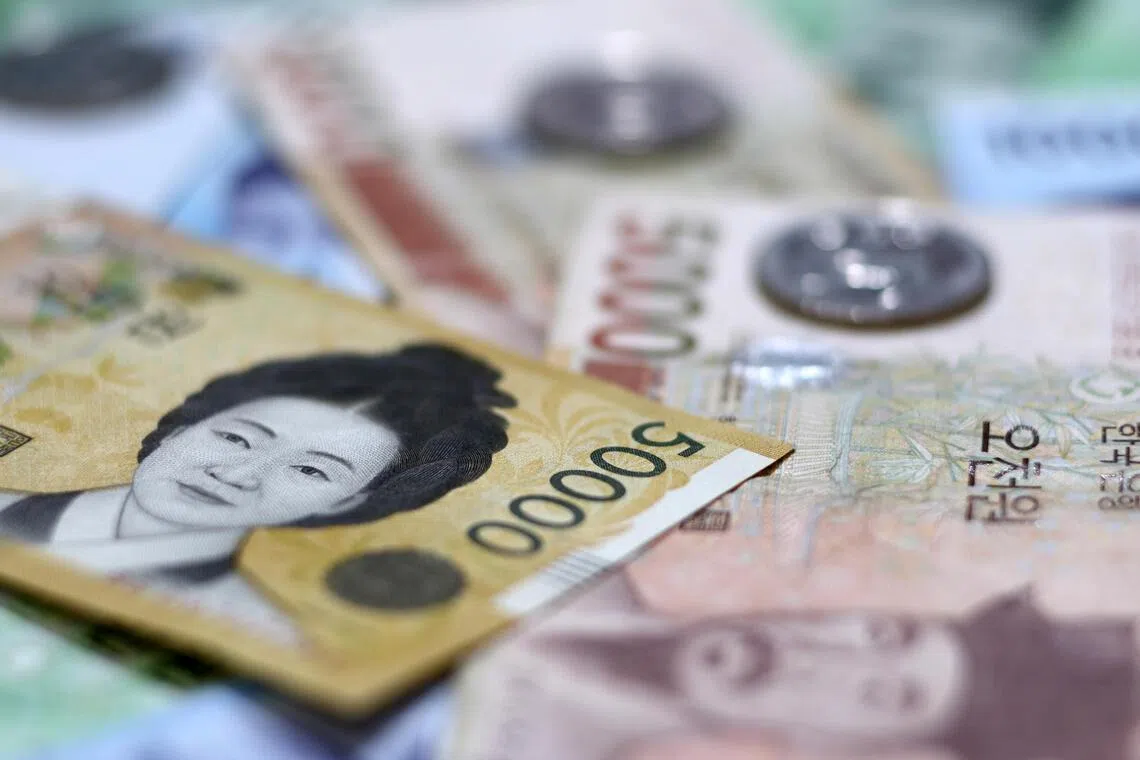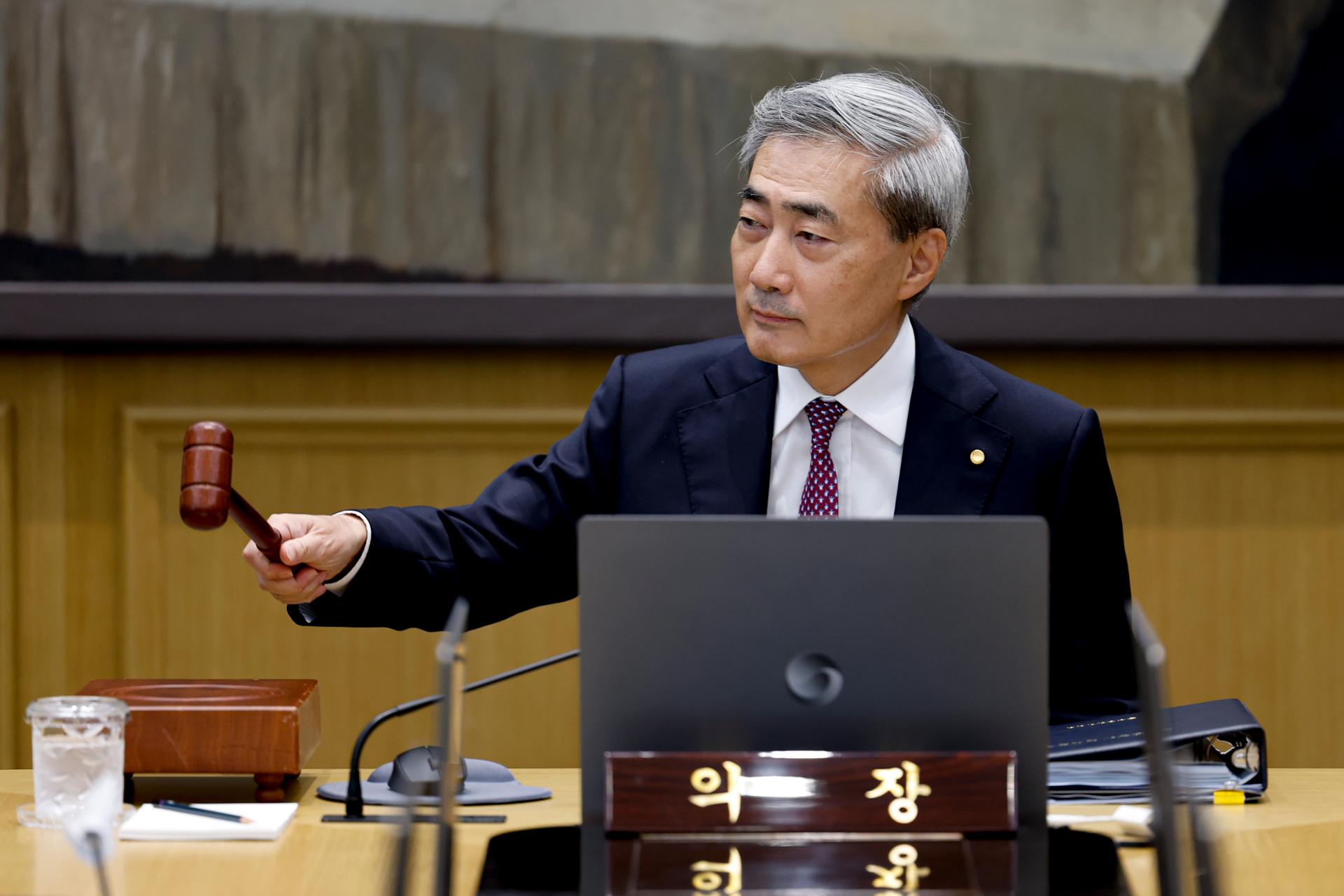
Bank of Korea Gov. Shin Hyun-song bangs the gavel to open a Monetary Policy Board meeting at the central bank in Seoul, Thursday. Joint Press CorpsThe Bank of Korea (BOK) raised its benchmark interest rate Thursday, for the first time in three and a half years, as the semiconductor-driven economic recovery, stubborn inflation and lingering financial stability risks have combined to bolster the case for tighter monetary policy.The central bank lifted its policy rate by 25 basis points to 2.75 percent at its Monetary Policy Board meeting, marking its first rate increase since January 2023.BOK Gov. Shin Hyun-song also signaled that further rate increases remain on the table, saying the bank would “continue to respond through monetary policy until we are confident that inflation is converging sustainably toward our target.”A major factor behind Thursday’s move was the sharp improvement in Korea’s growth outlook, fueled by the global artificial intelligence (AI) boom and soaring demand for semiconductors. As economic momentum strengthens, the central bank has less need to support activity through ultra-accommodative policy and can instead focus on containing inflation.Shin said Korea, a key player in the global AI supply chain, was benefiting from the memory chip upcycle, which is lifting corporate profits, business investment, wages and tax revenues through an unprecedented rise in nominal gross domestic product (GDP).“Exports and investment will continue to post robust growth on the back of the semiconductor upcycle, while improving income conditions are broadening the recovery in private consumption,” he noted.June exports topped $100 billion for the first time on record, driven largely by triple-digit growth in information technology (IT) products. Consequently, the BOK expects this year’s economic growth to exceed its May forecast of 2.6 percent by a wide margin.2단Persistent inflation remains an equally pressing concern. Consumer prices rose 3.2 percent in June, staying well above the BOK’s 2 percent target. Although oil prices have eased, Shin said the inflationary effects of higher costs and the weaker Korean won were likely to persist for some time. More importantly, he stressed that policymakers should not overlook mounting demand-side inflationary pressures as the semiconductor windfall increasingly spills over into the broader economy.The governor pointed to the unusually wide gap between Korea’s GDP and gross domestic income (GDI), arguing that improving terms of trade were boosting national income far faster than headline output. In the first quarter, GDP grew 3.8 percent from a year earlier, while GDI jumped 13.2 percent.“Unlike many major economies, where the recovery remains subdued, Korea’s chip boom is feeding into the domestic economy through stronger household incomes. As a result, demand-side inflationary pressures are likely to become more pronounced, and underlying inflation could prove to be stronger and more persistent than we had previously expected,” he said.The BOK chief warned against underestimating demand-driven inflation, drawing parallels with the U.S. Federal Reserve in 2021 during the COVID-19 pandemic, when policymakers initially dismissed persistent demand pressures and were ultimately forced into much steeper rate increases.He added that the central bank would closely watch next week’s second-quarter national income data, especially whether the exceptional GDI growth seen in the first quarter is sustained.Financial stability concerns also featured prominently in Thursday’s decision.For several weeks, the Korean won weakened to the mid-1,500 range against the U.S. dollar amid foreign equity outflows, while the stock market has remained volatile. At the same time, home prices in the Seoul metropolitan area continue to climb, supported by stronger household incomes and improving asset values.Taken together, those developments reinforced the need to “maintain the rate-hiking cycle,” Shin said.While declining to commit to a specific pace or timetable for further tightening, he emphasized that future decisions would depend on incoming data.“We will assess inflationary pressures, the pace of the economic recovery and financial stability before making our decisions,” he said.His remarks nevertheless leave the door open for another 25-basis-point increase as early as August, when the BOK’s next policy meeting is scheduled for Aug. 27.
BOK begins tightening cycle as chip boom fuels growth, inflation concerns - The Korea Times
The Bank of Korea (BOK) raised its benchmark interest rate Thursday, for the first time in three and a half years, as the semiconductor-driven econ...
652 words~3 min read