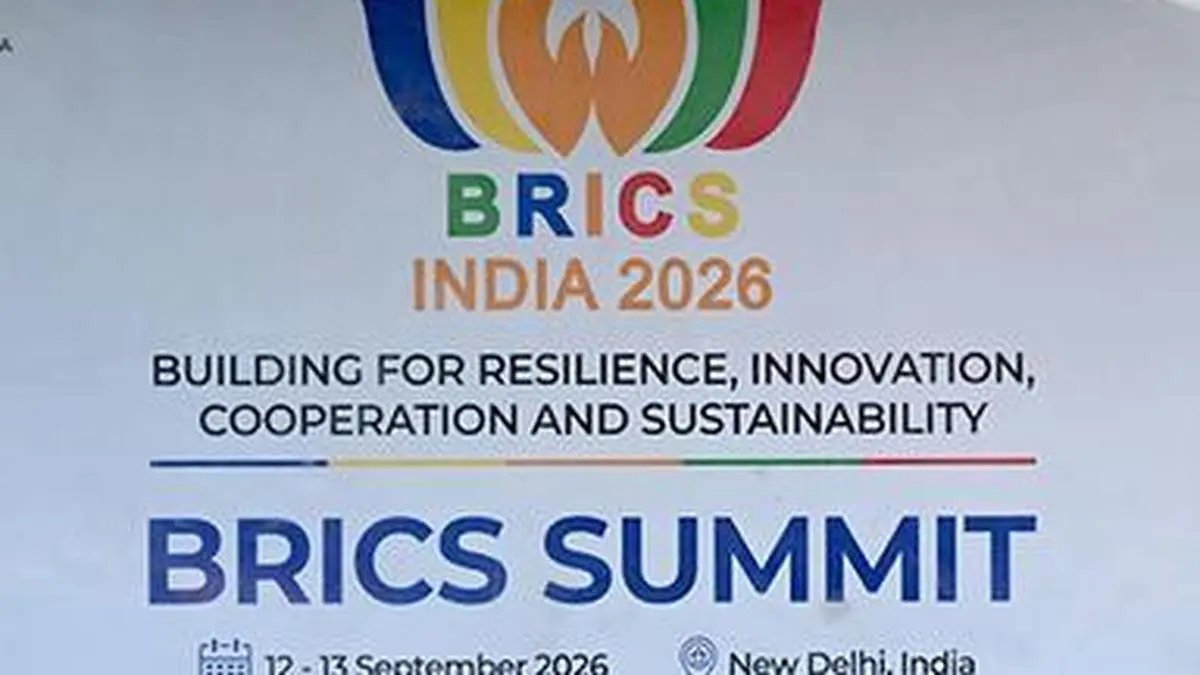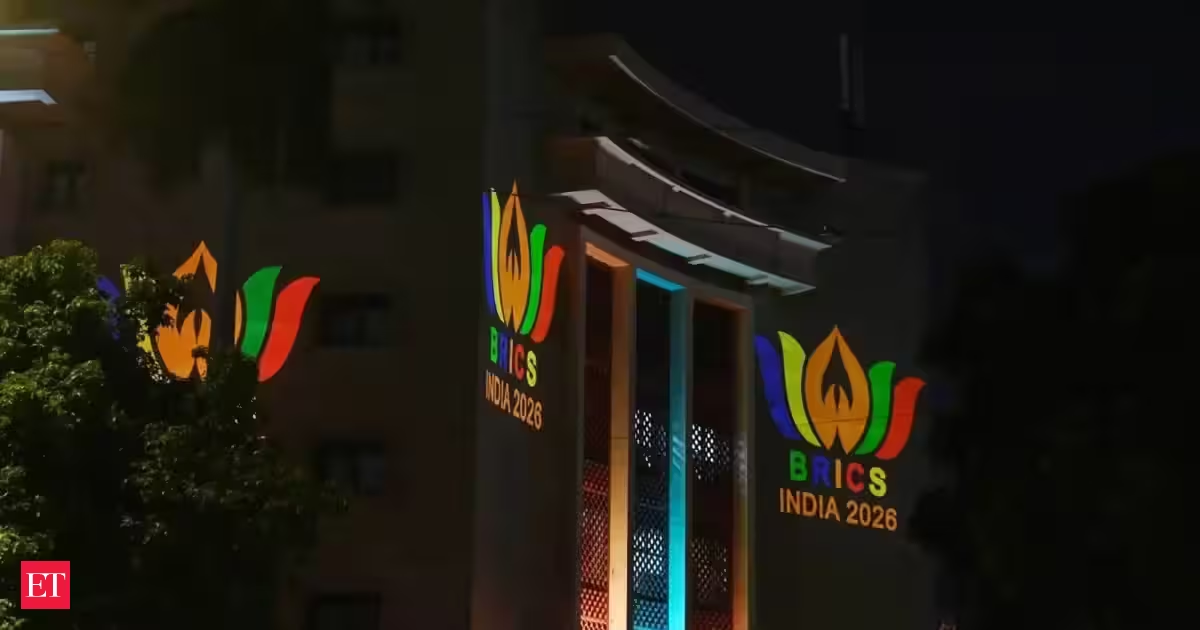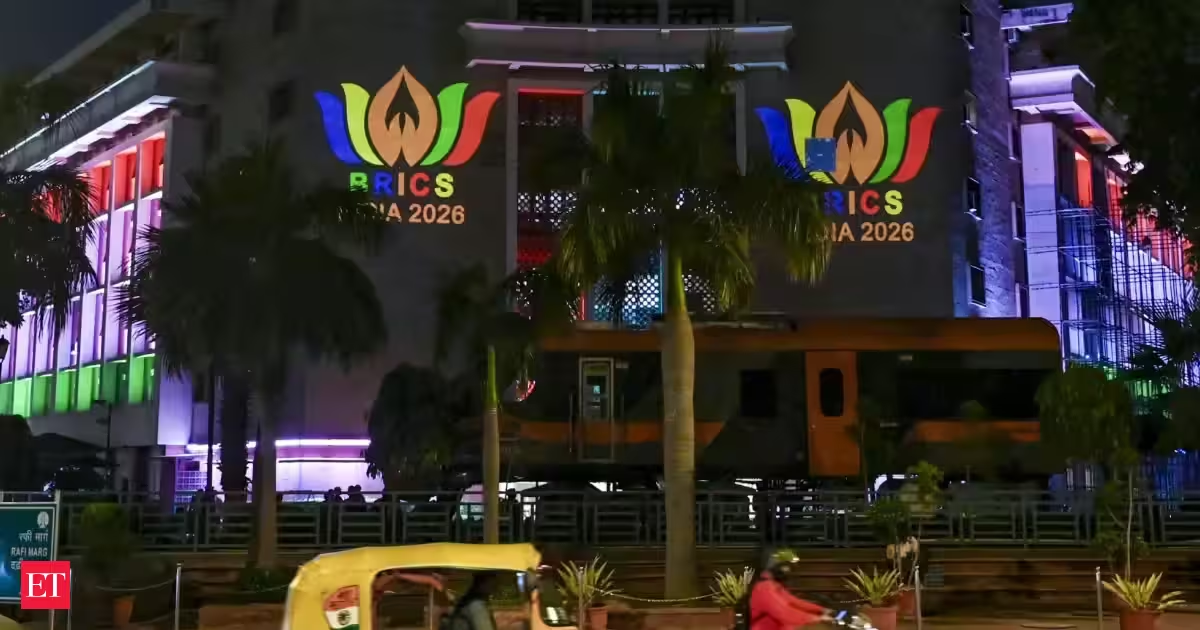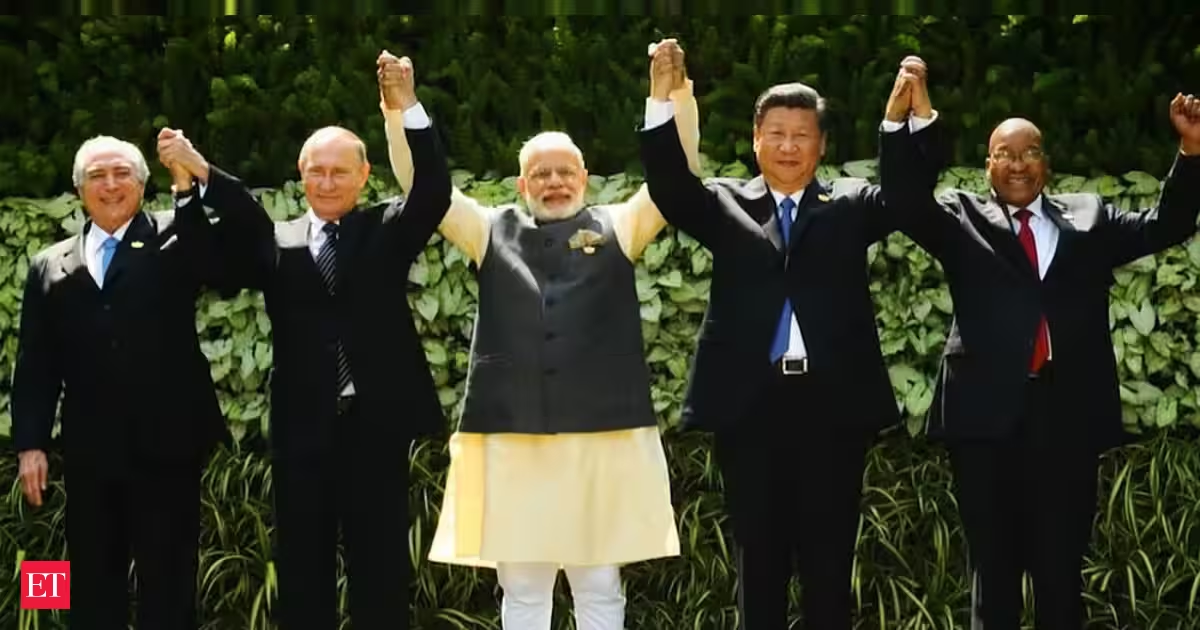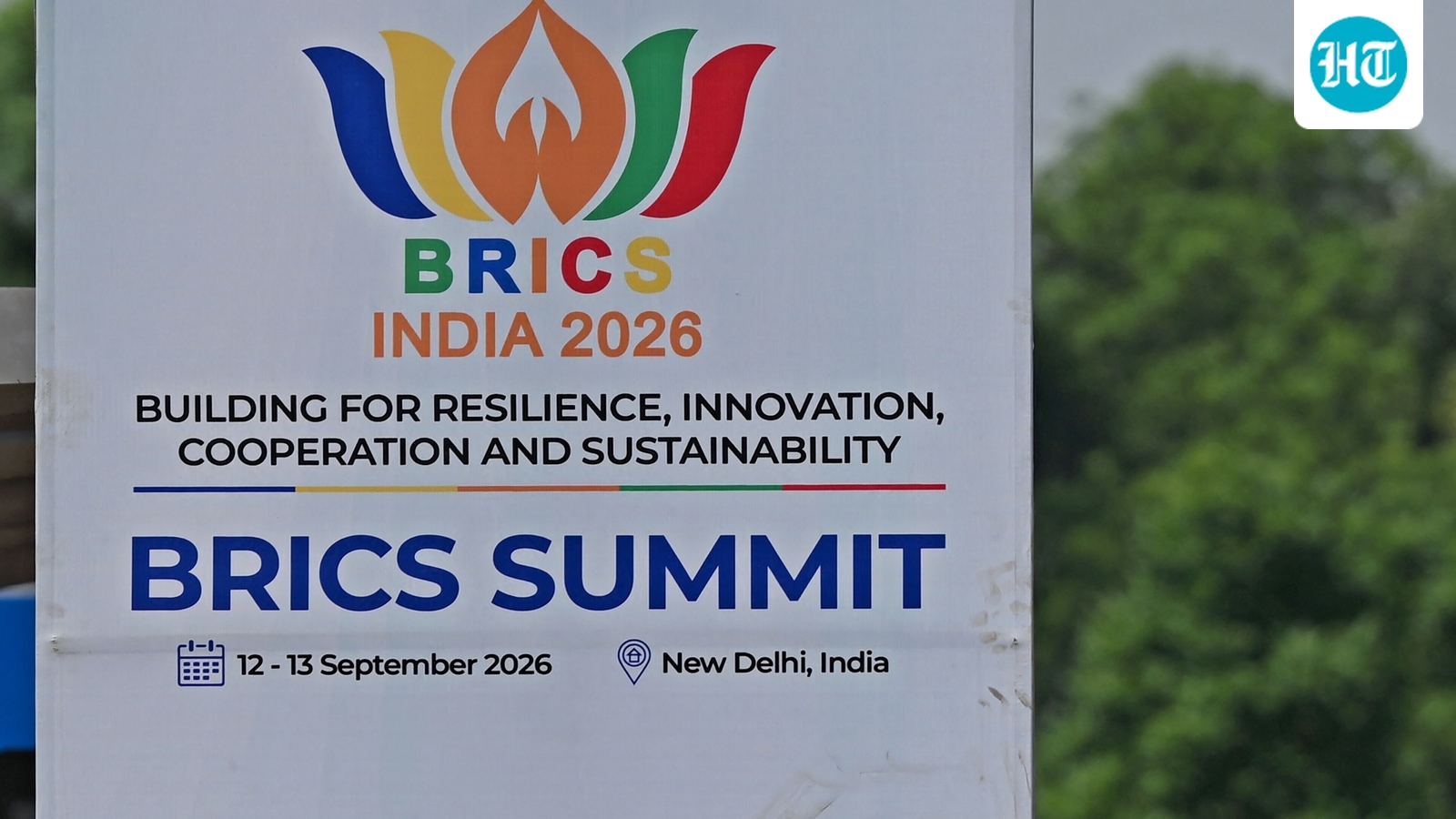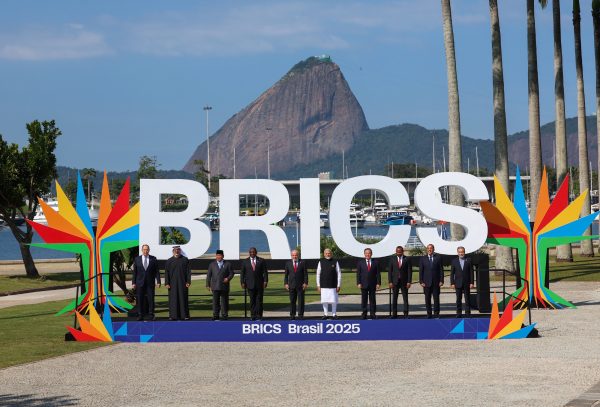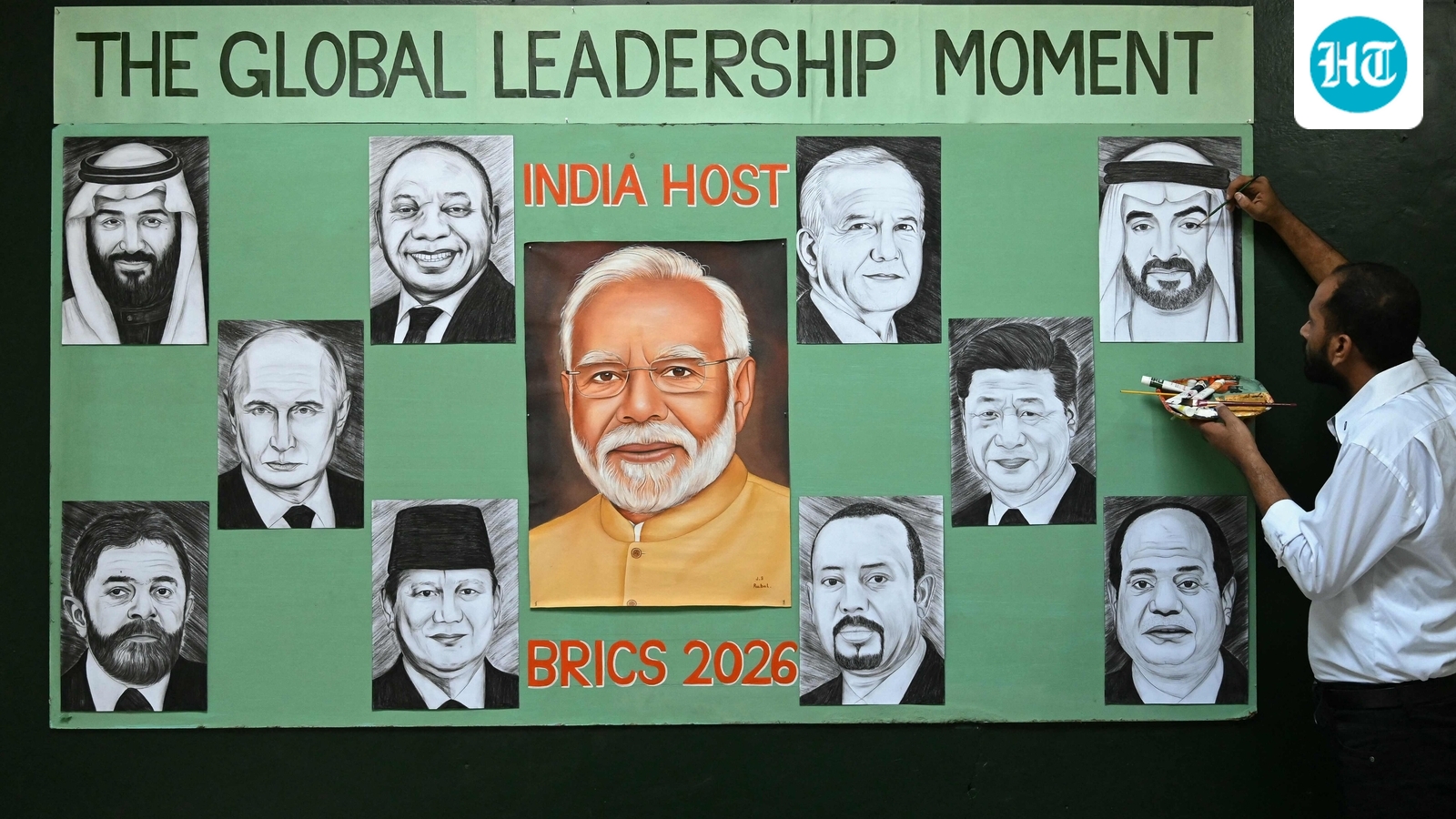
A political row has erupted over the BRICS Summit, set to begin Friday evening, with Congress MP P Chidambaram questioning the tangible benefits India has gained from such events, even as the BJP hit out at the opposition party over its approach to diplomacy.An artist gives final touches to paintings of BRICS member countries' leaders in Amritsar on September 10, (AFP)India, BRICS Chair for 2026, will host the 18th summit at Bharat Mandapam till Sunday, on the theme 'Resilience, Innovation, Cooperation and Sustainability’.On Wednesday, Chidambaram said India is part of several multilateral groupings, including BRICS, the Shanghai Cooperation Organisation (SCO), G20 and QUAD, but questioned what concrete benefits the country has received from them.Also Read | Xi to visit India after 7 years, hold meet with Modi on Day 1 of BRICS Summit“I don't know how many Presidents and how many Prime Ministers are coming. I don't think the last two or three BRICS summits have resulted in tangible benefits or tangible results,” he told news agency ANI.“In fact, we are part of BRICS, we are part of SCO, we are part of G20, and we are part of QUAD. What benefits are we getting out of that? I can't see. In the last two or three summits, I didn't see any benefits. Earlier, the BRICS Summits resulted in some tangible benefits,” he added.Hitting back, the BJP likened the opposition's mindset to "naaraz fufa". Senior party leader Nalin Kohli questioned the Congress’ approach to diplomacy.Also Read | Huawei, Alibaba, Emirates among big names expected at Modi's BRICS business speech“It is a surprise to note the statement of Mr. Chidambaram and the Congress Party, particularly at a time when India is hosting such an important event, the BRICS summit, where many heads of state and heads of government will come, and there will be direct meetings also, one-on-one meetings between Prime Minister Narendra Modi and these leaders,” he said.“What is the intent of the Congress Party? Is diplomacy to be seen as a transaction, like the Congress Party is projecting? What have I done for you? What will you do for me? Kind of an approach. What is the so-called tangible result? I mean, if we talk of tangible results, we can question what the Congress party's entire approach from 1947 right up to 2014 was on diplomacy..The Congress party certainly raises questions about itself when it asks and points out the so-called tangible results and questions the BRICS summit in Delhi,” he added.The Congress party has much to answer, Kohli said. “By Mr Chidambaram's strange logic, we don't see any benefit. Tomorrow, if somebody says that they see no benefit from the Congress party, will the Congress party then shut down? So I think Mr. Chidambaram is trying to make a political point when none exists, and this is just another attempt by the Congress party to somehow criticize anything and everything that PM Modi's government does, even when there is no merit or any reason to criticise it,” he said.Also Read | In BRICS nations, focus shifts to public transport in EV pushBJP national spokesperson Pradeep Bhandari alleged the opposition camp is driven by a deep-seated "Fear Of Missing Out" (FOMO). "If you observe the Congress today, seeing that the BRICS Summit is taking place in India, they are opposing it just like that 'naaraz fufa'. This is because the Congress knows that whenever the country prospers, whenever it involves boosting India's pride, the Congress party will always oppose it,” he said."Senior Congress leaders are beginning to realise that they may never see (Congress MP) Rahul Gandhi become Prime Minister in their lifetime, nor will the Congress ever get the opportunity to host the BRICS Summit. Congress is experiencing FOMO,” he added.India is a founding member of BRICS and has previously held the chairship in 2012, 2016 and 2021. The country assumed its fourth BRICS chairship on January 1, coinciding with the grouping completing 20 years since its establishment.The summit this weekend is expected to deliberate extensively on a number of pressing global challenges, including the economic consequences of the West Asia crisis.
'No tangible benefits': Chidambaram takes a BRICS jibe, draws BJP flak
India, BRICS Chair for 2026, will host the 18th summit at Bharat Mandapam from Friday evening. | India News
684 words~3 min read