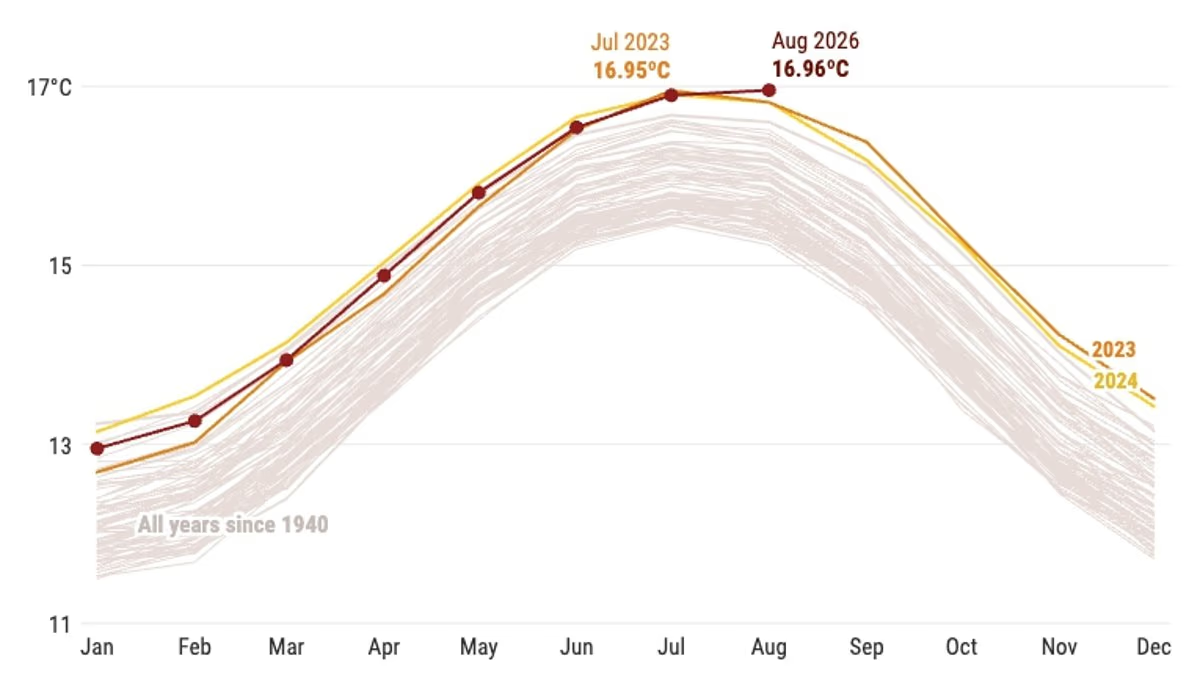
Earth just had its hottest August on record and tied the benchmark for the hottest month ever recorded since at least 1940, according to the Copernicus Climate Change Service, a European climate monitoring agency.
The global average temperature during August was 62.53 degrees Fahrenheit (16.96 Celsius), which was 1.53 degrees Fahrenheit (0.85 Celsius) above the 1991 to 2020 average. The record-hot month was driven partly by ocean temperatures that were, themselves, reaching record highs. Global sea surface temperatures tied the record for warmest monthly average logged in any month.
The months that comprise meteorological summer — June through August — tied with the summer of 2024 for the hottest such season on record, globally.
All those broken records stem from two factors, Copernicus reported: long-term, human-caused global warming and the strengthening El Niño event in the tropical Pacific. That combination has, historically, brought devastating extreme events worldwide. The last time there was a significant El Niño was in 2023 and 2024, and that event led to a 13-month streak of record-breaking global temperatures in Copernicus’ records.
August may mark the start of a similar, if not even longer stretch, given the greater intensity of the ongoing El Niño, said Samantha Burgess, the strategic lead for climate at the Copernicus Climate Change Service.