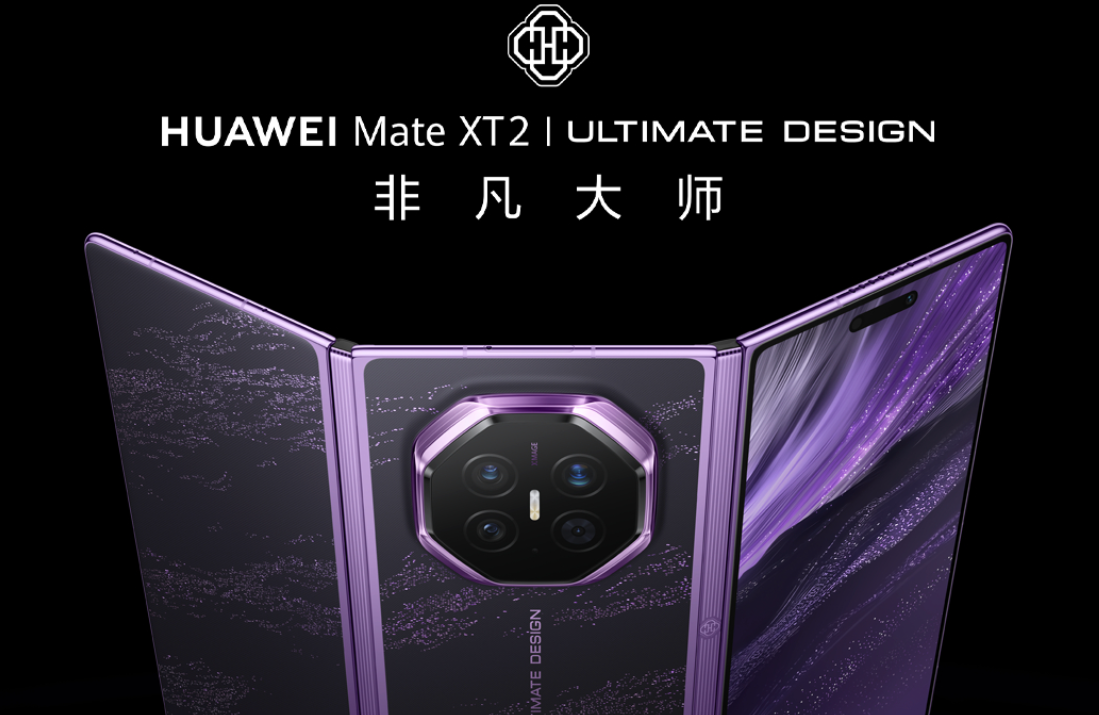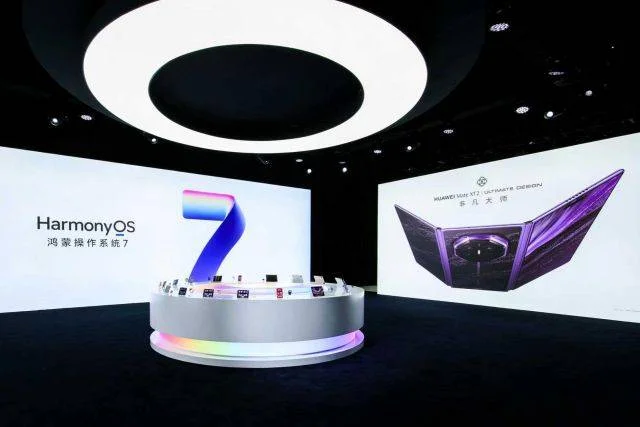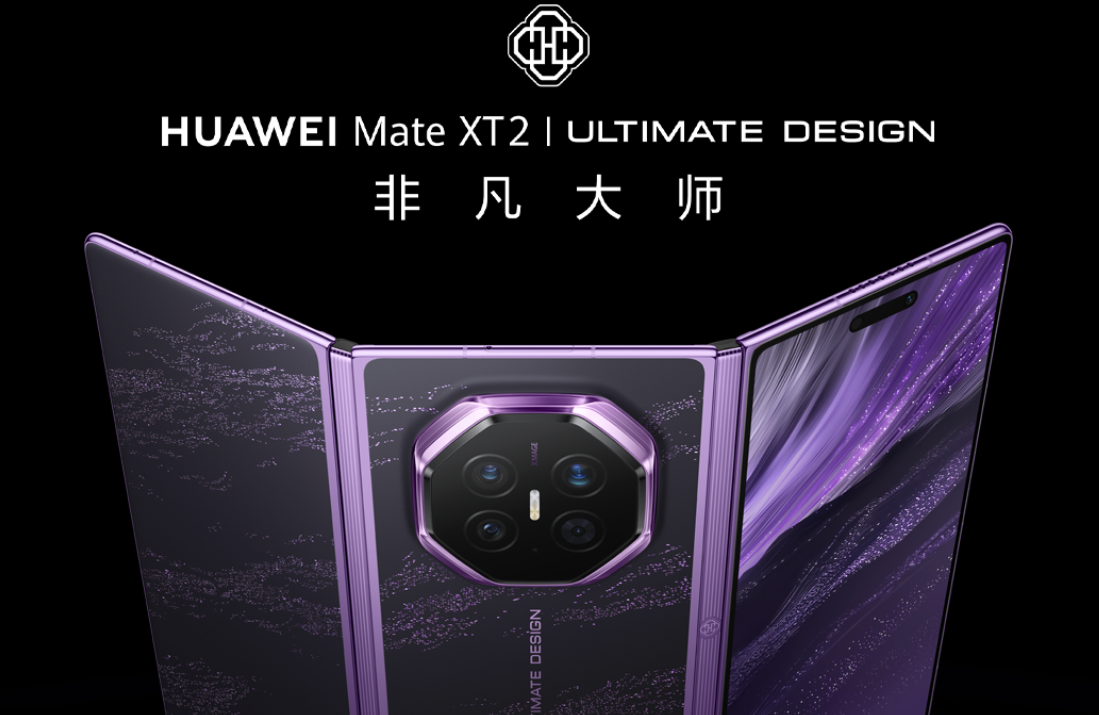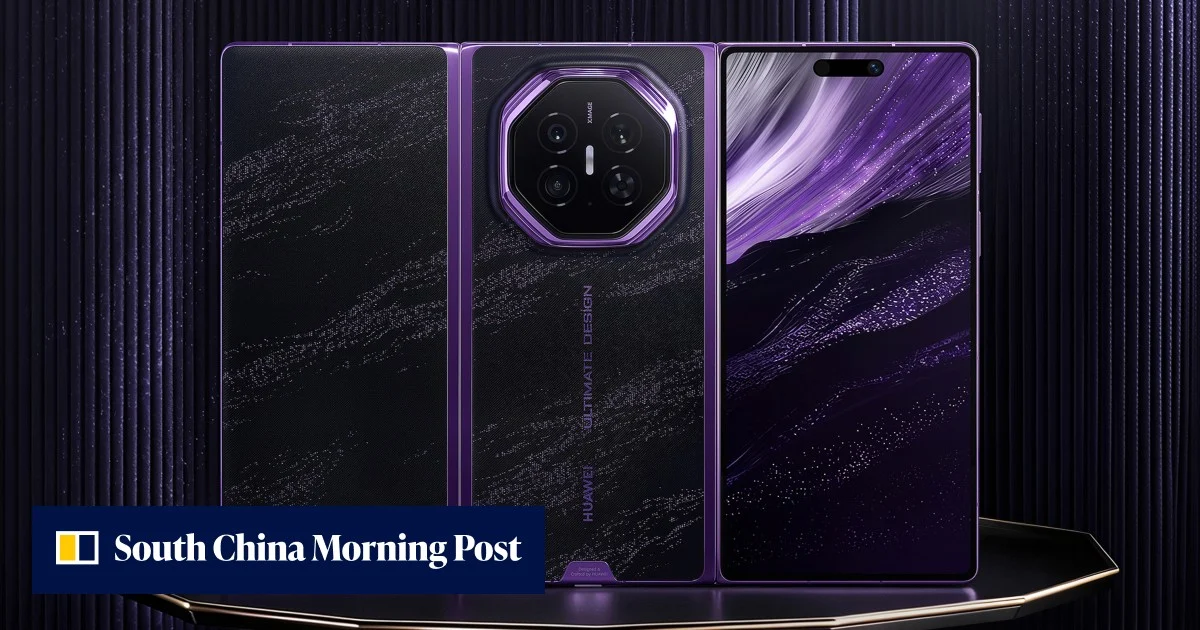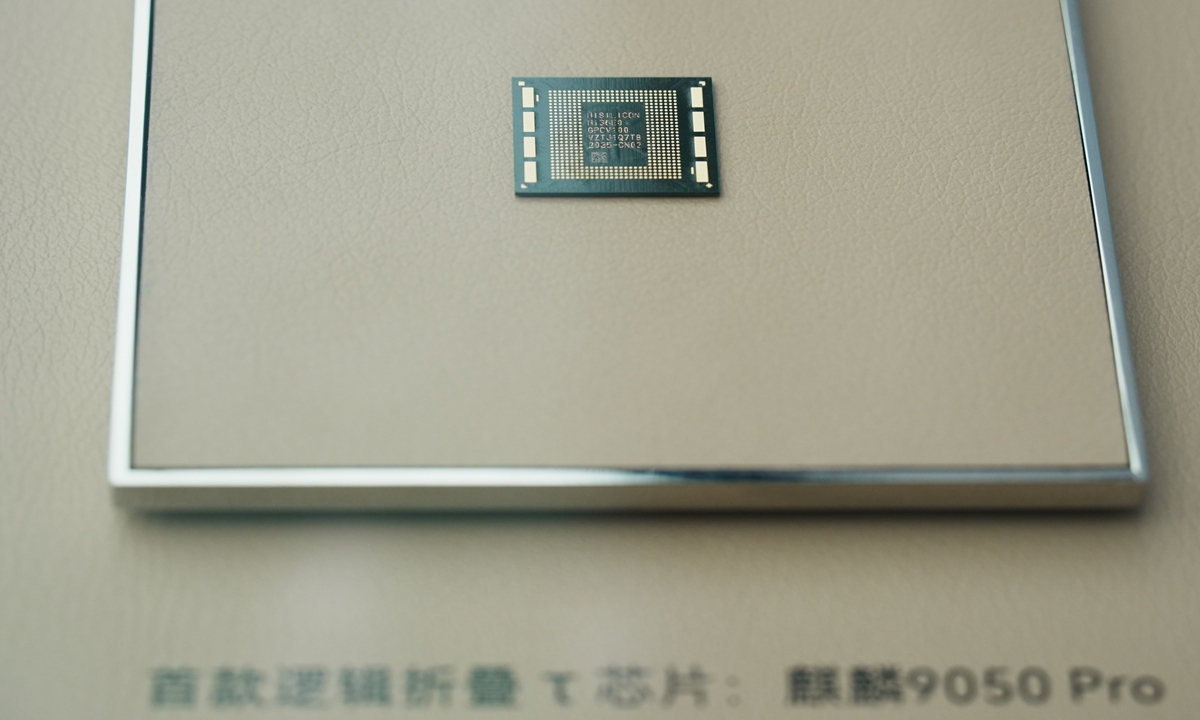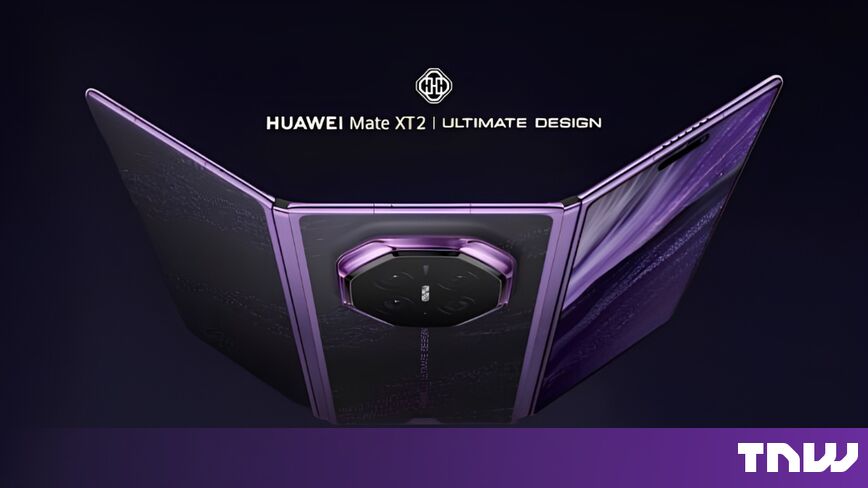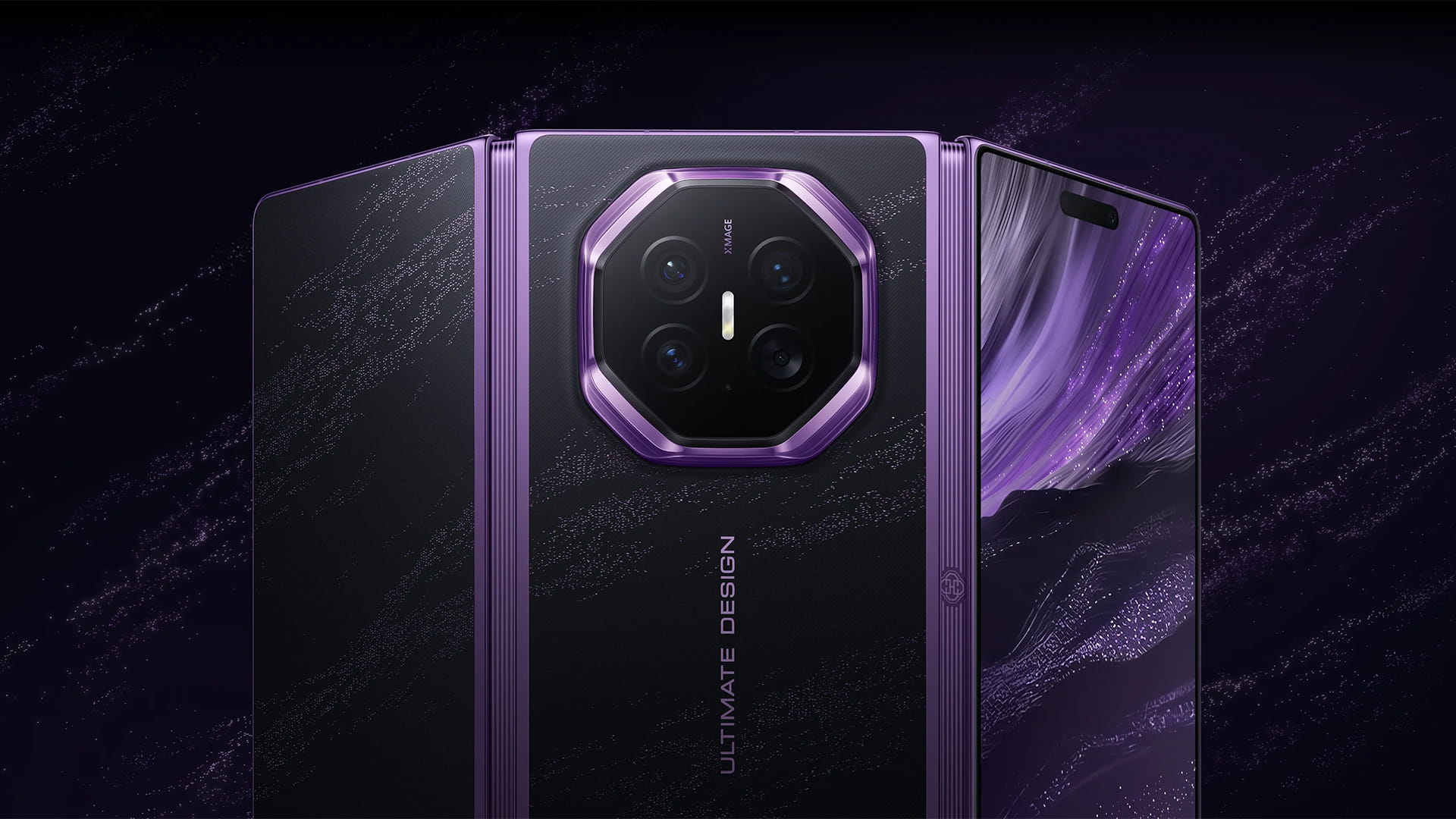
Huawei has unveiled the Mate XT 2, its latest trifold smartphone and the first commercial device powered by a chip based on the Chinese technology giant’s Tau scaling law.
Huawei executive director Richard Yu, also known as Yu Chengdong, holding up the Mate XT 2 onstage during the foldable smartphone’s launch on September 7. Photo courtesy of Huawei.
Launched on September 7, the Mate XT 2 is powered by Huawei’s new Kirin 9050 Pro processor, which uses LogicFolding, an architecture designed to improve chip performance by shortening signal paths and stacking logic across multiple layers.
The technology is a key component of the Tau scaling law that Huawei proposed in May as an alternative approach to advancing chip performance as conventional transistor scaling becomes increasingly difficult.
Unlike Moore’s law, which has traditionally linked semiconductor progress to shrinking transistors and packing more of them onto a chip, Tau scaling focuses on reducing the time required for signals to travel across devices, circuits, chips, and systems.