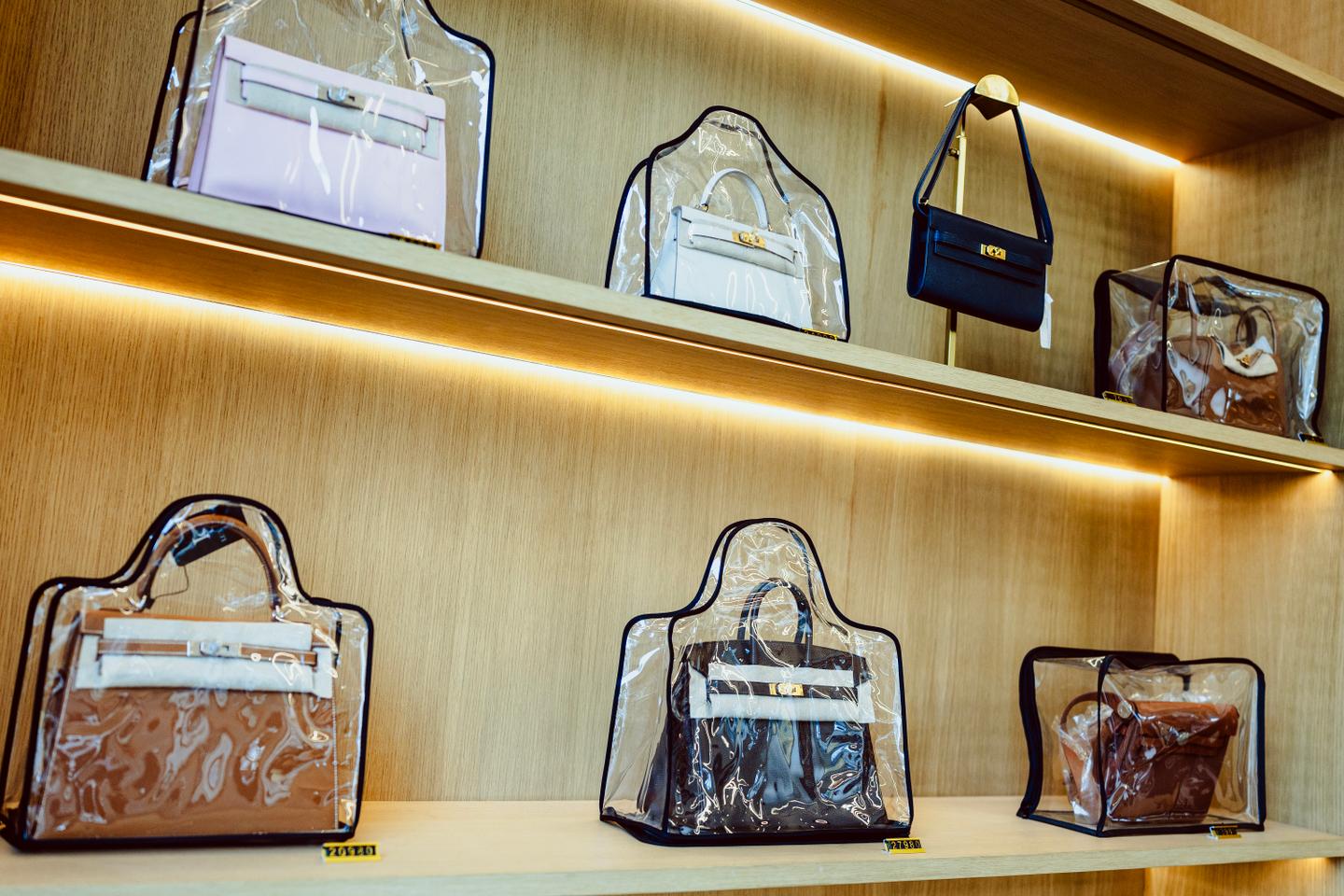
New York Fashion Week kicks off Thursday with 70 official runway shows and designer presentations. And while the rich and famous may buy those clothes right away, in the future, many items will likely get a second and maybe third or fourth life in the resale market.The secondhand market for designer clothes is booming. Online reseller The RealReal said demand for vintage on the site is up more than 400% since 2020, and rival ThredUp projected the global resale market will hit $400 billion by 2030. Karina Cohen writes Bottom Feeders Anonymous on Substack, a newsletter focused on secondhand and resale shopping.Cohen joined “Marketplace Morning Report” host Kimberly Adams about the booming secondhand luxury market. The following is an edited transcript of their conversation.Kimberly Adams: You've been digging through these resale reports with, as you say on your Substack, "the seriousness of a finance guy scouring the Federal Reserve's economic projections." So, as a finance girl who scours those things myself, what stood out to you this year?Karina Cohen: It wasn't so much about what people are buying or how much they were spending; it was sort of more about an attitude shift that's happening that's more about prioritizing things like authenticity and personal taste. There's also a shift in prioritizing future resale value. So when shoppers are making purchases, they're thinking about selling it down the line and how good of an investment it will be as a future return.Adams: Can you say a bit more about that? Because that idea of investment and value came up quite a bit in both the reports from The RealReal, which tends to have more high-end stuff, and ThredUp, which has sort of more regular clothes.Cohen: You don't really know what's going to hit in the future, but at any moment you can have a cultural moment that makes demand for a certain bag or a certain item just skyrocket. And if you have that, then you've just made a buck.Adams: What do you think these trends are telling us about how consumers are responding to the broader economy right now?Cohen: I think there's a lot you can sort of read in between the lines. Like, there's more of a demand for items that are in as-is condition, which could be interpreted as customers want something with a certain patina and character, but could also be interpreted as customers looking to save money. I think it just goes to show that with the resale market, you can really have some affordable options. You can have high-quality options, and they don't have to be mutually exclusive.Adams: How do you think the tariff environment, which has pushed up the costs for things like cotton goods and denim, even as raw cotton has gotten cheaper, how do you think that's affecting the secondhand market?Cohen: For customers who want things like natural fibers, if you're buying primary-market cotton, you've already seen a cost increase because cotton being imported from Asia, for example, is being tariffed at a very high rate. So items that are vintage aren't subjected to those price increases.Adams: Shein just went public last week with a quarter of the valuation at its peak, and according to these reports, that ties into what's going on in the resale market.Cohen: So the ThredUp report mentioned that 49% of younger generations have already reduced purchases of low-quality apparel because it cannot be resold, which is bad news for fast fashion, but great news for the environment. I think you're seeing that younger generations know that they might be throwing away their money a bit if they're buying an item that nobody will want in the future, and therefore they cannot make some of that money back the way they could if they bought a vintage luxury item.Adams: The secondhand resale market is projected to outpace the growth of the overall apparel market in the future. What do you think is just making resale so appealing to so many consumers right now?Cohen: I think chief among them for me, at least, is affordability and especially quality for the price that you're paying. With shoppers also sort of becoming more selective about materials, they're sort of questioning why they're being asked to pay, you know, $300 for a polyester dress that might not even feel that special to them. So knowing that you can go to a place like The RealReal, where you can find this amazing archival piece for minimal cost, you get affordability, you get sustainability, better quality, uniqueness.
Why the designer resale market is booming right now
Some consumers are increasingly viewing secondhand luxury items as smart investments for potential resale in the future.
753 words~3 min read