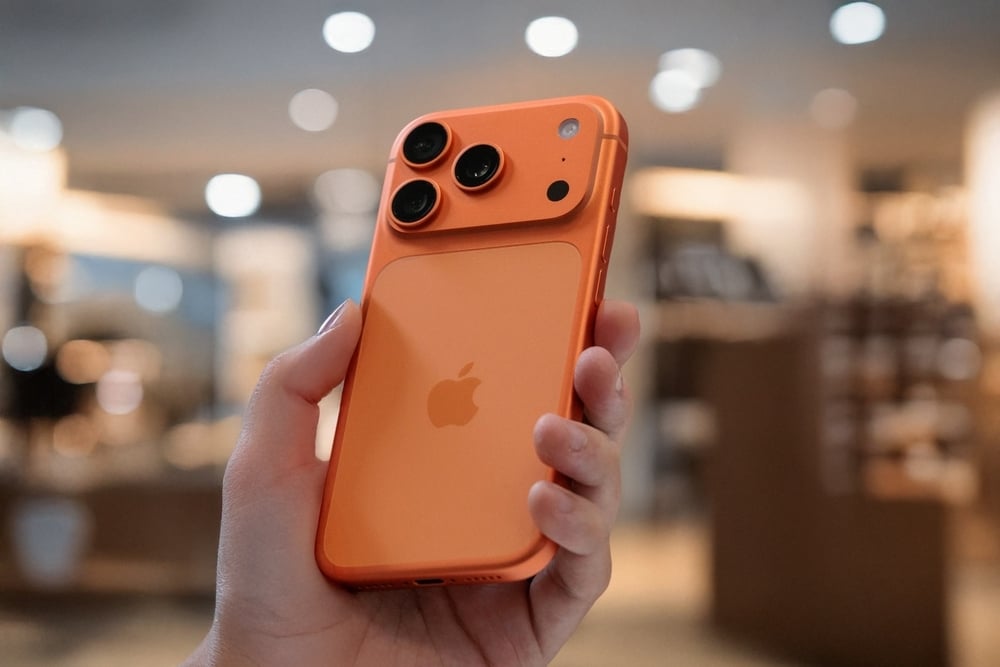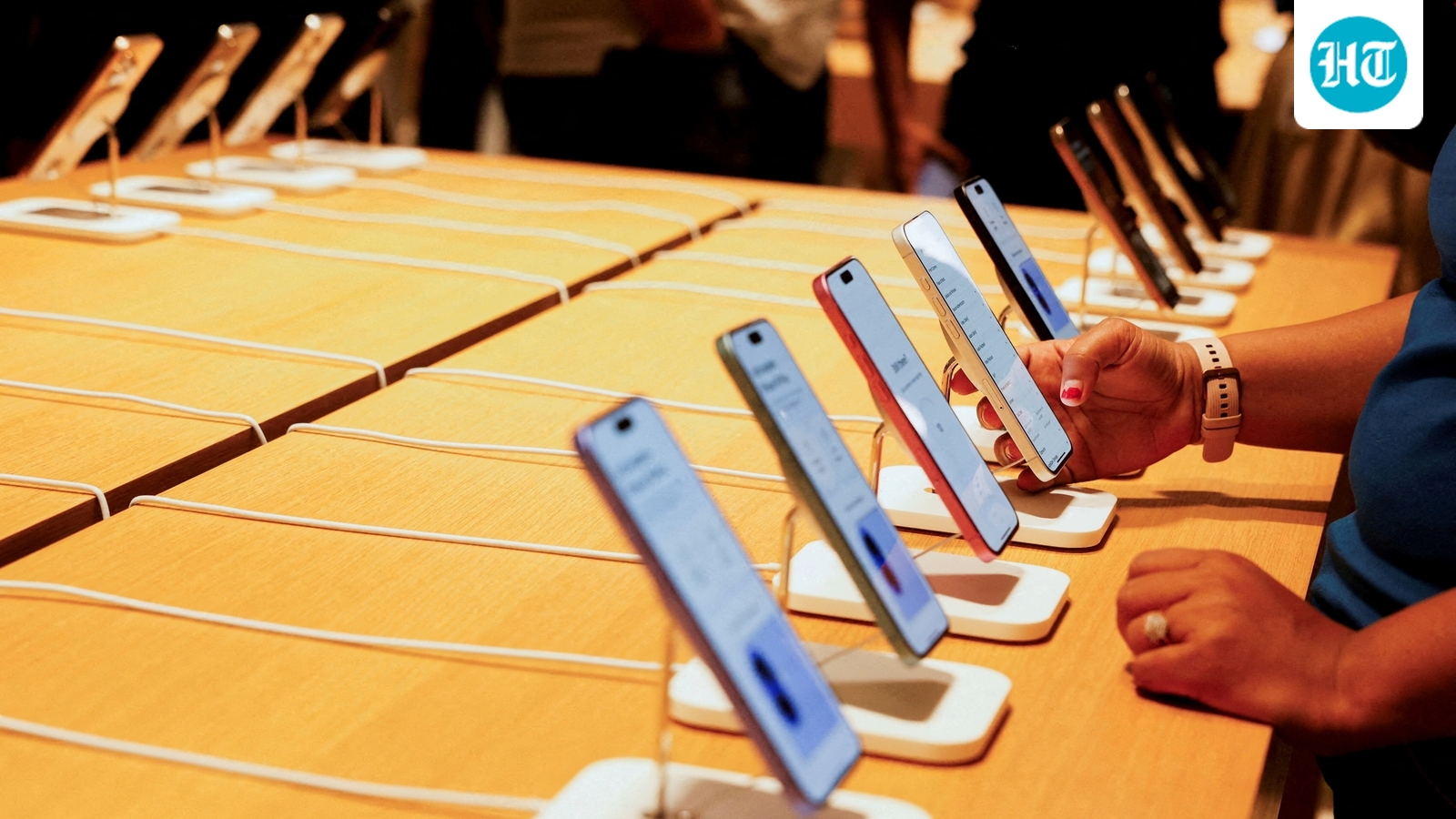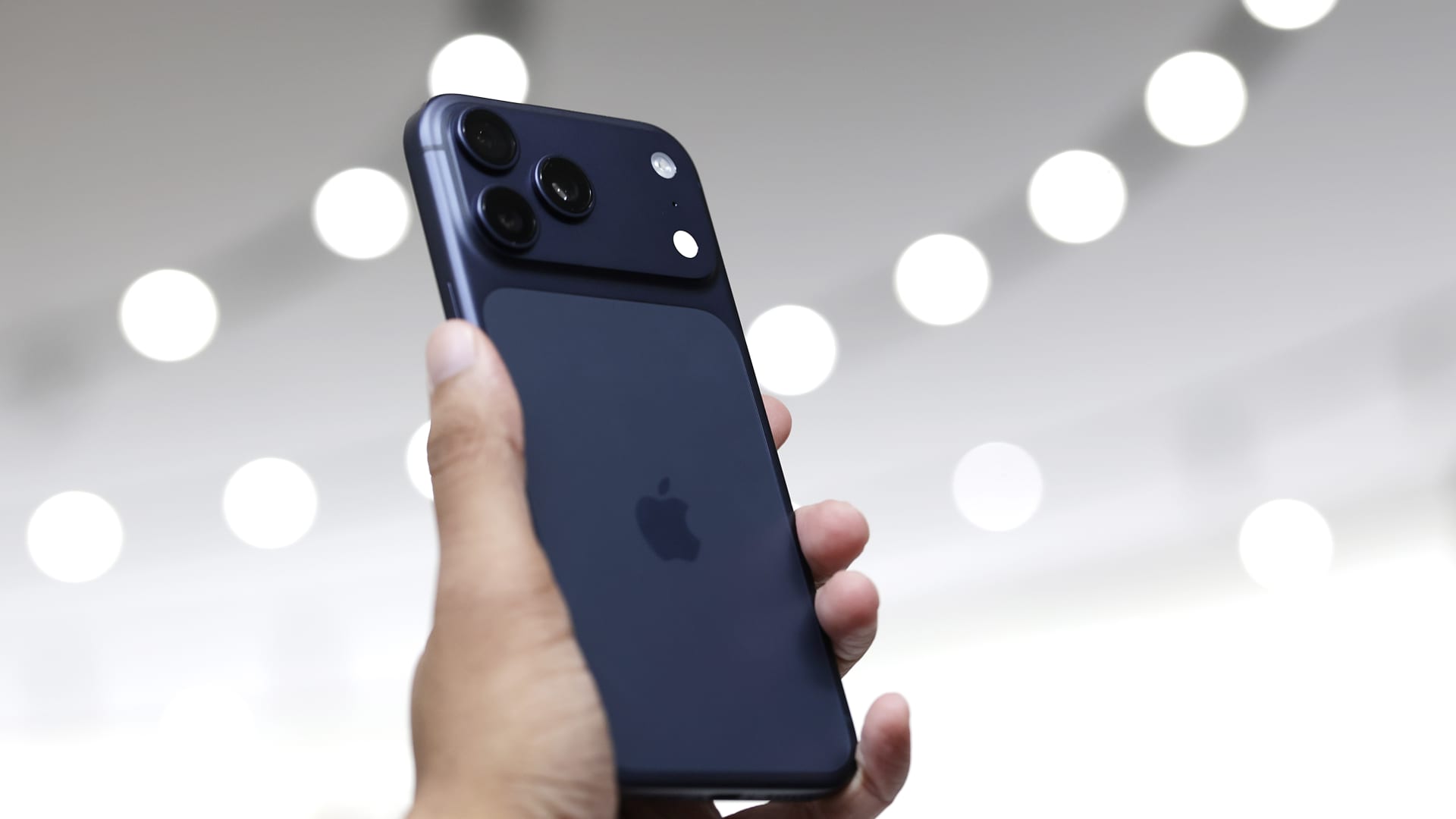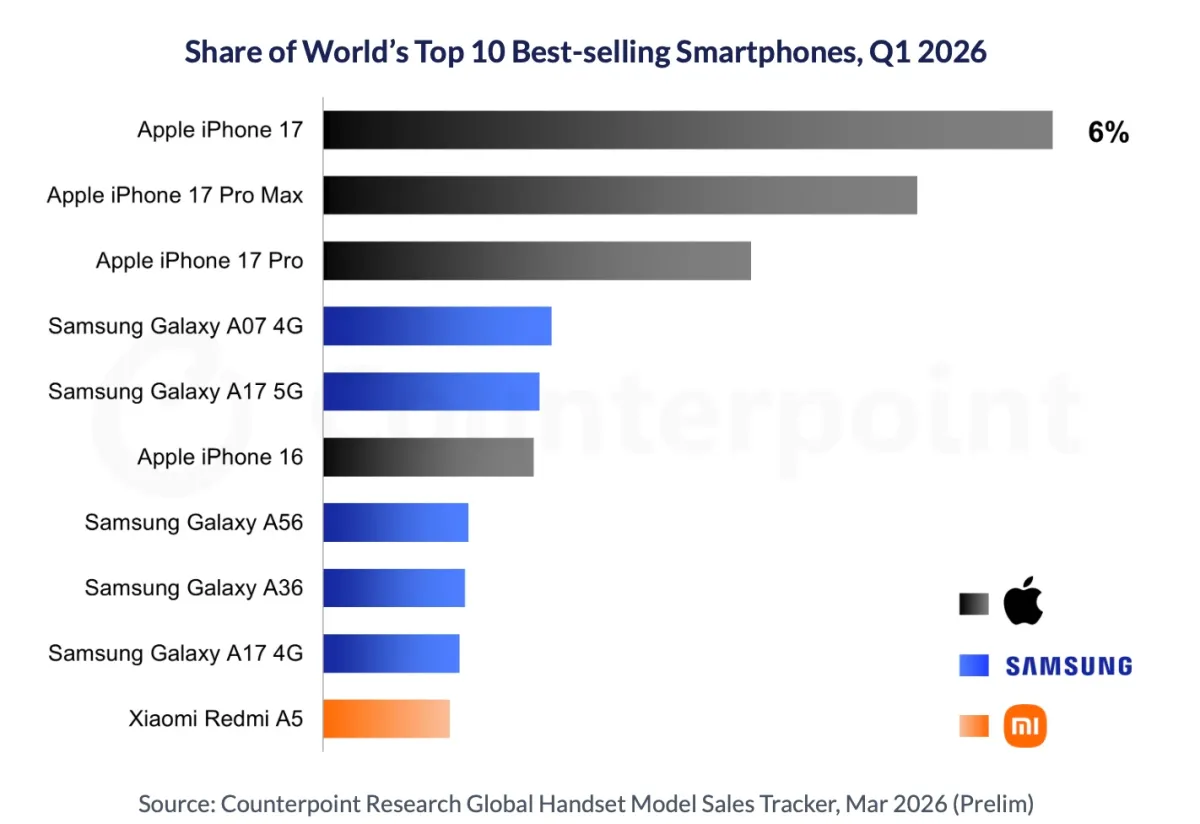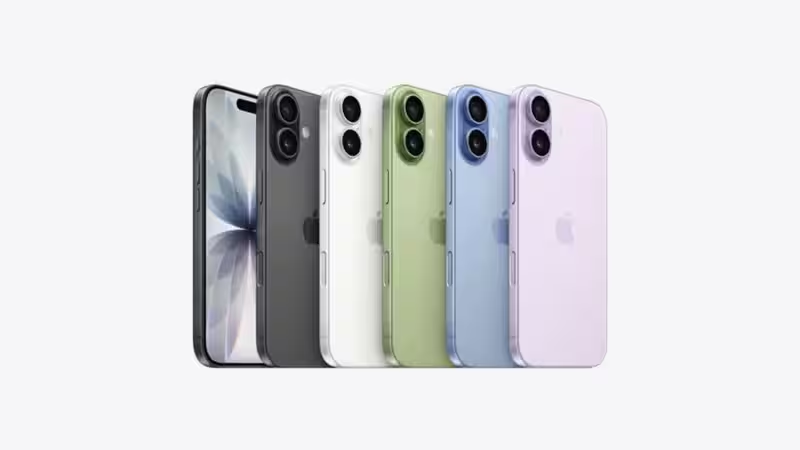
The headline number is large, but the more useful story is how Apple got there. The iPhone 17 generation reached its record while the wider smartphone business was moving in the opposite direction: global shipments fell sharply in the first half of 2026 as a memory shortage pushed up component costs, squeezed cheaper Android phones and shifted the market towards more expensive devices. Apple benefited from that dislocation without relying only on its most expensive Pro models. The standard iPhone 17 gained a 120Hz ProMotion display, 256GB of base storage and a 48MP ultra-wide camera, closing some of the feature gap that had historically pushed buyers towards Pro. Counterpoint says that base model generated 1.3 times the revenue of the iPhone 16 and led global smartphone unit sales in the first two quarters of 2026. The other surprise is geographical. China, where Apple has spent years facing harder competition from Huawei and other domestic premium brands, produced the biggest revenue increase for the series. The result suggests that Apple’s strongest lever was not simply charging more. It was making the mainstream iPhone easier to justify just as rival flagship prices were rising. There is, however, an accounting caveat: Counterpoint’s figure is an estimate of wholesale model revenue, not Apple’s own reported iPhone net sales, and the research firm’s chart excludes the iPhone Air while noting that the iPhone 17e has not yet completed 12 months on sale.Key highlightsCounterpoint puts first launch-year wholesale revenue for the iPhone 17 series above $170 billion.Revenue was 11% higher than for the iPhone 16 series over the comparable launch-year period; at a $170 billion floor, that implies roughly $16.85 billion of additional wholesale value.The base iPhone 17 generated 1.3 times the revenue of its predecessor and ranked No. 1 globally by unit sales in both Q1 and Q2 2026.China was the largest growth driver: iPhone 17-series wholesale revenue rose 35% there and the country contributed nearly 24% of the global series total.The record arrived during a severe smartphone memory crunch, which pushed up Android pricing and made Apple’s relatively stable iPhone prices more competitive in premium tiers.About The AuthorAt heart, I am a storyteller drawn to the watershed moments that bend the technology landscape. I braid narrative with data, humanise statistics, and trace the arc from first spark to world-changing impact. My reportage, features and reviews are witty, sardonic, visual and vivid, using anecdote to illuminate rather than eviscerate.
iPhone 17 series tops $170 billion in first-year wholesale revenue as base model and China power record
Counterpoint Research estimates that the iPhone 17 series generated more than $170 billion in wholesale revenue during its first launch-year window, 11% above the iPhone 16 generation. The base iPhone 17 was the biggest change in the mix: its revenue was 1.3 times that of its predecessor and it was the world’s top-selling smartphone by units in both Q1 and Q2 2026. China was the largest revenue-growth driver, with iPhone 17-series wholesale revenue up 35% there and the market accounting for near...
2,154 words~10 min read