Listen
/
1.0x
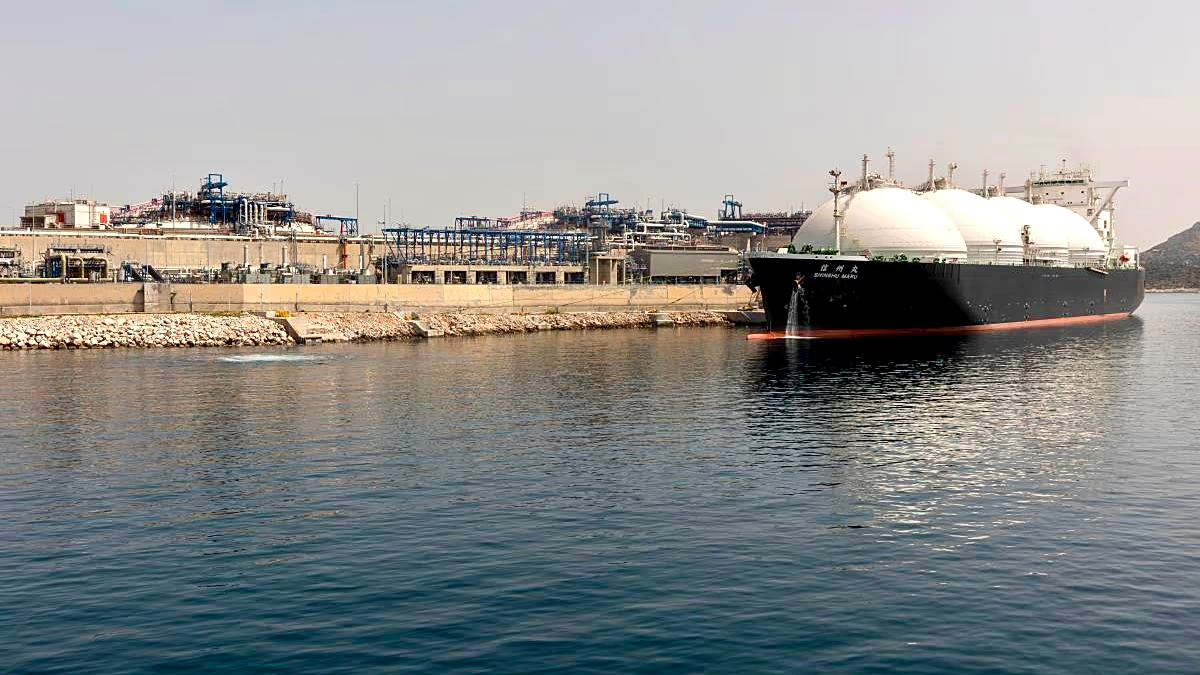
The Eastern Mediterranean’s importance is often measured by its gas discoveries, but reserves acquire strategic value only when they can reach consumers. Egypt’s Zohr, Israel’s Tamar and Leviathan, and Cyprus’s Aphrodite, Glaucus and Cronos have given the basin a substantial resource base. Yet Egypt occupies the pivotal position because its Idku and Damietta plants are the region’s only large-scale liquefaction facilities. Israel already sends gas to Egypt by pipeline, and the July 2026 investment decision on Cronos envisages moving Cypriot gas through Egyptian infrastructure for export from 2028. The region can help Europe diversify from Russian gas, but only through reliable production, secure pipelines and viable contracts. Discoveries alone do not create energy security
Politics continues to constrain that potential. Maritime boundaries remain disputed, Cyprus is divided, and governments advance incompatible interpretations of exclusive economic zones. Turkey’s “Blue Homeland” doctrine challenges arrangements promoted by Greece and the Republic of Cyprus, while Ankara rejects licensing decisions that ignore Turkish Cypriot claims. The East Mediterranean Gas Forum, launched in 2019 and established as a regional organisation in 2020, brought Egypt, Cyprus, Greece, Israel, Italy, Jordan and Palestine into a common framework but left Turkey outside. It has regularized cooperation among members, while Ankara’s exclusion has hardened divisions that prevent basin-wide planning