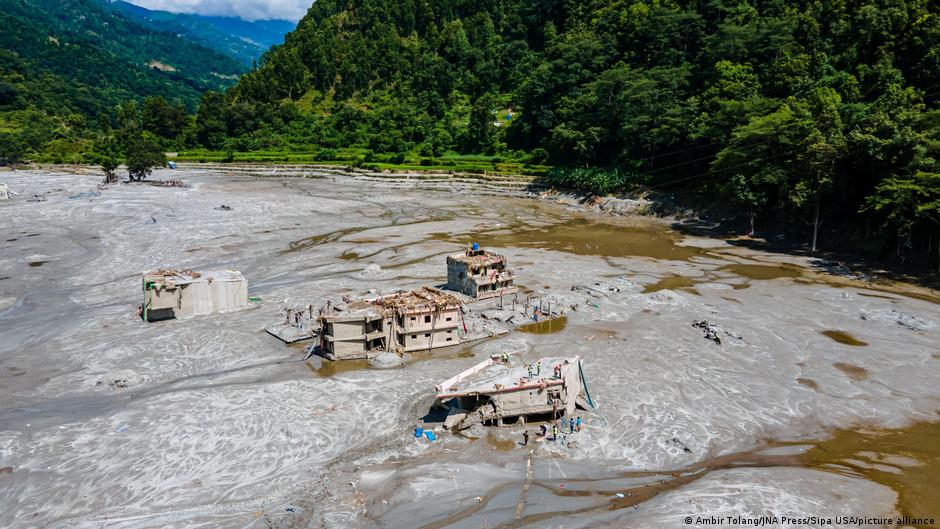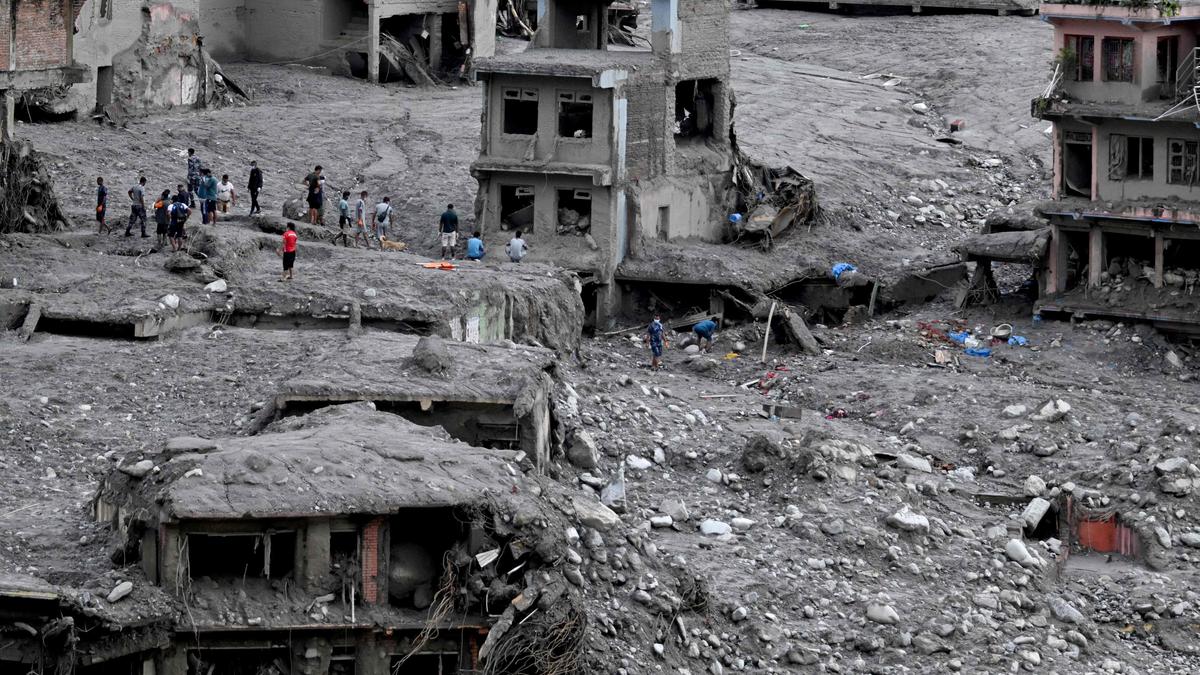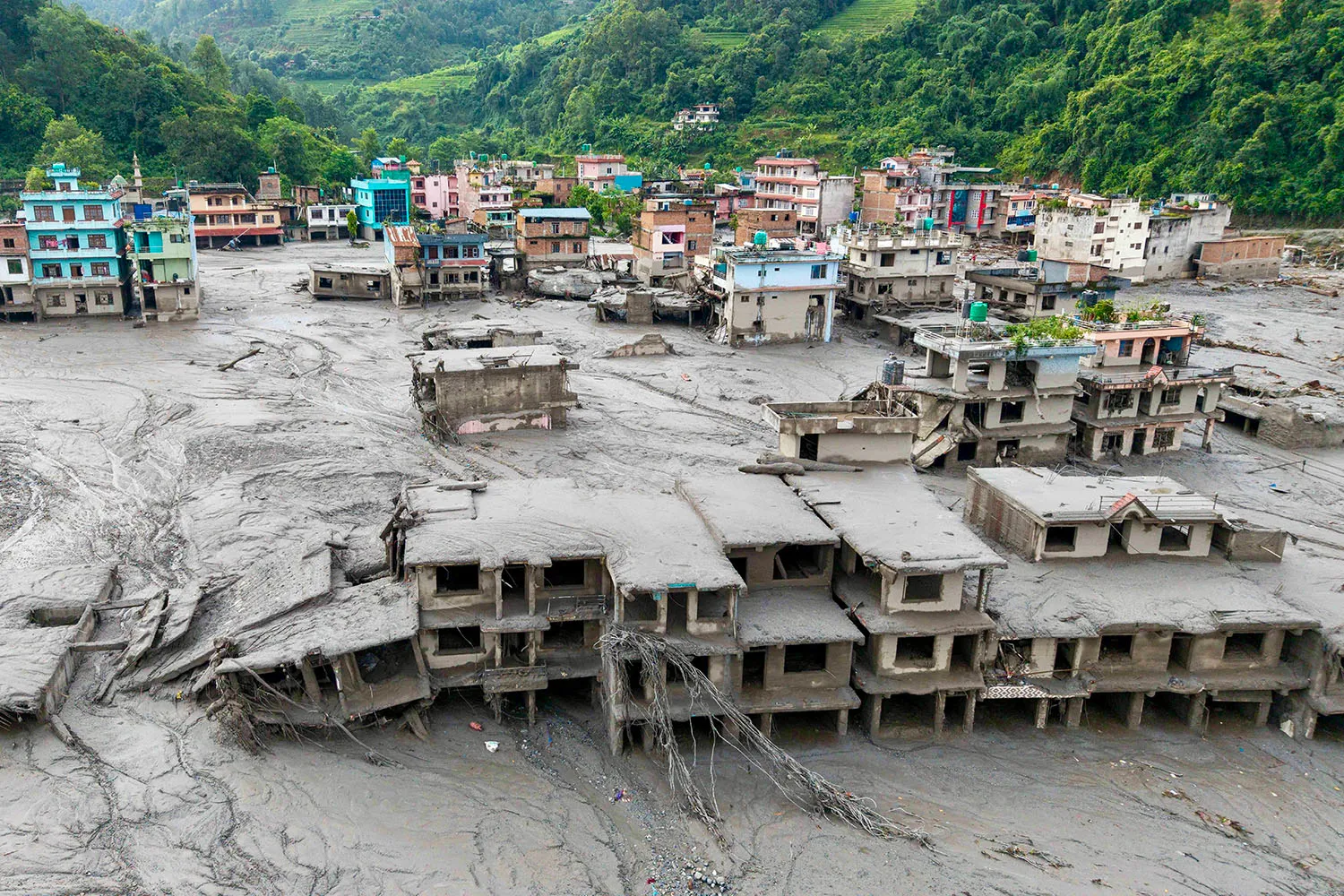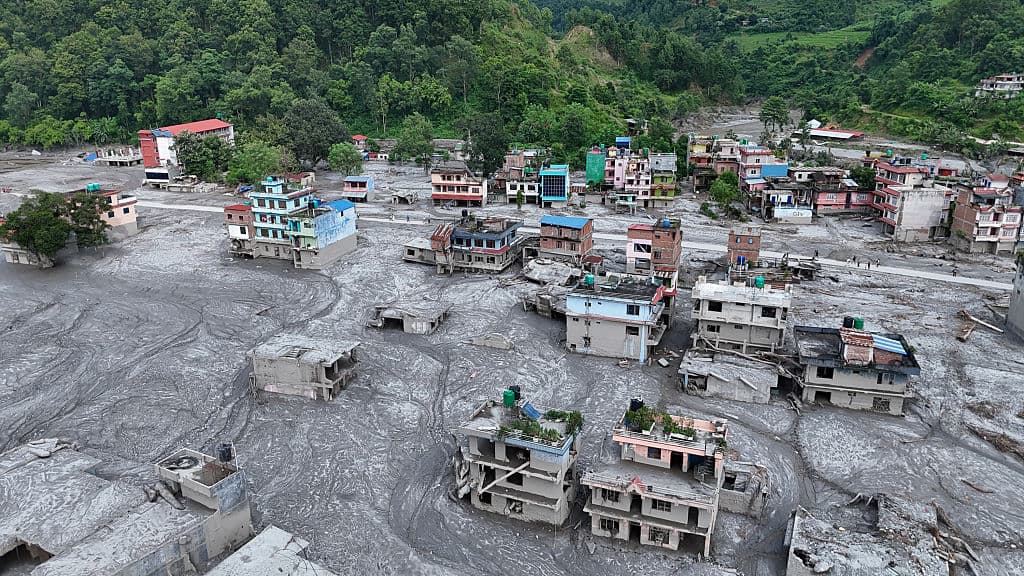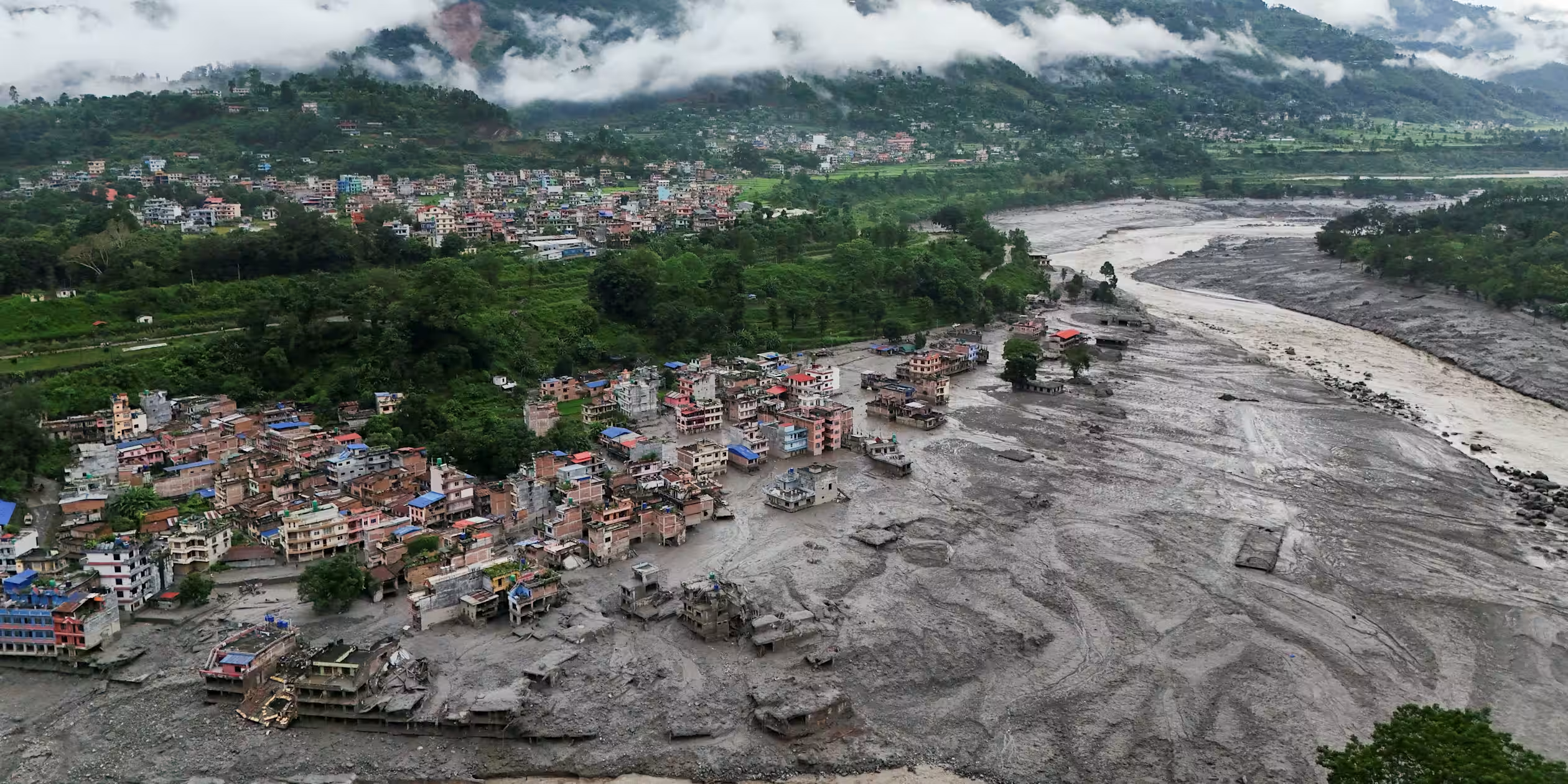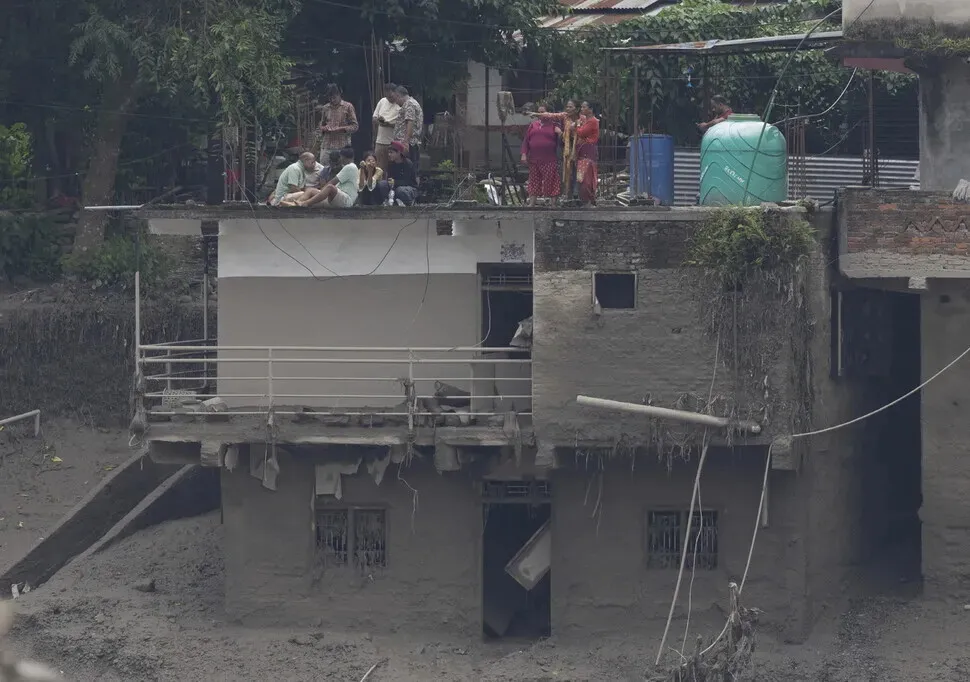
Residents of Trishuli Bazar in north-central Nepal stand atop a building after catastrophic flooding in the region on Aug. 26, 2026. (EPA/Yonhap)
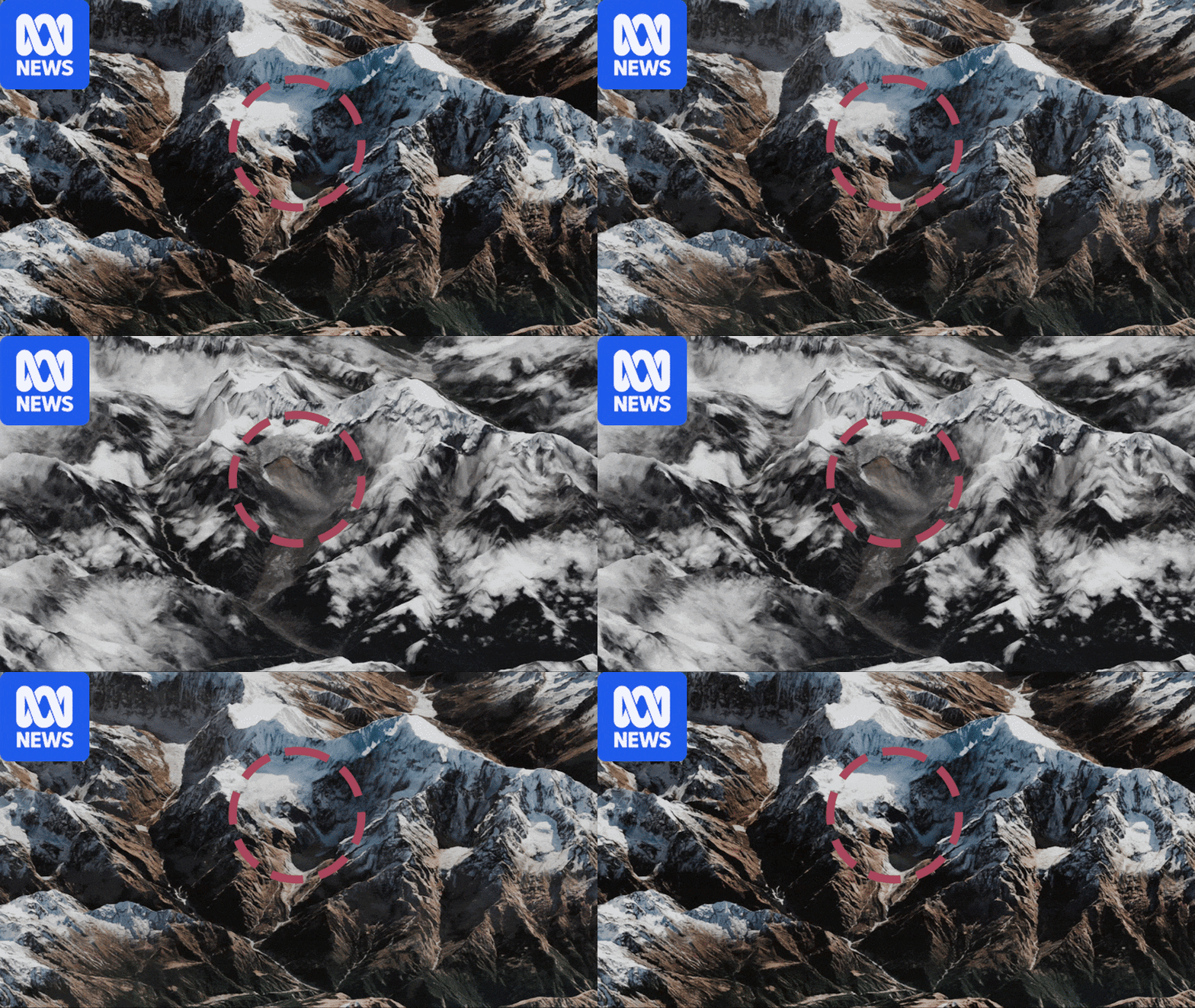
Though time is needed to assess exactly what led to the recent flooding and landslides in Nepal, many experts say the underlying cause is climate change, specifically the effect of human-emitted greenhouse gases during industrialization that have raised global temperatures.Though difficult to pinpoint why a certain region or glacier collapsed, what is almost certain is that the rapid rise in global temperatures has created conditions conducive to disasters, such as the melting of glaciers and permafrost in high-altitude areas, that change topography and waterways.Jon Tunnicliffe, an associate professor of environment at the University of Auckland in New Zealand, said, "Climate change can amplify hazards that already exist by altering the thresholds at which one process triggers another."Alpine regions, along with the two poles, are part of the Earth’s cryosphere and are among the first regions to be impacted by climate change. Since the melting of glaciers and permafrost drastically changes the topography and waterways of alpine regions, experts assess that such regions are at a greater risk of natural disasters compared to the polar caps. The Himalayan mountain region, which is also referred to as the “third pole” as it holds the largest store of ice and snow outside the polar caps, is also warming rapidly. A 2026 study showed that between 1990 and 2020, glaciers across the Hindu Kush Himalayas (HKH) experienced a “12% reduction in total area” and a “9% decline in estimated ice reserves.”