Posted on : 2026-09-03 17:28 KST Modified on : 2026-09-03 17:28 KSTOnce temperatures overshoot the 1.5°C threshold, the goal would be to bring warming back down to 1.5°C or below by the end of the century
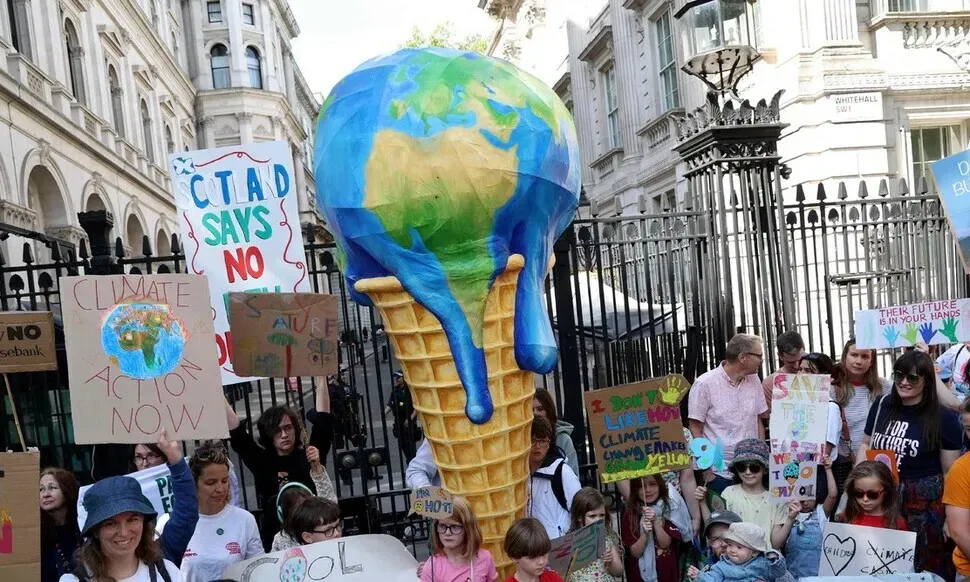
Parents and children with the UK climate group Mothers Rise Up take part in a demonstration to highlight the impact of record-breaking heat on children due to climate change, near Downing Street in central London on Sept. 1. (AFP/Yonhap)
The UN has acknowledged for the first time that limiting global warming to 1.5°C, the central goal of the Paris Agreement, is no longer attainable, and is now calling on countries to pursue “net-negative CO2 emissions” as a new climate objective. The UN Environment Programme admitted that global temperature rise is set to cross the 1.5°C warming threshold within “the next few years” in a new report published Wednesday. In the most optimistic scenario, peak temperature rise is expected to stay at 1.8°C during the 21st century. Under current climate policies, projected global warming is to reach 2.6°C. In 2015, 196 parties signed the Paris Agreement, expressing concern over dangers posed by warming of 1.5°C and higher above pre-industrial levels and vowing to pursue efforts to limit the temperature rise to 1.5°C. However, the burning of fossil fuels and other factors have caused current warming levels to reach approximately 1.4°C relative to 1850-1900. Although global temperatures in 2024 exceeded 1.5°C above pre-industrial levels, experts have not yet determined that the Paris Agreement target has been breached because the threshold is measured as a 20-year average. After long championing the goal of limiting global warming to 1.5°C, the UN has admitted that the target is now effectively out of reach. Instead, for the first time, it proposes that the goal be shifted from “avoiding overshoot to navigating it.”Once temperatures overshoot the 1.5°C threshold, the goal would be to bring warming back down to 1.5°C or below by the end of the century through reductions in greenhouse gas emissions. To achieve this, the UNEP says countries must go beyond simply reaching carbon neutrality and instead achieve net-negative emissions.