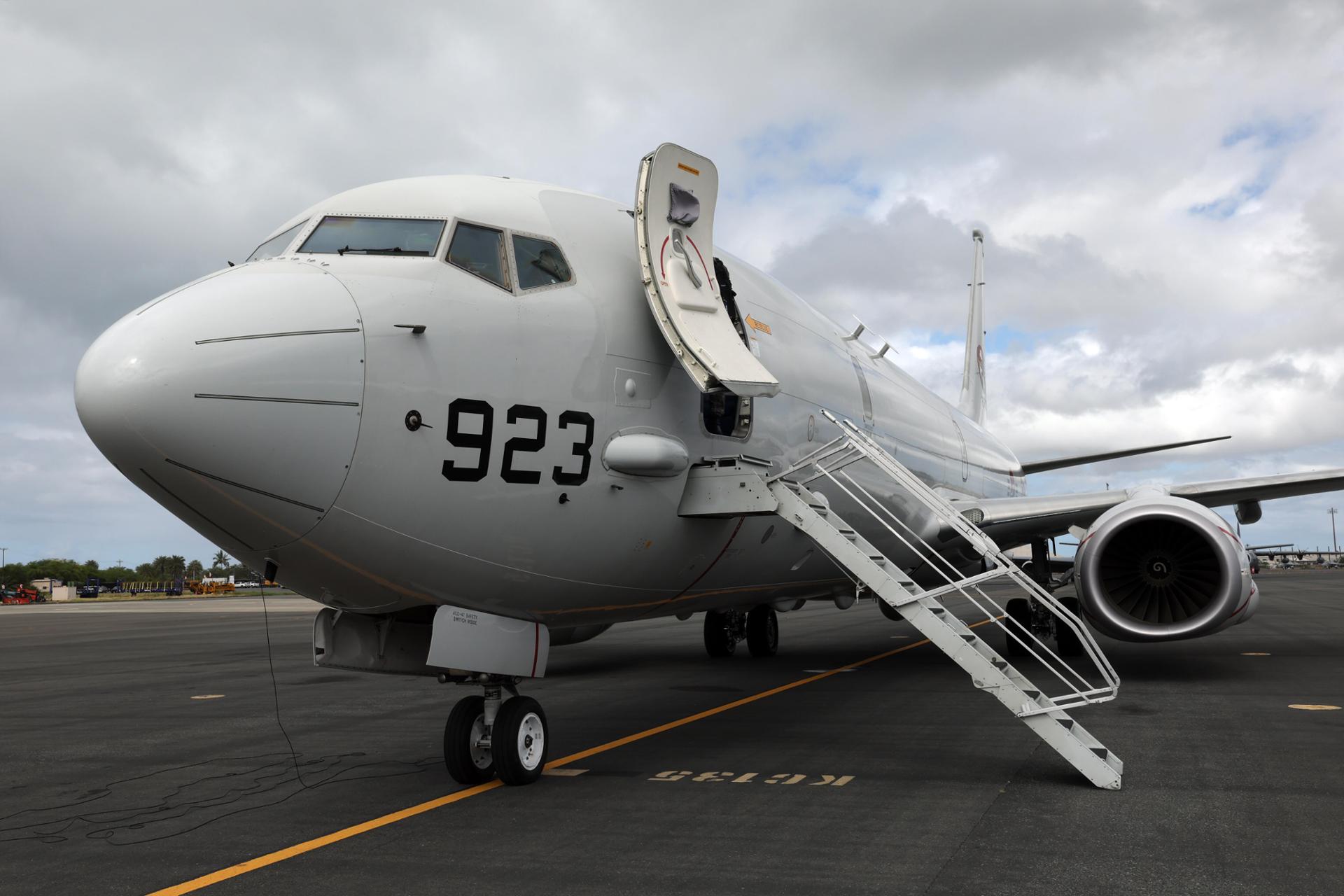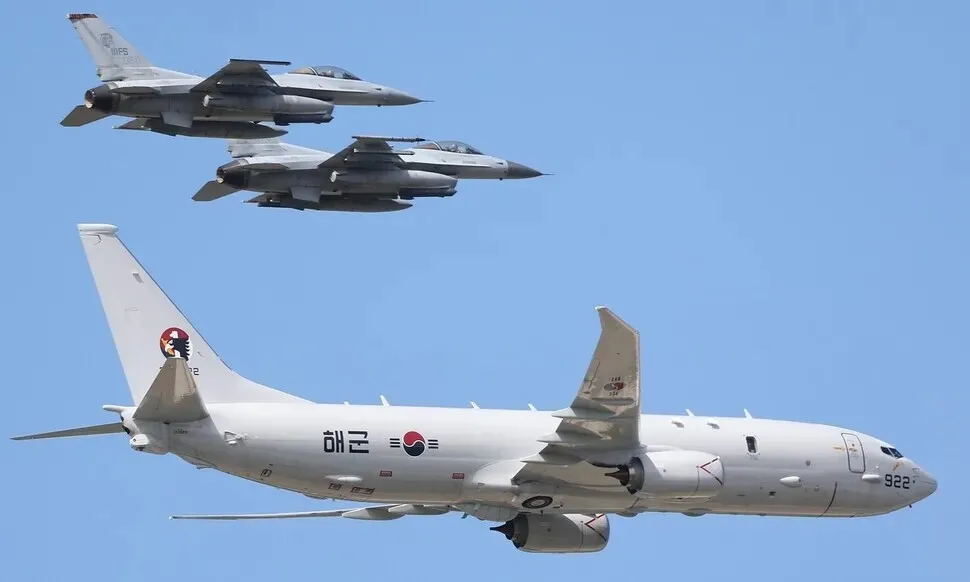
Korean Navy’s maritime patrol aircraft flying during a media day for Armed Forces Day in 2024. (Yonhap)
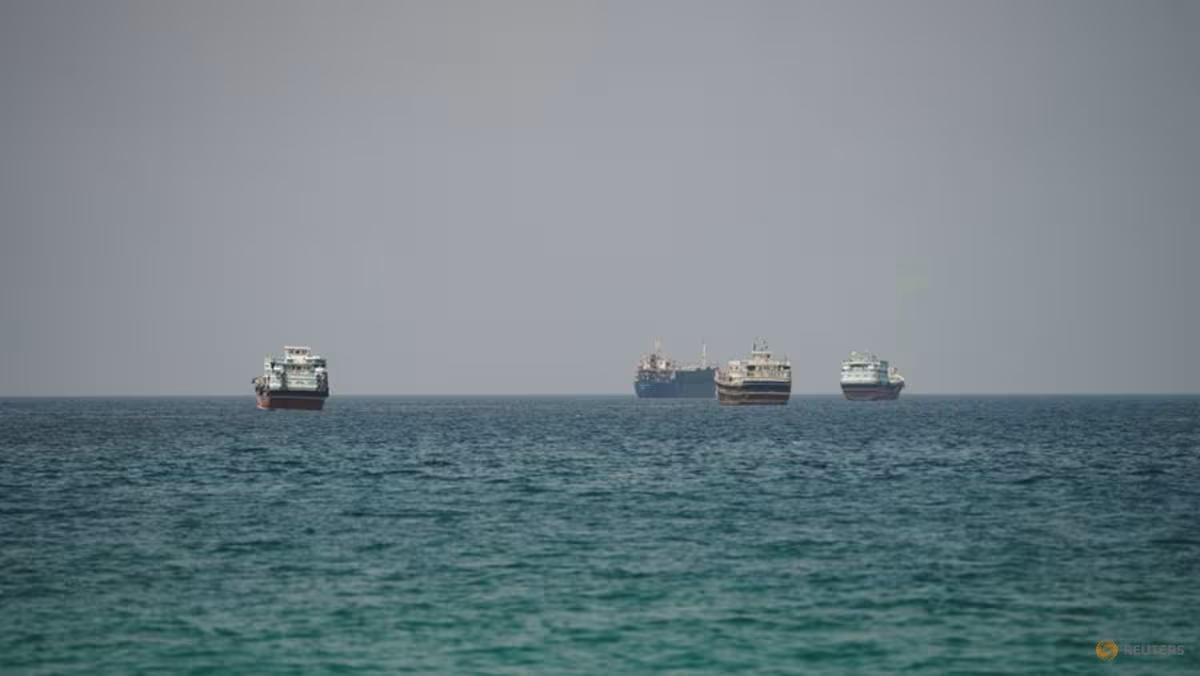
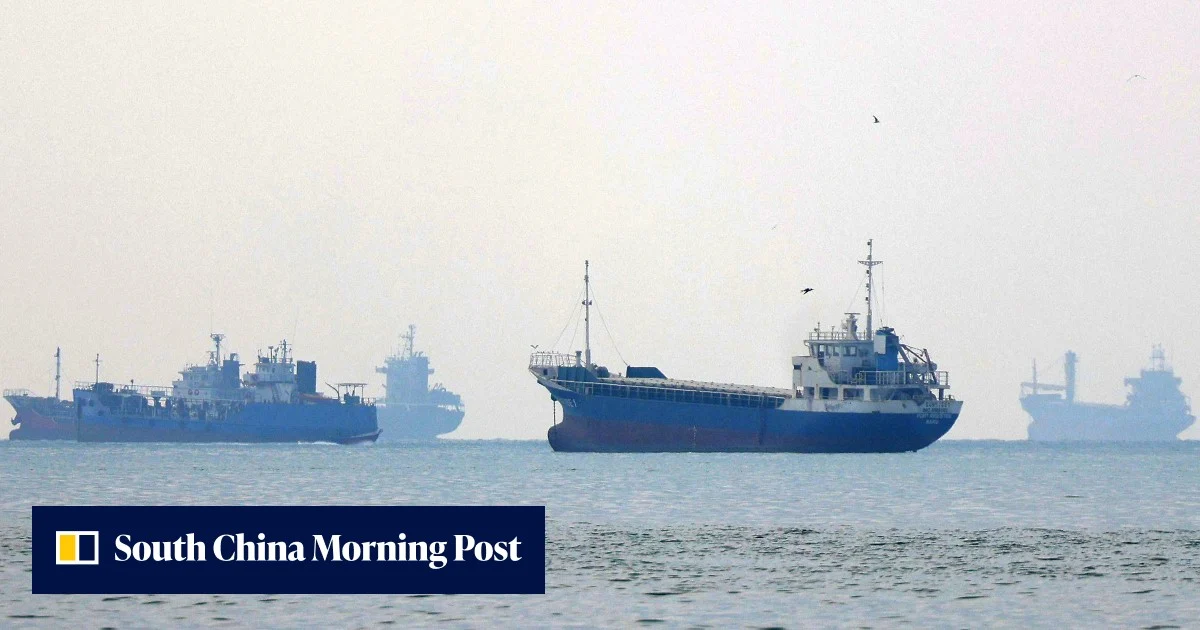
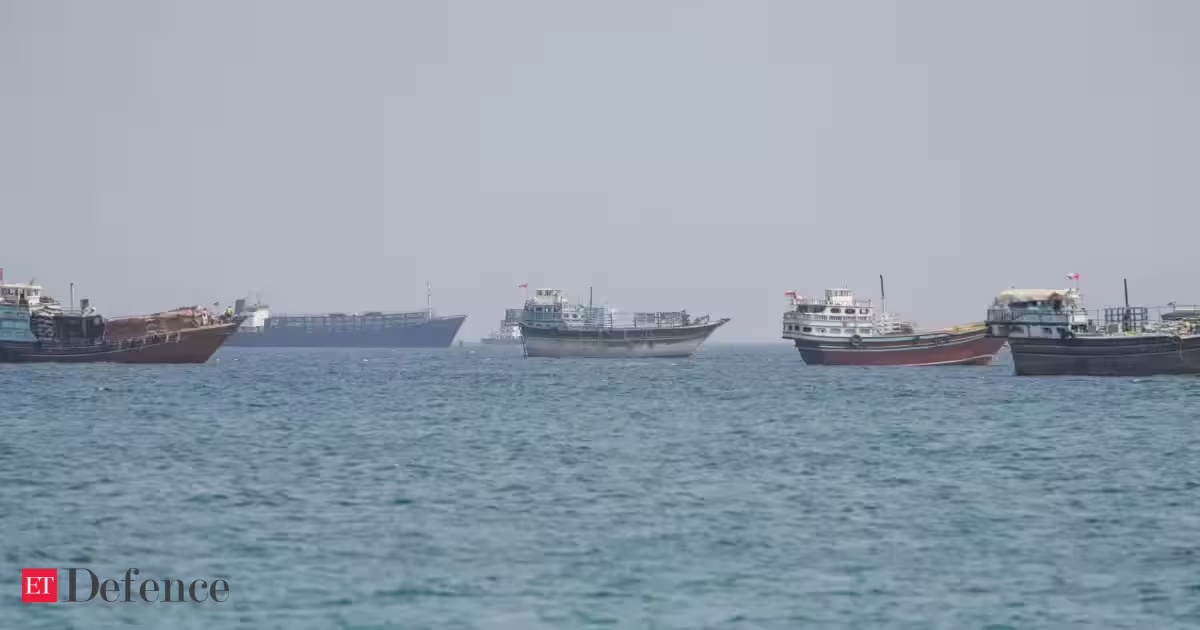
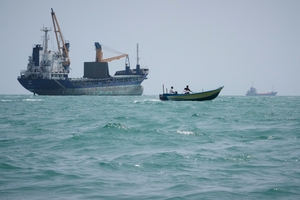
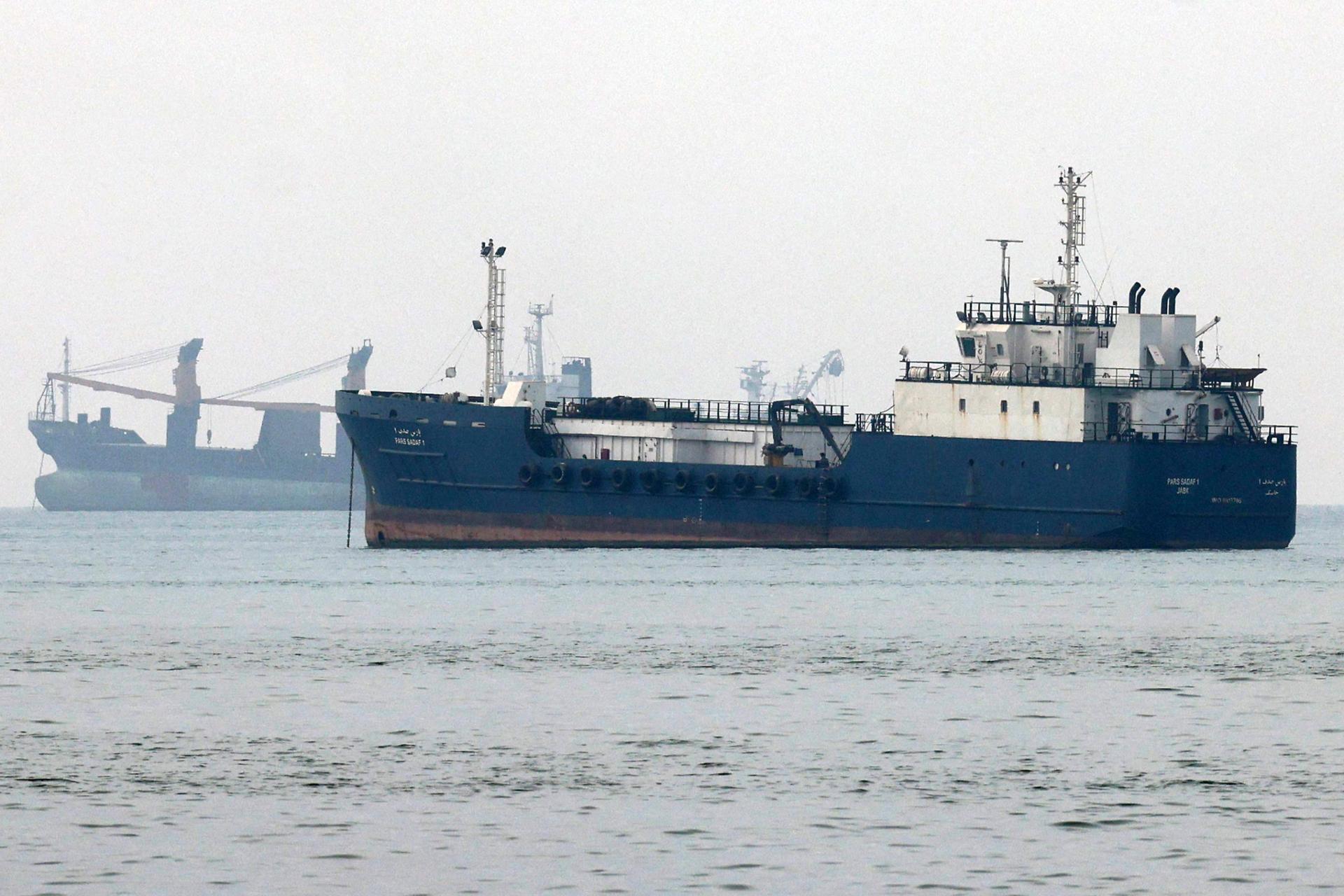
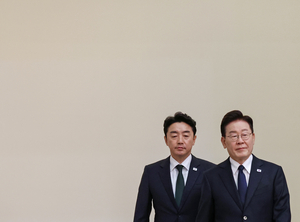
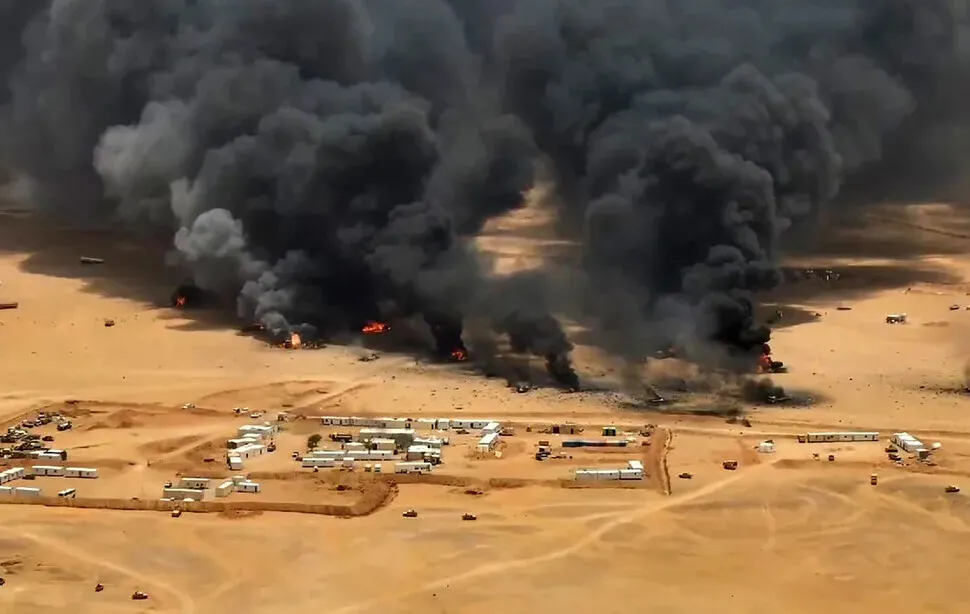
The Korean government has sent a survey team to assess the situation in the Strait of Hormuz, the first step in preparations for a possible overseas military deployment.The move comes about six months after US President Donald Trump in March called on Korea and four other countries to dispatch naval vessels to the critical waterway, shortly after the outbreak of the US and Israel’s war with Iran.Korea’s Ministry of National Defense said Tuesday it had sent a survey team to the United Arab Emirates, which would serve as the operational base for any deployed Korean force, to assess regional conditions and security. But the ministry stressed that the team was not being sent on the assumption that an actual deployment would follow.Nevertheless, dispatching a survey team is the normal step taken after the government determines that the need for a deployment warrants further examination and begins preparing for that possibility. When an ally requests military assistance, the Ministry of National Defense and the Ministry of Foreign Affairs first conduct an internal review. If they conclude that a deployment merits consideration, they then send a survey team to the proposed location.The UAE, where the survey team has been dispatched, hosts military forces from the US and other countries as well as support facilities. The team is believed to be examining military bases and ports that Korean forces could use, along with maintenance and logistics support and the broader operational environment.The team is likely to focus in particular on Al Dhafra Air Base near Abu Dhabi, one of the principal US military facilities in the Middle East and a major operating location for US Air Forces Central.The government has seriously considered deploying P-8A Poseidon maritime patrol aircraft, and the survey team is expected to assess whether Al Dhafra can support operations by aircraft of that kind.Once the survey is completed, the government is expected to begin the formal process of deciding whether to proceed with a deployment.Under Korean law, an overseas troop deployment requires a report to the National Security Council (NSC), Cabinet review, and approval by the National Assembly. After returning to Korea, the survey team will prepare a report for the NSC.Based on the survey’s findings, the chairman of the Joint Chiefs of Staff will review a preliminary deployment plan and submit it to the defense minister, who will then present it to the NSC.If the NSC approves the plan, the government will then draft a deployment authorization bill for Cabinet deliberation and presidential approval. The bill must specify essential details such as the size of the force, the duration of the mission and the duties assigned. A deployment is finalized only when the National Assembly passes the authorization bill.This process is expected to take some time, however, because the ruling Democratic Party has yet to reach an internal consensus and because the parliamentary calendar includes ministerial confirmation hearings and parliamentary audits beginning next month.Open opposition to a deployment has also emerged within the Democratic Party.Hong Ihk-pyo, who serves as President Lee Jae Myung’s senior secretary for political affairs, said Tuesday on a livestream with the commentator Kim Ou-joon that the government’s position had not yet been finalized.“We’re not at a stage of the government deciding on its position yet,” Hong said. “This isn’t something that the public, supporters of the Democratic Party, or supporters of the Lee administration need to be concerned about.”He added that Korea, as a sovereign country, would make its own judgment rather than automatically bowing to US pressure.Korea currently has four military contingents deployed overseas: the Hanbit Unit in South Sudan and the Dongmyeong Unit in Lebanon on UN peacekeeping missions, the Cheonghae Unit off Somalia as part of a multinational force, and the Akh Unit in the UAE on a defense cooperation mission.If the Hormuz deployment is ultimately approved, it would mark the first time in about 23 years that Korea has sent troops overseas at the US’ request, since the deployment to Iraq from 2003 to 2008.During Trump’s first term, the US also asked Korea and other countries in 2020 to participate in a multinational effort to protect shipping through the Strait of Hormuz amid heightened tensions. Rather than sending a new unit, Korea expanded the operational area of the Cheonghae Unit, which was already operating in the Middle East, and carried out what the government described as independent operations.Since joining the United Nations in 1991, Korea has agreed to 17 overseas troop deployments at the unit level, excluding extensions of existing missions. The most recent was the Araw Unit, which helped the Philippines recover from damage caused by a typhoon from 2013 to 2014.By Kwon Huk-chul, staff reporterPlease direct questions or comments to [english@hani.co.kr]