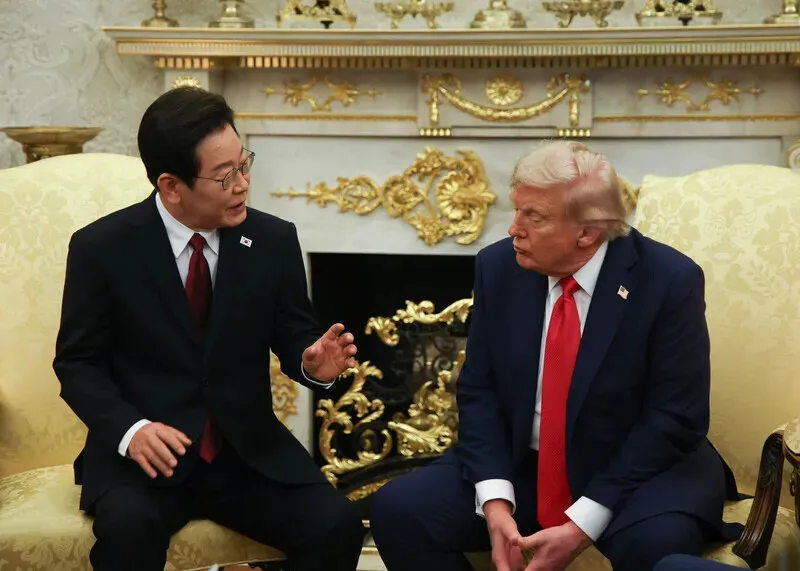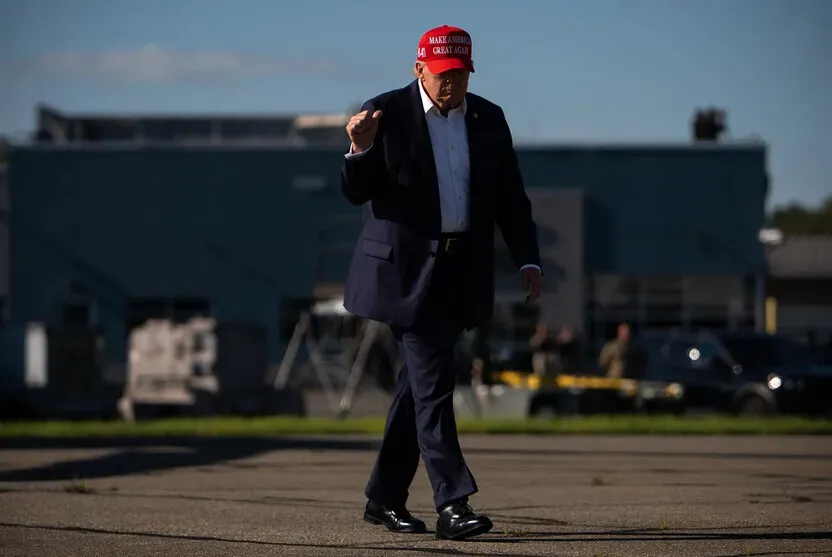
US President Donald Trump gestures to reporters while heading to Air Force One at an airport in Norristown, New Jersey, on Sept. 8, 2026. (AP/Yonhap)
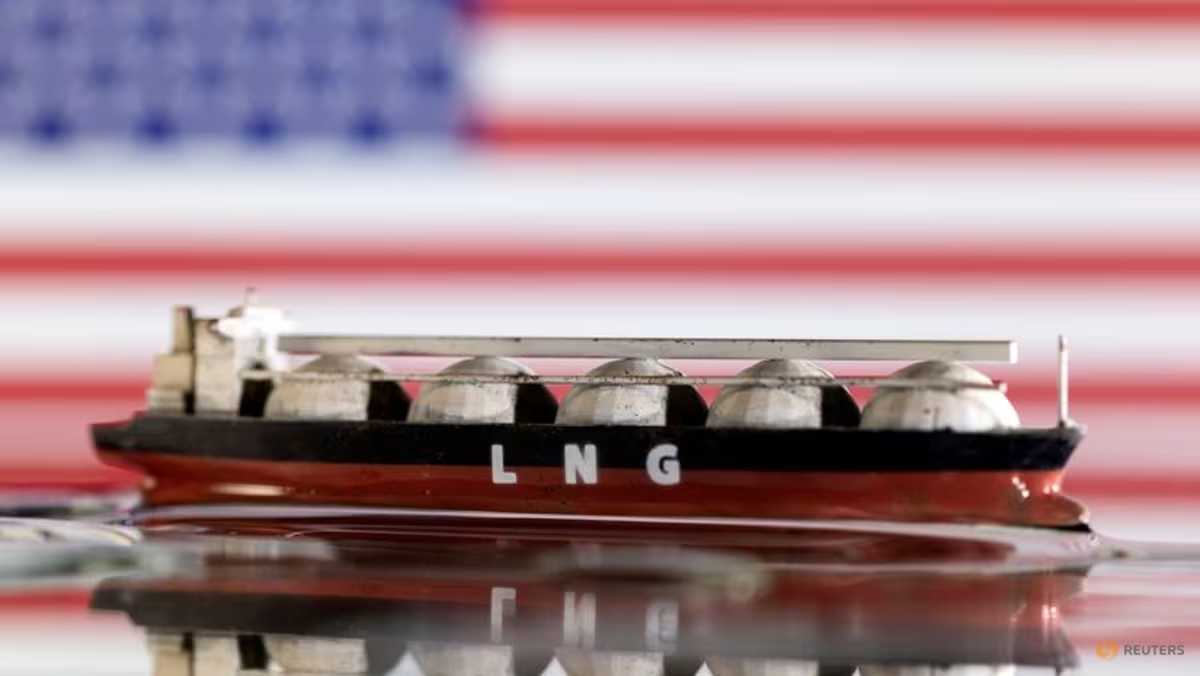
Korea’s US$200 billion investment package in the US is starting to take shape.Korea and the US have selected the combined-cycle gas-fired power project in Encinal, Texas, as the first investment under the program.An initial US$2.2 billion or more is expected to be committed this year, with Seoul planning to announce its US investment plan on Sept. 18 and make the first transfer of funds at the end of the month.Korea must rigorously scrutinize these investments under the guiding criterion of whether they meet the requirement of “commercial reasonableness” — in other words, whether Korea can recover the principal and earn a profit.Now that negotiations over the US investment package have wrapped up, Korea should use that as leverage to take a more assertive posture in security and trade talks so as to safeguard the national interest.As the Hankyoreh reported on Tuesday, Korea has whittled its investment options down to three: a US$120 billion framework to build eight nuclear reactors in the US, the US$67 billion Alaska LNG project, and the US$22.3 billion combined-cycle gas-fired plant in Texas.Seoul is also pursuing the acquisition of a minority stake in Westinghouse as part of the eight-reactor project, but is apparently circumspect about the Alaska LNG project.Focusing the US investment package on energy infrastructure makes sense, given the rapid growth in US energy demand amid the proliferation of data centers for artificial intelligence. Texas, in particular, is known to face acute strains on its power supply.But rising demand does not guarantee profitability. To generate returns in the US despite its high labor costs and weak manufacturing ecosystem, Korea must carefully vet long-term power purchase agreements, construction costs and the risk of delays in permitting and approvals.Even greater prudence is needed for the eight-reactor project, which would account for 60% of the total US$200 billion package.Korea must not commit to a total figure before ensuring the projects will be profitable. Otherwise, we risk ending up in a situation where Korea is footing the bill for projects controlled by Westinghouse for its own profit.Korea should push hard for the adoption of Korean-designed reactors and ensure that the agreements spell out Korean companies’ involvement in design, construction and operation, the distribution of profits, and responsibility for cost overruns.The Alaskan LNG project poses even more risks, considering that even oil titans like ExxonMobil backed out of the project in the mid-2010s due to lack of profitability. The Trump administration may be driving hard bargains ahead of the midterms in November, but there’s no reason for Korea to take on a project that bears us no benefit. Including US$150 billion in shipbuilding cooperation, Korea’s pledged investments in the US run a total of US$350 billion, or 470 trillion won. Pressure from the US gave Korea little choice but to sign on to an agreement that poses an excessive burden considering the size of Korea’s economy and foreign exchange market. Over the past year, the US has continued to press Korea on security and trade matters for supposedly slow walking the process of confirming investments. Now that the first target for investment has been decided, it’s time for us to speak up and make ourselves heard on matters of security and trade. If Korea says yes to every one of the US’ endless list of demands, it shouldn’t be surprised when it’s treated like a “money machine,” to borrow Trump’s term. Please direct questions or comments to [english@hani.co.kr]