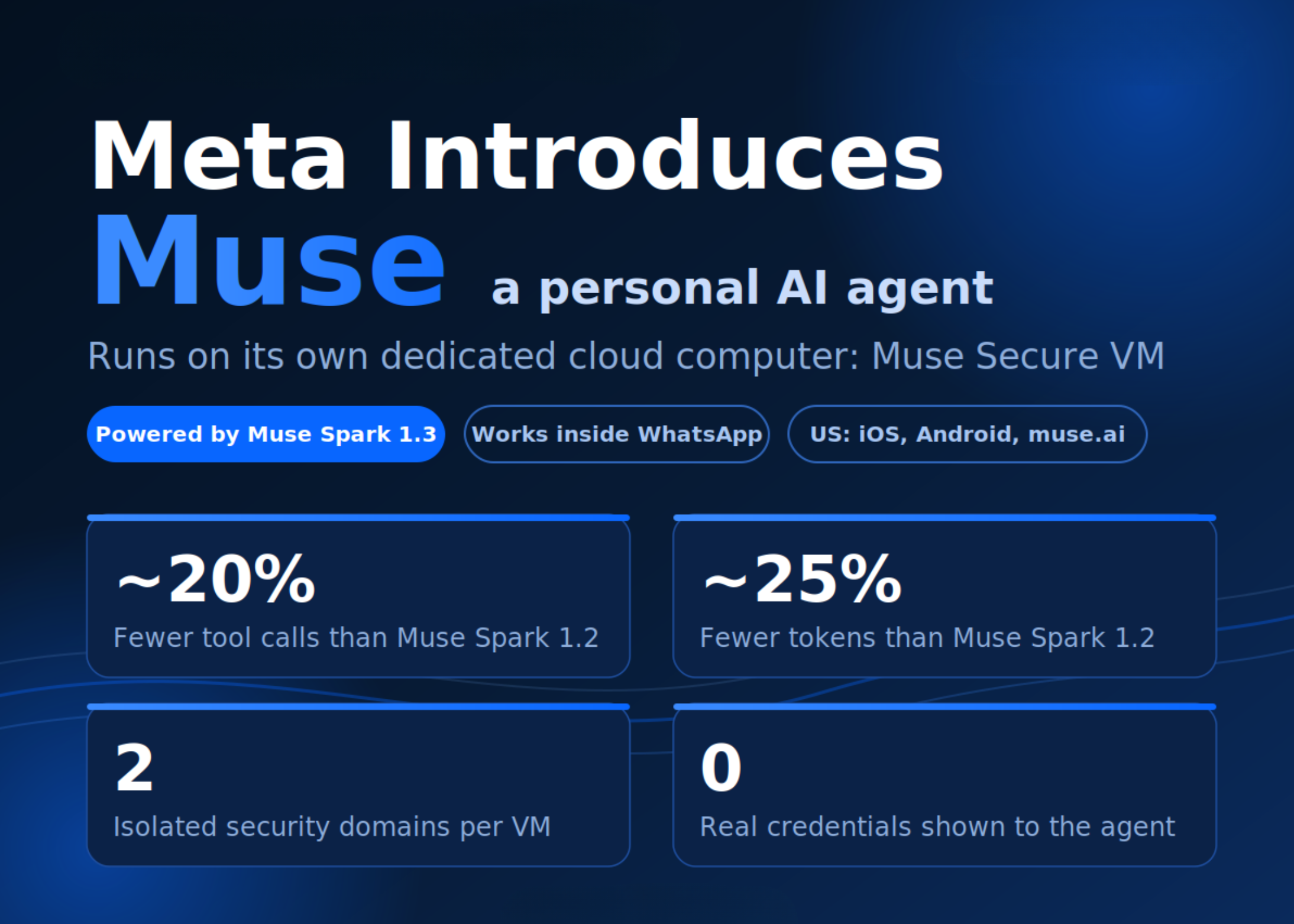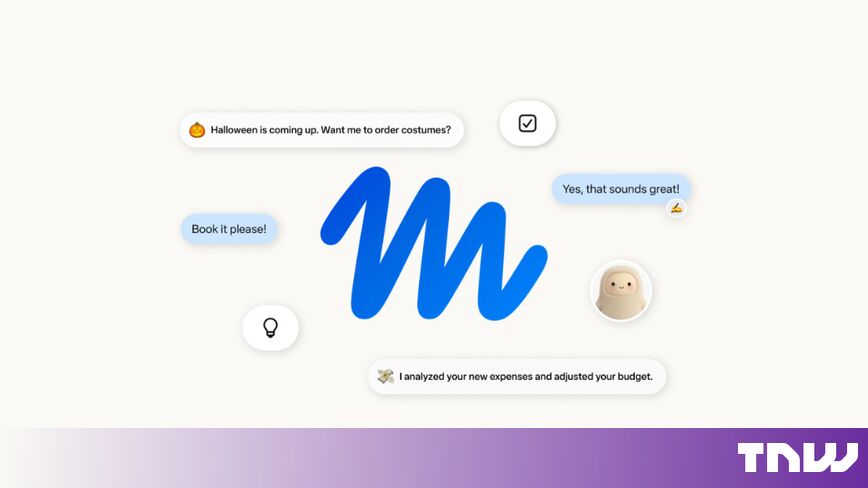
Personal assistants have been stuck on the phone for a decade, and the phone was never built to let software act on somebody's behalf. Apple's review guidelines bar an App Store app from producing and running other software on the device. Android and iOS both keep one app out of another's data, and both suspend background work to protect the battery. Meta's answer, shipped on 8 September 2026, was to stop arguing with the handset. Muse runs on a Linux virtual machine that Meta rents to each user, with its own file system, its own terminal and its own copy of Chromium. The app on the phone is not much more than a window onto that machine. The design decision carries consequences the launch material does not dwell on. The result is an agent that never sleeps, writes and runs its own code, and arrives at websites as the person rather than as a declared robot. Whether that counts as freedom or as exposure depends a great deal on which side of the login screen the question is asked from.Key highlightsAbout The AuthorAt heart, I am a storyteller drawn to the watershed moments that bend the technology landscape. I braid narrative with data, humanise statistics, and trace the arc from first spark to world-changing impact. My reportage, features and reviews are witty, sardonic, visual and vivid, using anecdote to illuminate rather than eviscerate.
Meta Muse Explained: The Cloud PC Behind Its 24/7 Agent
Meta launched Muse on 8 September 2026, a personal AI agent for adults in the United States. Every user is given a dedicated Linux virtual machine in Meta's cloud, holding the agent, a Chromium browser and a separate permission guard called Sentinel. Muse is free with weekly limits, with plans at 20 and 100 dollars a month.
3,844 words~17 min read