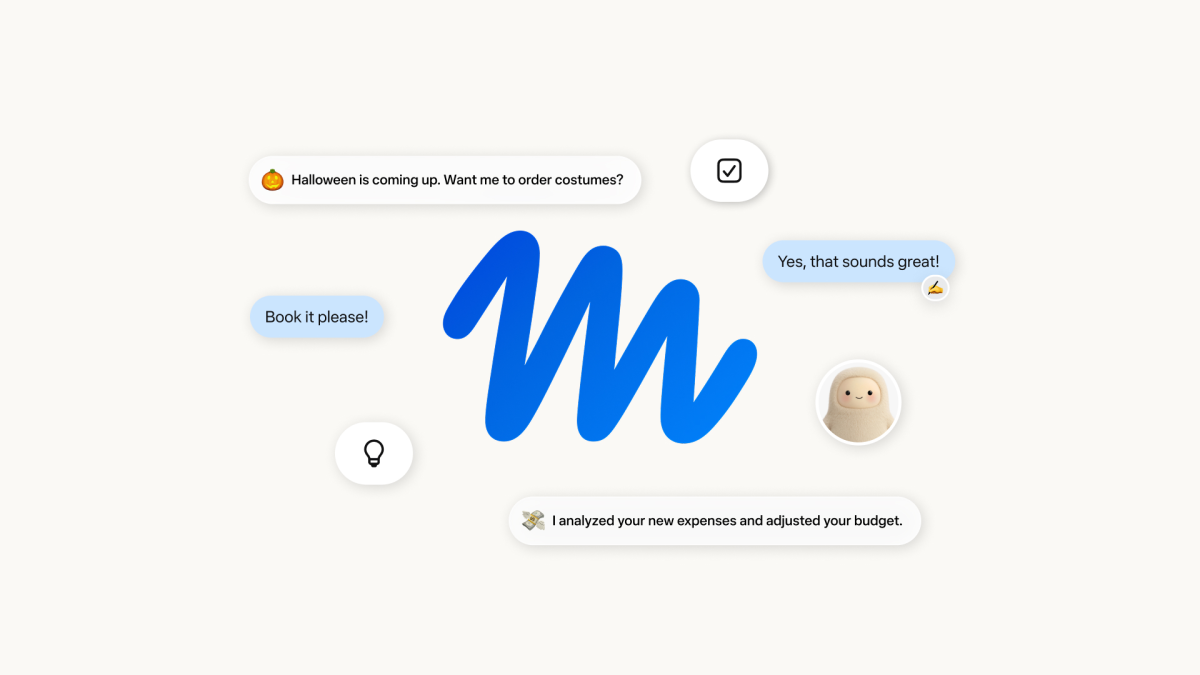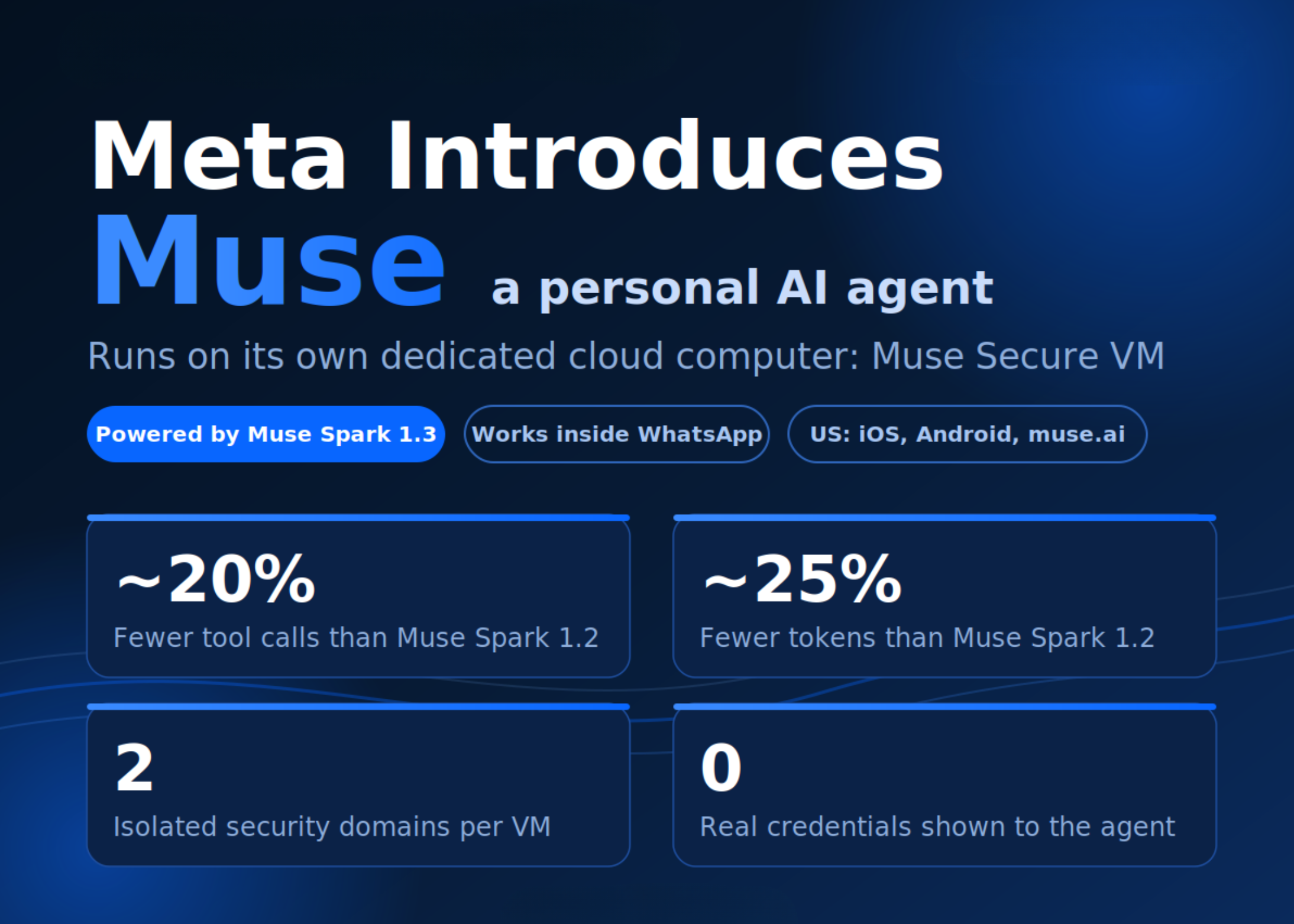
Today, Meta has introduced Muse, a personal AI agent that takes actions rather than just answering questions. Muse can send emails, book travel, negotiate bills, and pursue long term goals. It keeps working after you close the app and returns only when it needs approval. The bigger story for AI devs is architectural. Each user gets a dedicated cloud virtual machine, called Muse Secure VM, where the agent, its browser, and all credentials live in isolation. Is it deployable? Muse itself is a consumer service, rolling out now in the US on iOS, Android, and muse.ai, with a free tier and paid plans. Developers cannot self host Muse, but its underlying model, Muse Spark 1.3, is available today through Meta Model API and Muse Code, with an open weights release on Meta’s stated roadmap.
What Muse Actually Does
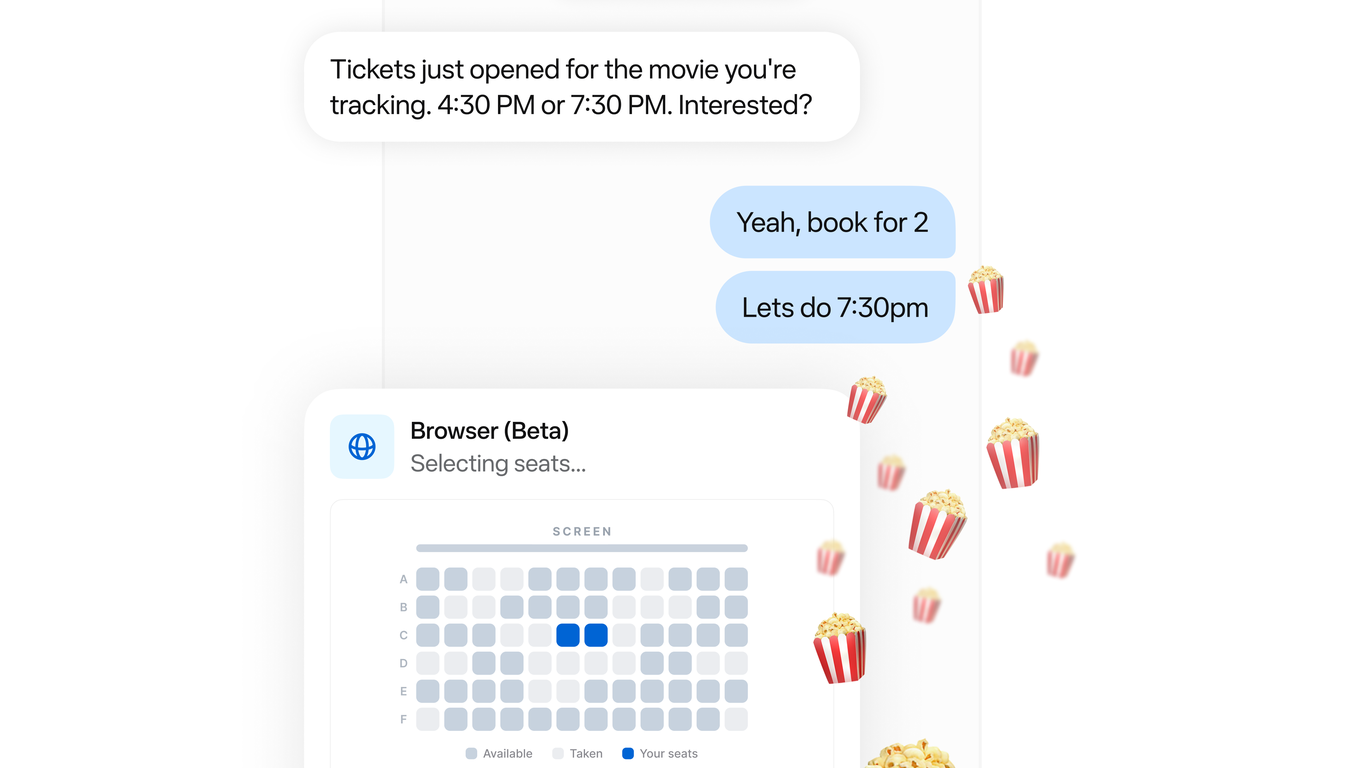
Muse is built around messaging. Users describe a task or a goal, and the agent plans and executes. It can open its browser, fill forms, and negotiate on a person’s behalf. Meta’s examples include selling a car for more, lowering a bill, and adapting a training plan. Muse also remembers context across conversations. It can turn a saved Instagram recipe reel into a grocery list and recall friends’ dietary restrictions. Sensitive steps, such as sending an email or completing a purchase, always pause for user approval. A full audit trail shows everything the agent has done and plans to do.