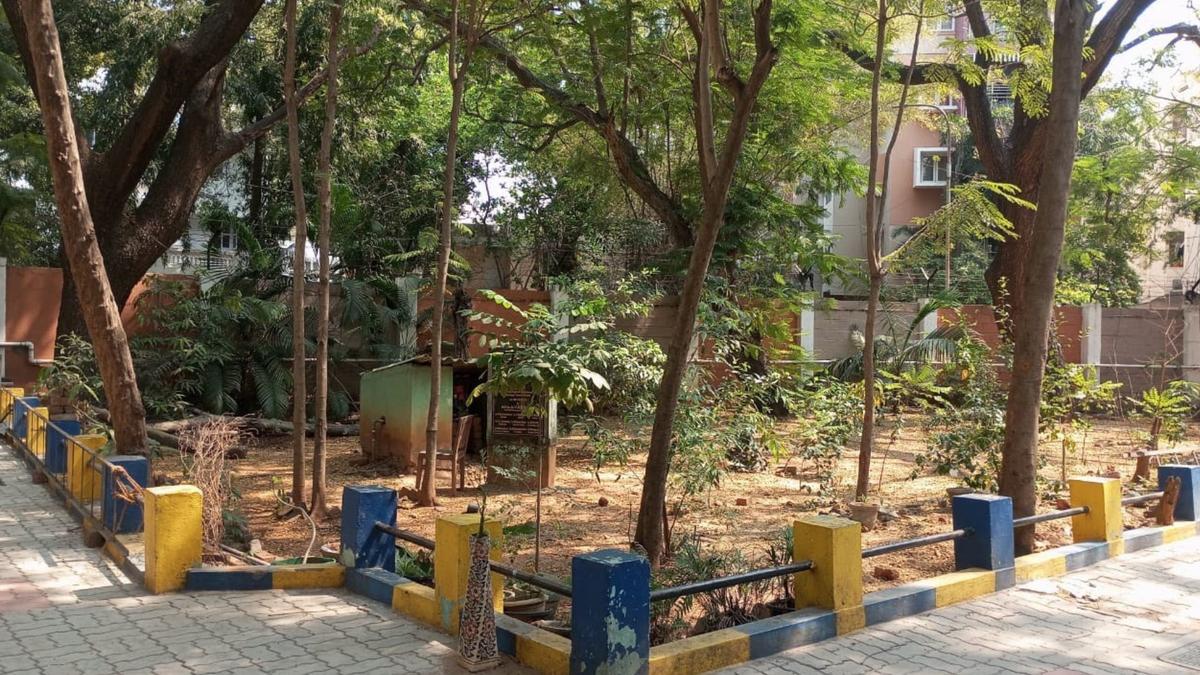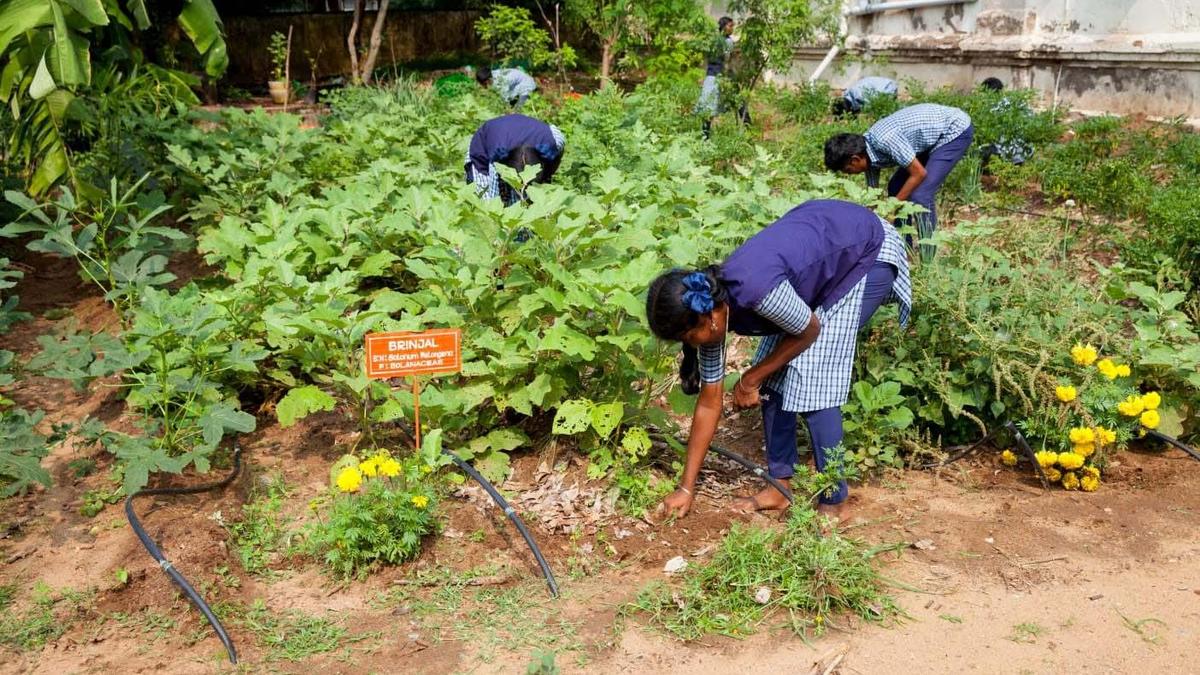
A herbal garden developed at the Government Higher Secondary School at Manjakuppam in Cuddalore district.
| Photo Credit: SPECIAL ARRANGEMENT
At the Government Boys Higher Secondary School in Manjakuppam in Cuddalore, environmental learning is taking root beyond the classroom. Solar panels, a herbal garden, rain-water harvesting facilities and a compost pit now offer students practical exposure to renewable energy, water conservation, waste management and biodiversity.The transformation is part of Cuddalore district’s Green School programme under the District Climate Change Mission, through which 11 government schools have been developed as climate-responsive campuses. The initiative seeks to make sustainability a routine part of school life, encouraging students to carry environmentally responsibile practices to their homes and communities.The programme combines green infrastructure with activity-based learning tailored to each school’s needs.Implemented through the Department of Environment and Climate Change, the programme combines green infrastructure with practical environmental education for students. It includes photovoltaic systems, herbal gardens, rainwater harvesting facilities, borewells, compost pits, waste management systems and green space development, based on the requirements of individual schools.The programme was implemented in four phases. The Government Boys Higher Secondary School in Tittakudi was included in the first phase. The second phase covered government schools in Manjakuppam, Kadampuliyur, Vriddhachalam, Panruti and Reddiyur while the subsequent phases covered schools in Oraiyur and Chidambaram.According to Collector Sibi Adhithya Senthil Kumar, “the initiative is designed to take environmental education beyond classroom-based lessons by allowing students to observe and take part in sustainable practices on their campuses. Solar systems will help students understand renewable energy generation and clean-energy use, while herbal gardens are intended to serve as living learning spaces for studying plant diversity and uses of medicinal plants.”“Rainwater harvesting structures and related water facilities will promote conservation and responsible management of water resources. Compost pits and waste management facilities will enable schools to handle biodegradable waste scientifically and convert it into compost for use in gardens and green areas,” he further added.The green spaces developed on campuses are also expected to improve the school environment and provide the students opportunities to engage with nature.According to S. Manivel, Green Fellow, Department of Environment and Climate Change, “the programme aims to encourage students to adopt practices relating to water conservation, renewable energy, waste management, biodiversity protection and sustainable living, with the expectation that the awareness generated in schools will extend to homes and local communities.” Published - September 08, 2026 09:09 pm IST