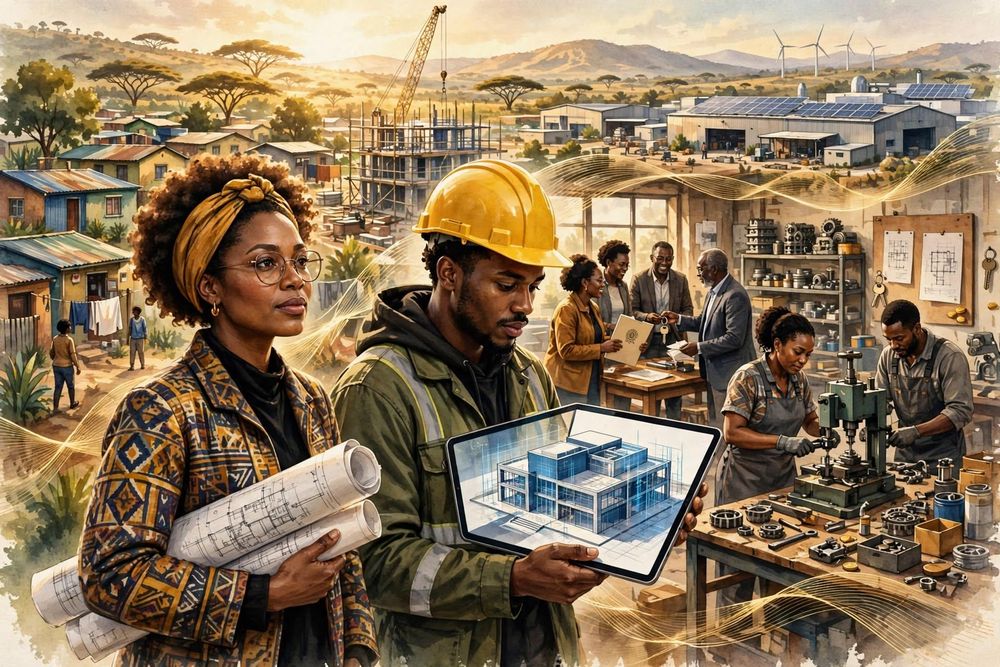
As South Africa advances into the future, the pivotal question remains: how are we reimagining our economic landscape to empower the Black majority and ensure sustainable success for generations to come?
South Africa’s Black majority has spent thirty-two years exercising political power while remaining far less successful at accumulating the economic power needed to actually reshape the country. That is not a criticism of democracy.
It is a description of its unfinished business.That contradiction deserves more attention than it receives. We have become exceptionally good at responding to racism. We debate racist statements, commemorate historical injustices, contest symbols and revisit the crimes of apartheid, often rightly so.
But there is another question we should be asking with equal urgency: What are we building?Because political liberation does not automatically produce economic power. And economic power is not simply about having jobs. It is about owning productive assets, controlling capital, building companies, generating intellectual property, creating institutions, influencing markets and possessing the purchasing power to shape what an economy produces.
This is where the conversation about Eskom becomes instructive. The current tendency to evaluate Eskom primarily through the language of profit and loss misses something fundamental about the institution’s original developmental purpose. Established as the Electricity Supply Commission in 1923, Eskom was created within an industrialising South Africa to provide electricity as an essential input into economic development. Its early mandate was closely connected to the expansion of mining, railways, industry and the wider economy.