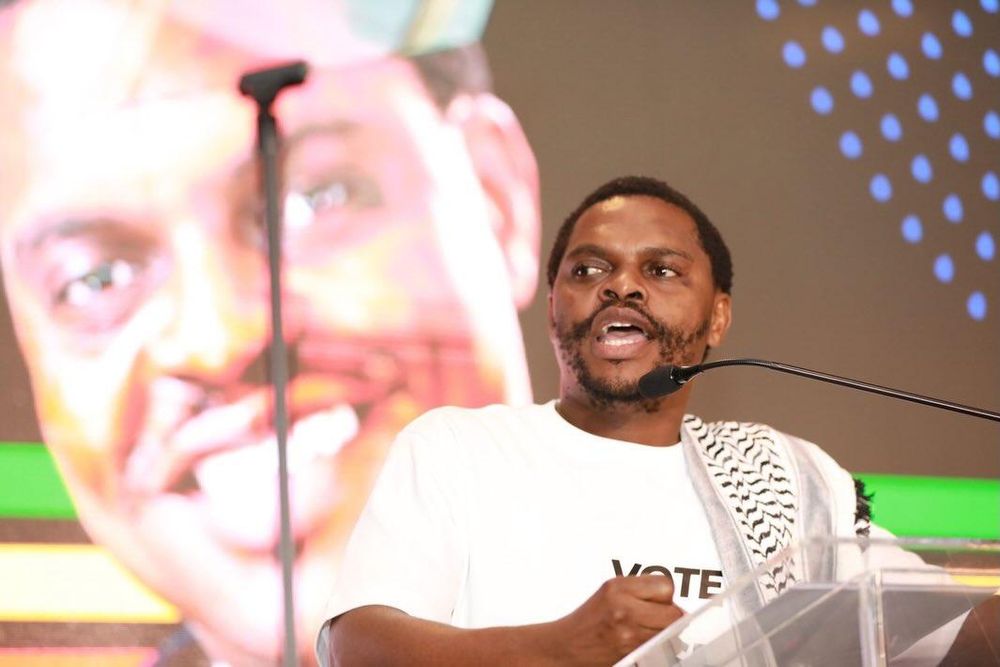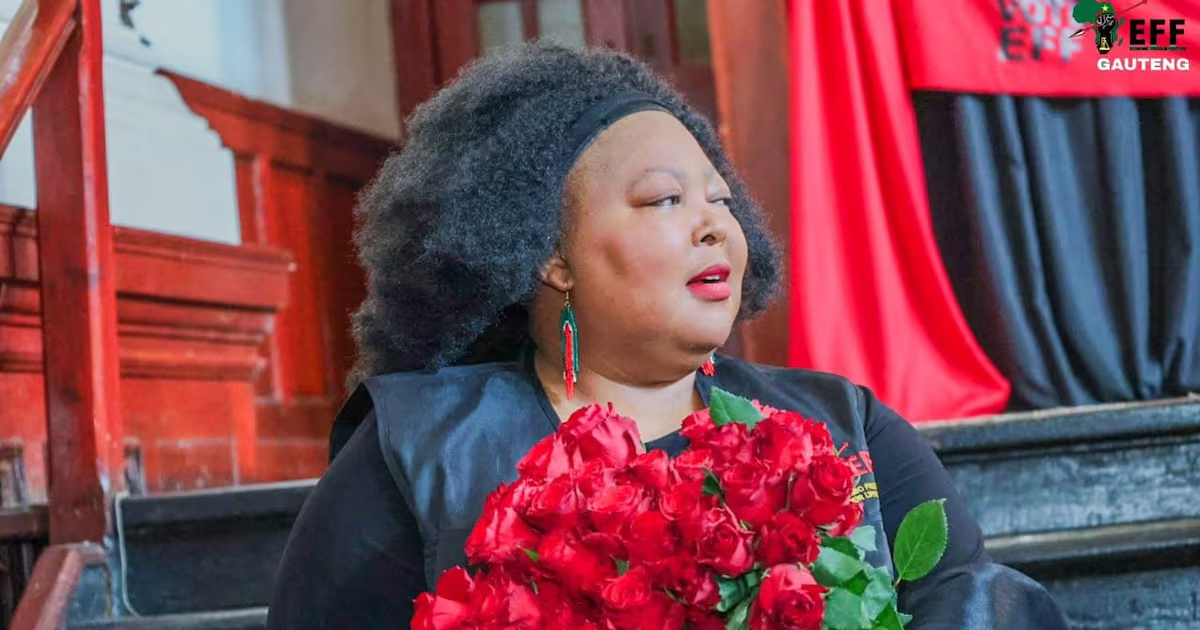
South Africa’s constitutional democracy owes a great deal to public-interest litigation. Organisations such as Section27 have stepped in where the state has failed, securing textbooks for schoolchildren, defending access to health care and standing beside communities that could never afford expensive lawyers. That proud record is precisely why Section27’s decision to represent Tlaleng Mofokeng deserves scrutiny. On September 9 Mofokeng is scheduled to appear before the high court in her attempt to review and set aside a disciplinary finding by the Health Professions Council of South Africa (HPCSA). She has every right to challenge that decision. But there is another question that deserves an answer: why should scarce public-interest legal resources be used to fight this particular battle for this particular person? This is not motivated by hostility towards Section27, nor an argument that Mofokeng should be denied access to justice. It is about fairness, stewardship and what public interest should mean in one of the world’s most unequal societies. Section27’s mission is admirable and necessary. Guided by the constitution, it has used litigation, advocacy and community mobilisation to advance health care and basic education. Its work has changed lives. That history deserves respect. But representing Mofokeng in a professional disciplinary dispute feels far removed from the struggles of the vulnerable communities that made Section27’s work so important. Mofokeng is no powerless litigant. She is a medical doctor, internationally recognised health advocate and former UN special rapporteur on the right to health. She has held prominent international and academic positions and developed substantial professional networks. And now there is another important fact. Mofokeng is the EFF’s mayoral candidate for Johannesburg for the November 4 local government elections. She is seeking political leadership of South Africa’s largest city with the backing and political infrastructure of one of the country’s major opposition parties. That development makes Section27’s involvement even more difficult to understand. Whatever one may think of Mofokeng or the EFF, there can be no doubt that she is hardly politically homeless, institutionally isolated or without access to powerful networks. Yet a public-interest organisation historically associated with fighting for people without money or influence is providing legal expertise to an internationally connected professional who is now campaigning to become mayor of Johannesburg. Surely we are entitled to ask why? The controversy began with Mofokeng’s own public conduct. In October 2025 the HPCSA found her guilty of unprofessional conduct over social media posts that it concluded brought the medical profession into disrepute. She was fined R10,000. Among the statements at issue were highly inflammatory remarks. She wrote “F**k you Netanyahu” in reference to Israeli Prime Minister Benjamin Netanyahu, and referred to UN Watch executive director Hillel Neuer as “You white man. Evil scum. Voetsek.” People will disagree about whether a professional regulator should discipline a doctor for political speech on social media. Mofokeng’s defenders argue that her comments must be understood within her advocacy. Those are arguments for a court to consider. But that is not my central concern. Mofokeng has every constitutional right to challenge the HPCSA. What she does not automatically have is a right to have that challenge supported by a public-interest organisation. Having the right to go to court and having a donor-supported organisation commit its lawyers, expertise and institutional capacity to your case are two different things. This distinction has become even more significant because controversy around Mofokeng did not end with the HPCSA. In July Geneva-based UN Watch filed a formal complaint with UN secretary-general António Guterres concerning Mofokeng’s conduct. The complaint focused on two issues that are particularly relevant now: her acceptance of the EFF’s Johannesburg mayoral candidacy and her attempt to rely on functional immunity associated with her UN mandate in challenging the HPCSA proceedings. UN Watch called on Guterres to denounce what it characterised as Mofokeng’s acceptance of a partisan political candidacy while still serving as an independent UN expert. It alleged that she accepted the EFF’s political “deployment” while her UN mandate had not yet formally concluded. These are allegations made by UN Watch, and they should be treated as such. Mofokeng is entitled to challenge its interpretation. But the complaint nevertheless raises an important question: where should the boundary lie between the independence expected of a UN special rapporteur and active participation in party politics? UN Watch went further. It called on Guterres to clarify that Mofokeng’s social media statements were personal expressions rather than acts performed as part of her official UN functions and therefore, in its view, should not attract functional immunity. That question goes directly to the controversy now heading to court. If insulting people on social media constituted personal political expression, should those statements be shielded from professional consequences through immunity attached to an independent UN mandate? That is ultimately a legal question and it should be determined through the proper processes. But the fact that it has reached this point makes Section27’s choice of case even more worthy of scrutiny. UN Watch had previously criticised Mofokeng in its report “From Watchdogs to Ideologues”, arguing that her tenure sometimes blurred the boundary between independent human rights work and political activism. Again, UN Watch’s conclusions are not judicial findings. But when considered alongside the HPCSA’s separate misconduct finding, the social-media controversy and Mofokeng’s subsequent entry into party politics, they form part of a broader debate about accountability and institutional boundaries. If insulting people on social media constituted personal political expression, should those statements be shielded from professional consequences through immunity attached to an independent UN mandate? That is ultimately a legal question and it should be determined through the proper processes. And this brings us back to Section27. South Africa is not short of people desperately needing public-interest lawyers. There are mothers arriving at dysfunctional clinics without adequate medicine. There are children attending schools with collapsing infrastructure and unacceptable sanitation. There are communities without reliable water and families whose constitutional rights exist beautifully on paper but remain inaccessible because they cannot afford legal representation. Those are the South Africans who make organisations such as Section27 indispensable. Legal resources are not infinite. Lawyers’ hours are not infinite. Donor funding is not infinite. Every decision about where those resources are directed therefore carries an opportunity cost. When expert legal capacity is committed to a prominent former UN official, medical professional and now EFF mayoral candidate challenging a R10,000 professional sanction arising from her own social media statements, asking what public interest is being advanced is entirely reasonable. Perhaps Section27 believes the case could establish an important precedent concerning the scope of functional immunity for UN experts. If so it should say so clearly and explain what constitutional principle is at stake, who beyond Dr Mofokeng stands to benefit, and why this litigation deserves the organisation’s resources when so many South Africans cannot access lawyers for the most basic violations of their rights. Transparency would strengthen Section27, not weaken it. The optics have also fundamentally changed since Mofokeng entered electoral politics. Section27 is now providing legal expertise to someone who will soon ask Johannesburg residents to entrust her with enormous political power. She has the machinery of a national political party behind her while campaigning to lead the economic centre of South Africa. That does not remove any of her constitutional rights. It does, however, make it increasingly difficult to portray her as someone who requires scarce public-interest resources to access justice. As Mofokeng’s challenge comes before the high court later this week, Section27 should answer a straightforward question: why does this case constitute public interest rather than simply an individual’s interest? Section27’s legacy is worth protecting. That is why its choices deserve scrutiny. Public-interest organisations derive their moral authority not simply from the causes they support but from the discipline with which they decide whose battles require their limited resources. Her lawyers will argue about the legality of the HPCSA decision. But outside that courtroom sits a far bigger question about what public interest means in South Africa. Millions of South Africans are still fighting for healthcare, education, basic dignity and meaningful access to justice. Many will never have international recognition, powerful professional networks or a national political party standing behind them. They should surely remain at the heart of public interest. • Chauke is a community and student activist at the University of the Witwatersrand, where he has held multiple leadership positions, including serving as a Student Representative Council member from 2021 to 2023.
KAMOHELO CHAUKE | Section27’s troubling choice in representing Tlaleng Mofokeng
Why are donor funds being used to defend the EFF’s mayoral candidate for Johannesburg?
1,405 words~6 min read