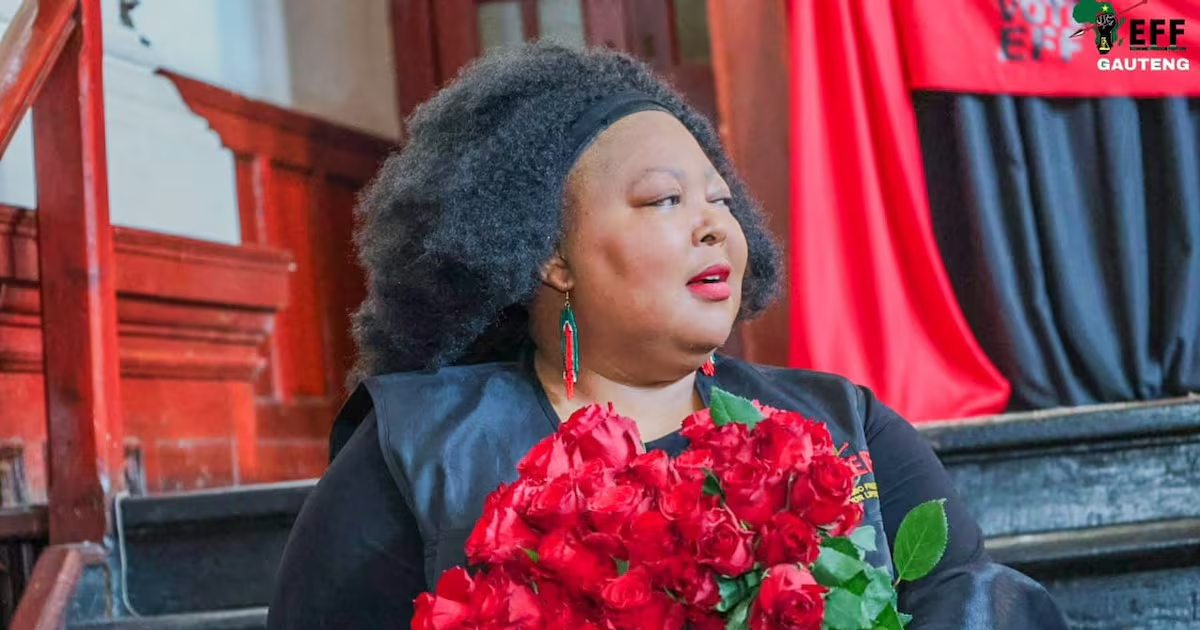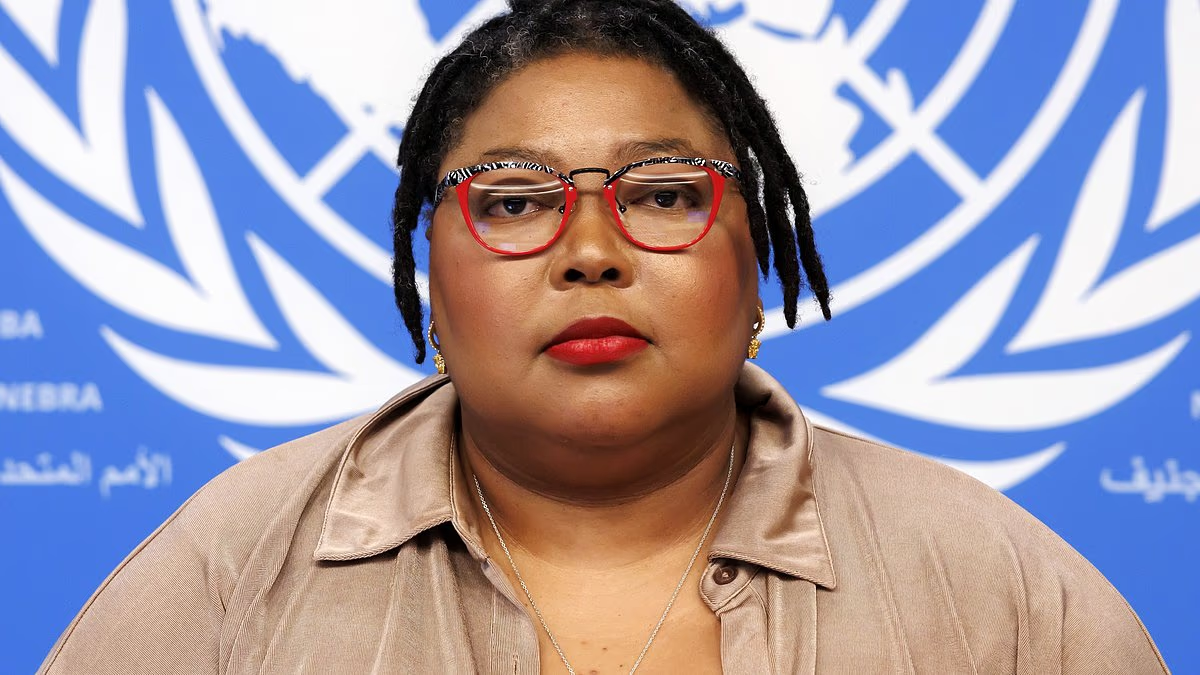
Kamohelo Chauke asks why Section27 has represented Tlaleng Mofokeng, an accomplished doctor and, until July, UN special rapporteur on health, in her defence against a complaint made to the Health Professions Council of South Africa (HPCSA) (“Section27’s troubling choice in representing Tlaleng Mofokeng”, September 8). Section27 first started representing Mofokeng in April 2025 following a complaint by the South African Zionist Federation against her at the HPCSA. It sought a sanction against Mofokeng, which could range from a professional sanction that must be disclosed to future employers to removal of her licence to practise medicine in South Africa. Whatever one may think of the statements Mofokeng made about Israeli Prime Minister Benjamin Netanyahu on X, the argument that she should be professionally sanctioned in South Africa for those statements is absurd. Indeed, while the first medical committee of preliminary inquiry of the Medical and Dental Professions Board of the HPCSA initially imposed a fine on Mofokeng, it decided on review on June 11 that the sanction should be set aside. This decision was made an order of court by consent on September 9.Chauke is of course correct that Mofokeng announced her candidacy for mayor of Johannesburg following the end of her tenure as UN special rapporteur on health in July. Needless to say, Mofokeng’s political candidacy came long after Section27’s legal assistance to her began and after the HPCSA’s decision to consent to a court order setting aside its decision to sanction her in June. Section27 is not and will never be aligned to any political parties. Before she was UN special rapporteur on health, Mofokeng worked extensively in public and private health care. She focused on youth-friendly services, HIV prevention and women’s health. She has been a fierce advocate for the rights of everyone to access health care services and for a system that provides such services. As UN special rapporteur on health, she challenged power imbalances in international decision-making bodies, ensuring that the priorities, voices and rights of marginalised communities are defended. We represented Mofokeng not because of her subsequent party-political association, but at the expense of our public interest work. Our involvement in this case centred on protecting the right of health professionals to speak out and upholding the constitutional values we continue to defend. The South African healthcare system and those who use it need fierce advocates. As Section27 we use law, research and advocacy to advance socioeconomic rights, in particular the right to access health care services and the right to basic education. We need people who will call out injustice, whether it is in the operating theatre, in the media or in the maternity ward. We need healthcare workers who stand up for their patients and strive to fix the systems that can sometimes fail them. Our involvement in this case centred on protecting the right of health professionals to speak out and upholding the constitutional values we continue to defend. We represented Mofokeng because we believe freedom of speech, as guaranteed in the constitution, is a cornerstone of activism. It promotes open debate, exposes injustices and holds those in power accountable. It facilitates the kind of activism civil society organisations used to secure access to treatment for people living with HIV and that health workers exercise every day. The kind of activism that Mofokeng displayed as a doctor and as the UN special rapporteur on health. Attempts to infringe on this right limit robust activism. Section27 is politically independent. As Chauke notes, we have a long and proud history of working with people across South Africa to vindicate rights, particularly the right of access to healthcare services and the right to basic education. We are activist lawyers who have contributed to health and education law and policy. Among our many victories in the defence of human rights, we have represented the bereaved families of the mental healthcare users who died following their move out of Life Esidimeni and the family of Michael Komape, who drowned in an unsafe pit latrine at his Limpopo School. Because of the Michael Komape case, there are now no schools in Limpopo with only unsafe pit latrines, according to government monitoring. We litigated to restart the national school nutrition programme after Covid-19, ensuring that more than 9-million children get a meal every day. We have litigated to make sure all pregnant women and children get the health care services they need and that the child protection register starts to work, preventing sexual predators from jumping from school to school. We have protected and promoted the rights of cancer patients to receive treatment and ensured that oncology backlogs spanning years in Gauteng have been eradicated. Our priority, as public interest lawyers, is ensuring the realisation of the rights of everyone to health, education and related rights and making health and education systems work for those who need their services. We represented Mofokeng because the health system needs activist health workers. And sanctioning health workers for their activism cannot be in the public interest. • Stevenson is executive director at Section27.Business Day
SASHA STEVENSON | Activism at risk if health workers such as Mofokeng are silenced
Defending outspoken doctors protects patient care and public interest
842 words~4 min read