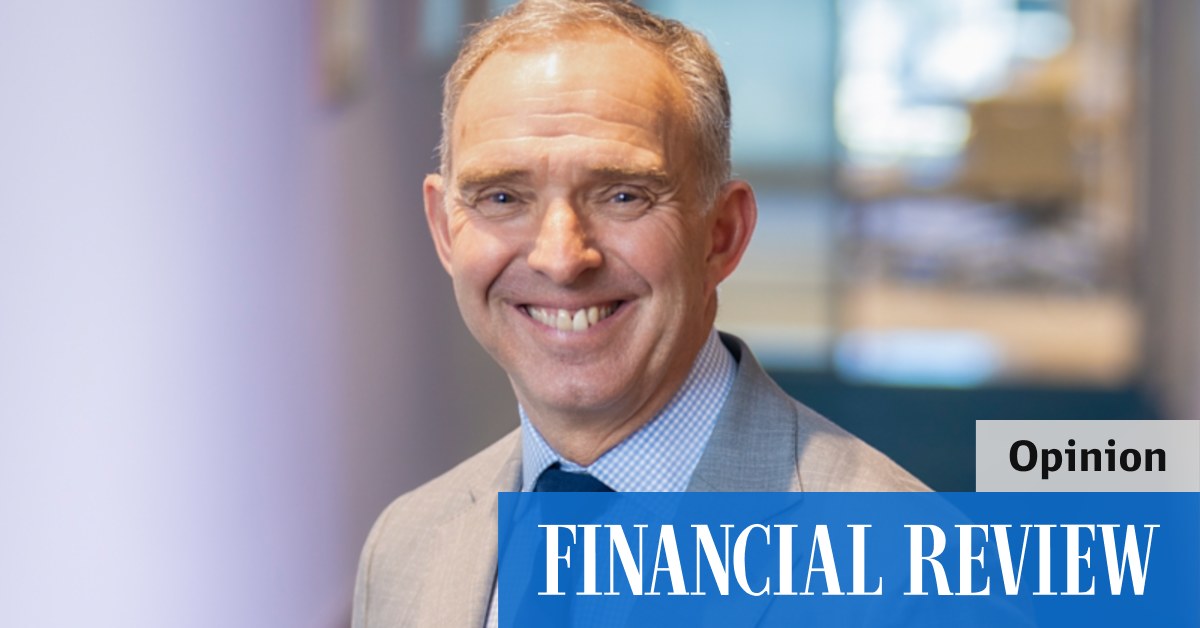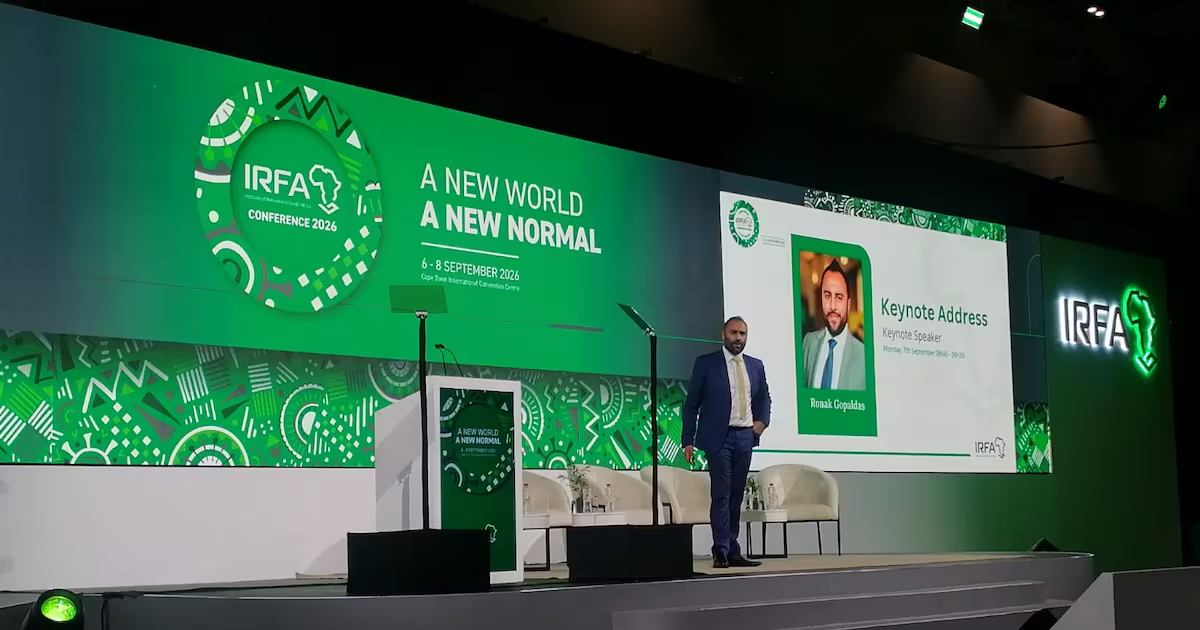
Business leaders in the retirement fund space and other key sectors should not regard geopolitical tensions, trade fragmentation and other economic disruptions as a bump in the road but as a signal of a new, unpredictable global reality.This is according to Ronak Gopaldas, director at Signal Risk, fellow at the Gordon Institute of Business Science and co-founder of Mindflux Training. He said the return of US President Donald Trump to the White House added to instability brought on by the Covid-19 lockdown, the inflationary wave of 2022 and military conflicts in parts of the world.Addressing delegates of the Institute of Retirement Funds Africa (Irfa) Conference in Cape Town on Monday, he said the world was convinced world wars were things of the past, and the world that emerged was the system that had won, where everyone would live happily ever after. “Many of us grew up in that age of optimism. You think about South Africa in the 1990s, and the world in the 1990s, globalisation, the types of leaders we had, [former US president] Bill Clinton, [former SA president] Nelson Mandela, [former UK prime minister] Tony Blair. We had the World Cup, we had the London Olympics, we had the era of [former US president] Barack Obama. “It turns out the past 30 years were largely a holiday from history, and now we’re going back to factory settings, where effectively we’ve always been governed by a might-is-right world, great power competition, where the strong do what they can, and the weak suffer what they must.”Gopaldas said it was important for observers to distinguish between Trump’s ideas and his style, as his ideas tend to be broadly quite consistent with his vision. As a result, different stakeholders would get a mixed bag of outcomes from his policies. “From an economic perspective, he believes in three things. He believes in trade wars. He believes in tax cuts and deregulation, laissez-faire economics, and he does not believe in central bank independence. Those ideas are broadly consistent. His doctrine, economically, is also very much America first, insular, isolationist and quite parochial.” As much as the dynamics appear to give Trump an outsized amount of power over the US and global economy, Gopaldas said, there are some fundamentals Trump will find himself at the mercy of.“It’s not normal policy behaviour, but I think there’s largely been a bailout as a result of the AI optimism and AI exuberance, which is why we’ve effectively shrugged off the geopolitical volatility thus far, though things seem to be changing right now. “Ultimately, it’s going to come down to a four-way game of chicken between Trump, the Fed, the bond market, and China. I see Trump blinking in that equation. “If we extend this kind of psychology to the Iran war, there’s a big question mark around the Strait of Hormuz and what’s going to happen there, and how long this is going to last. “As we get closer and closer to US midterms, it becomes about missile maths. It becomes about markets and midterms, and we’re starting to see a shift now. Of course, the impact for African sovereigns, it’s about food, fertiliser and fuel.”Irfa president Nancy Andrews said retirement funds sit at an intersection of people’s hopes for a secure future and the economic, social and policy realities of the present. The environment is changing quickly. Andrews said: “Markets are shifting, regulations are evolving, and technology is changing the way we work and communicate, and members’ expectations are rightly becoming more demanding. It would be easy to only look at the difficulty in that change, yet I believe it also allows us to renew our focus on what matters, and that is sound judgment, responsible stewardship and better retirement outcomes for members.”She said in times of uncertainty, good stewardship requires more than only reacting to the latest development, but asks funds and trustees to test assumptions. “It means ensuring investment choices remain robust. Governance is more than a matter of process and that operational decisions are carried through with care and due diligence.”Andrews said a sound programme also reminds the sector that good decisions do not happen in isolation, but depend on effective governance, constructive engagement in regulation, and shared understanding of the practical realities facing funders and their members.
LISTEN | Turbulence is the world’s new destination, not a detour, says analyst
Analyst warns business leaders to prepare for a new era of global instability
714 words~3 min read