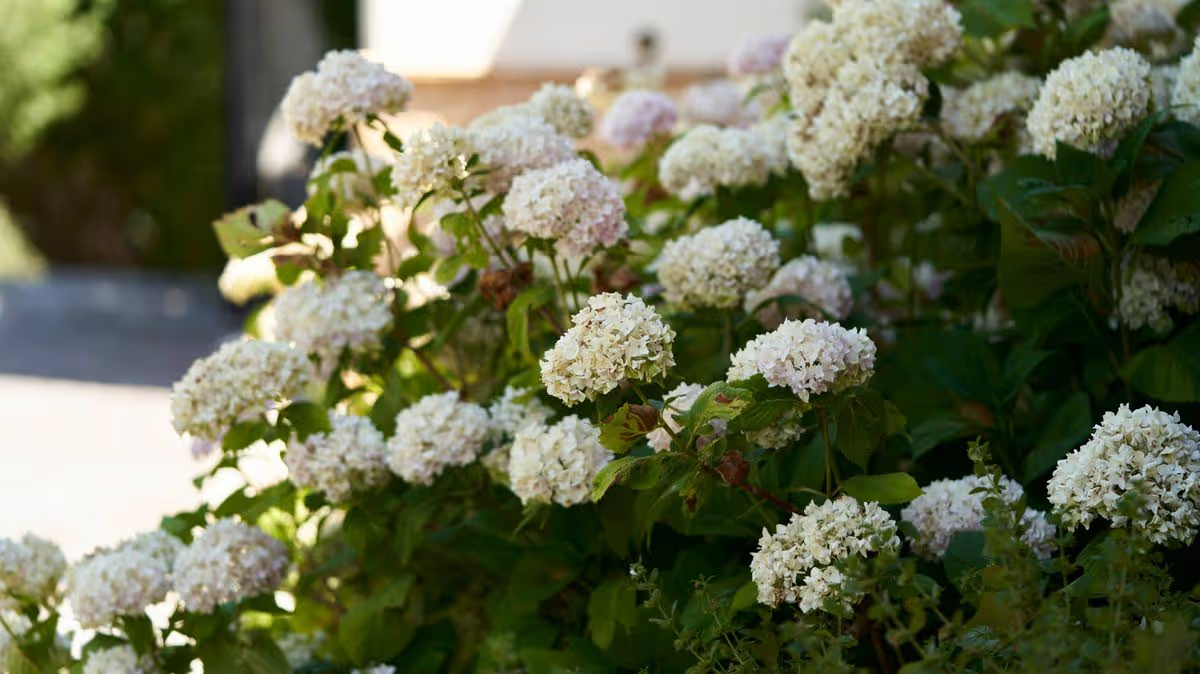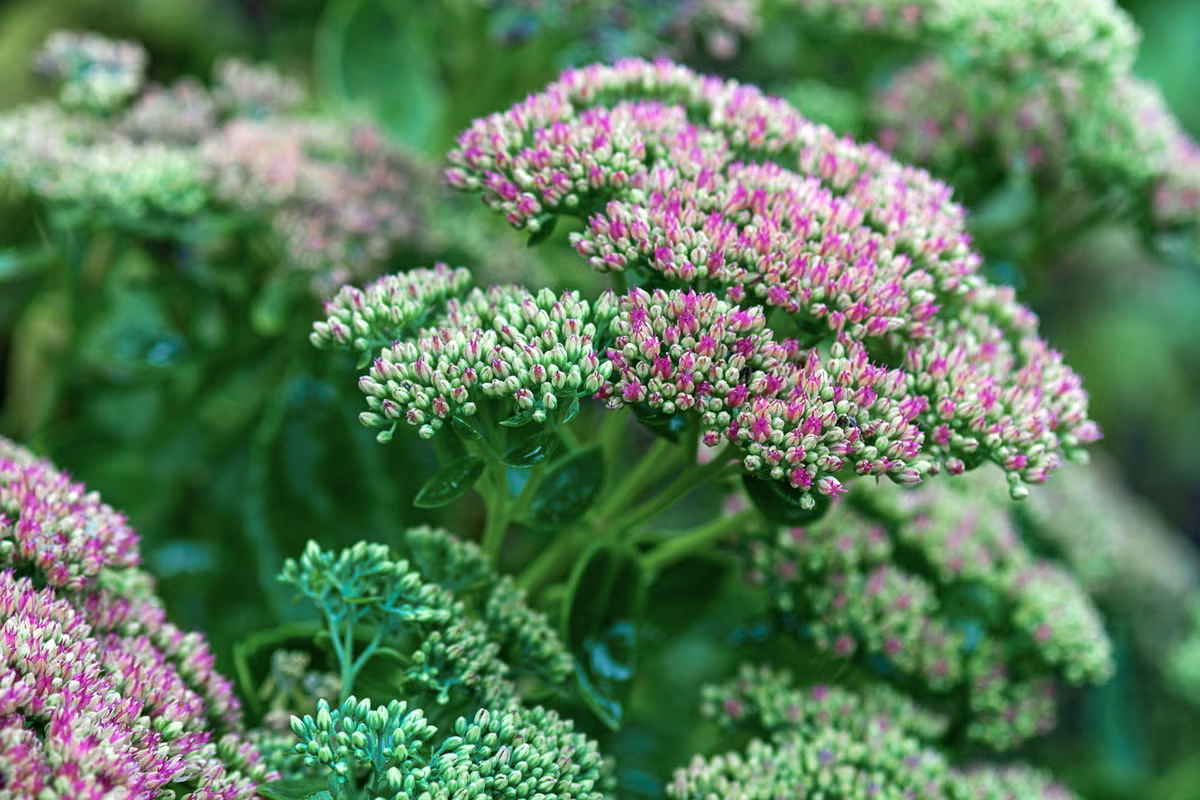
As experts predict that hotter summers will become the norm, growers may need to trade in some of their water-demanding plants for varieties that better withstand drought.Conventional cottage garden flora that struggled in this summer’s high temperatures could well be substituted with succulents and Mediterranean species suited to arid environments.Hydrangeas, acers and dogwoods have all struggled this year, says Antony Henn, garden designer and founder of ready-made garden border kits Garden On A Roll.“Things with big juicy leaves have really suffered in the drought. Japanese acers have scorched leaves – they’re alive but they don’t really like the direct sun and the very dry weather.“For next year you’ve really got to look for plants that are drought-tolerant, maybe with smaller leaves, that are going to survive with a lot less water.”“Those cottage garden early summer perennials have really not done so well, whereas tougher later flowering ones like euphorbia, eryngium and sedums are all doing quite well,” says Saul Walker, partnerships and events manager of plant conservation charity Plant Heritage.“Salvias are also a definite plant for the future. They like the heat, coming from a Central American region.”‘Salvias are also a definite plant for the future. They like the heat, coming from a Central American region.’ (Alamy/PA)Any new plants will need to be well watered and looked after until they have become established, experts agree.However, Walker warns that you have to be careful with drought-tolerant substitutions which might not survive a wet winter or spring.“Mediterranean plants might do well in our summers but it’s always interesting in the winter to make sure that those plants aren’t just sitting in soggy, cold soil because they won’t like it.”Plant swapsSwap astrantias for achilleasSwap astrantias (left) for achillea (Alamy/PA) (Alamy/PA)“Astrantias are definitely not great in the drought,” says Walker. “They could be replaced with something like achilleas. I’ve been very impressed with achilleas’ staying power this year and though they are not similar, it’s quite a nice swap in some ways.They have similar colours – astrantias come in purple, pink and white hues, and you can get the same colours with achilleas. Achilleas have a slightly later flower.Swap hydrangeas for buddleiaHydrangeas (left) could be swapped with buddleia (Alamy/PA)Hydrangeas are thirsty plants which don’t like full sun or dry soil, although if you plant them in shade they should may fare better. They could be swapped for buddleia, suggests Walker.“I think buddleias have gone out of fashion but they might come back because they’ve good staying power and obviously good flowering and they are good for wildlife too.“Look at some of the nice cultivars, such as the deep purple ‘Black Knight’, and some of the species types such as Buddleia globosa (the orange ball tree), a yellow flowering one, and Buddleia alternifolia, which is a little more compact.”Swap clematis for trumpet vine‘Climbers are not having a great time,’ says Walker (Alamy/PA)“Climbers are not having a great time,” says Walker. “They like having a cool, moist root run, with their heads in the sun and roots in the shade.“The plant I’ve noticed just outside the office at RHS Garden Wisley is campsis, the trumpet vine, which is flowering its socks off, and also things like passion flowers are doing really well.“I think they are a lot tougher than they look, especially the straight caerulea, but there are some nice cultivars such as ‘Constance Elliot’ and ‘Sue Beardshaw’ which do quite well in the heat.”Wisteria, once established, is also pretty tough, he adds.Other recommendationsHenn recommends swapping some of your less drought-tolerant species for nepeta (catmint), his favourite flowering perennial.“They are great for bees and butterflies and once they’re established they are amazing – you can cut them back if they get a bit dry and they will regrow.”He also recommends the ice plant, hylotelephium (formerly known as sedum), with its succulent leaves that store water.“Once they are established you don’t have to water them. They are great for bees and butterflies and a brilliant drought-tolerant plant for the future.”Walker agrees that some succulents and fleshier plants such as agaves, aeoniums and aloes will love dry weather but do require specific, excellent drainage and don’t relish clay soil.He also recommends the ice plant, hylotelephium (formerly known as sedum), with its succulent leaves that store water (PA)“If you’ve a clay soil that gets very wet and cold in the winter, they won’t do so well, unless you’ve got a custom-built rock garden or a gravel garden,” he says.Henn also recommends convolvulus, which is from the same family as bindweed, but has silvery evergreen leaves which tolerate drought.Ornamental grasses such as carex should also replace some thirstier plants, he predicts.“Water them thoroughly before you plant them, make sure they’re established and you’ll never have to water them again.”What about plants which might not tolerate heavy rain after the long, hot summer?“I remember a year when we had a very early cold period after a wet period, which killed off a lot of the tougher evergreens,” Walker recalls. “Evergreens can suffer a bit because they don’t like very waterlogged soil.”
El Nino: How to future-proof your garden with drought-loving plants
Experts look at hardy species which may replace traditional favourites
840 words~4 min read