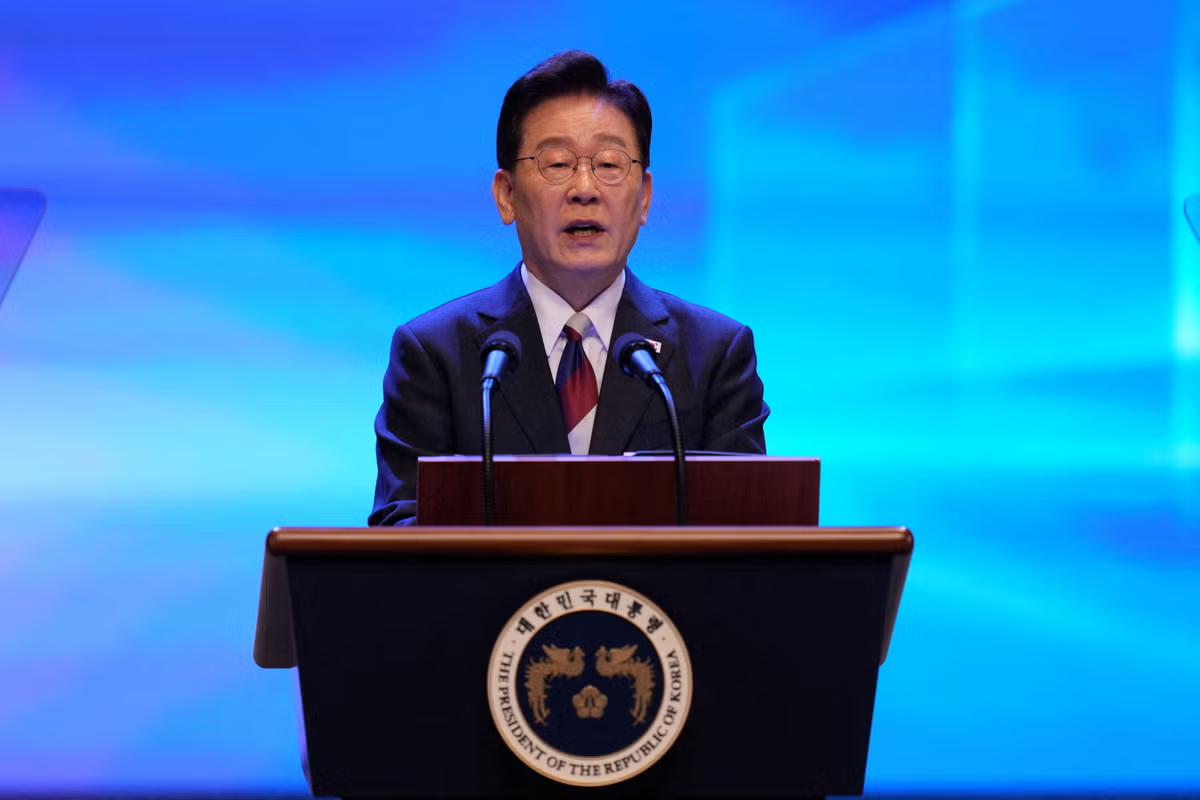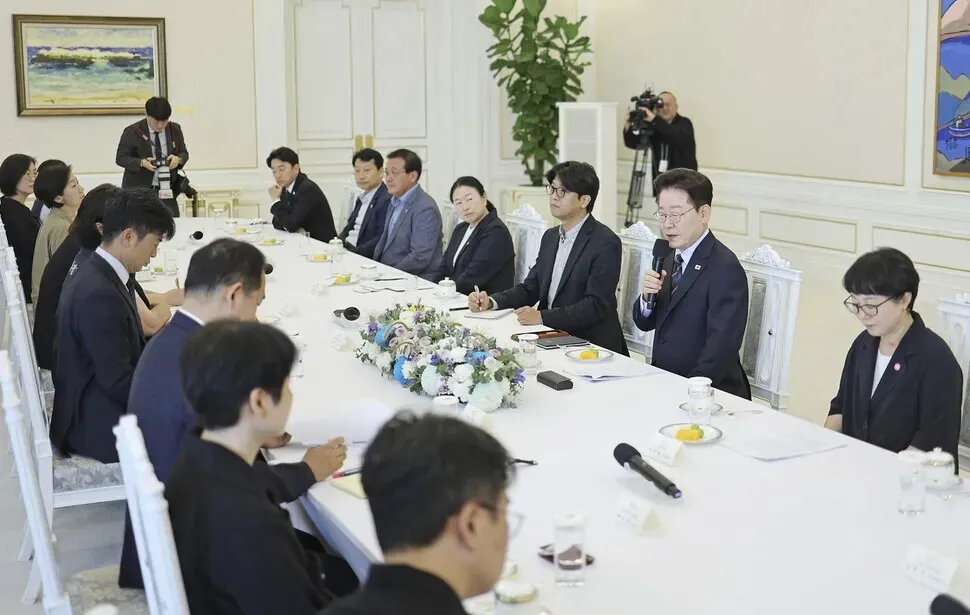
President Lee Jae Myung speaks at a roundtable with civic groups held at the Blue House on Sept. 4, 2026. (pool photo)
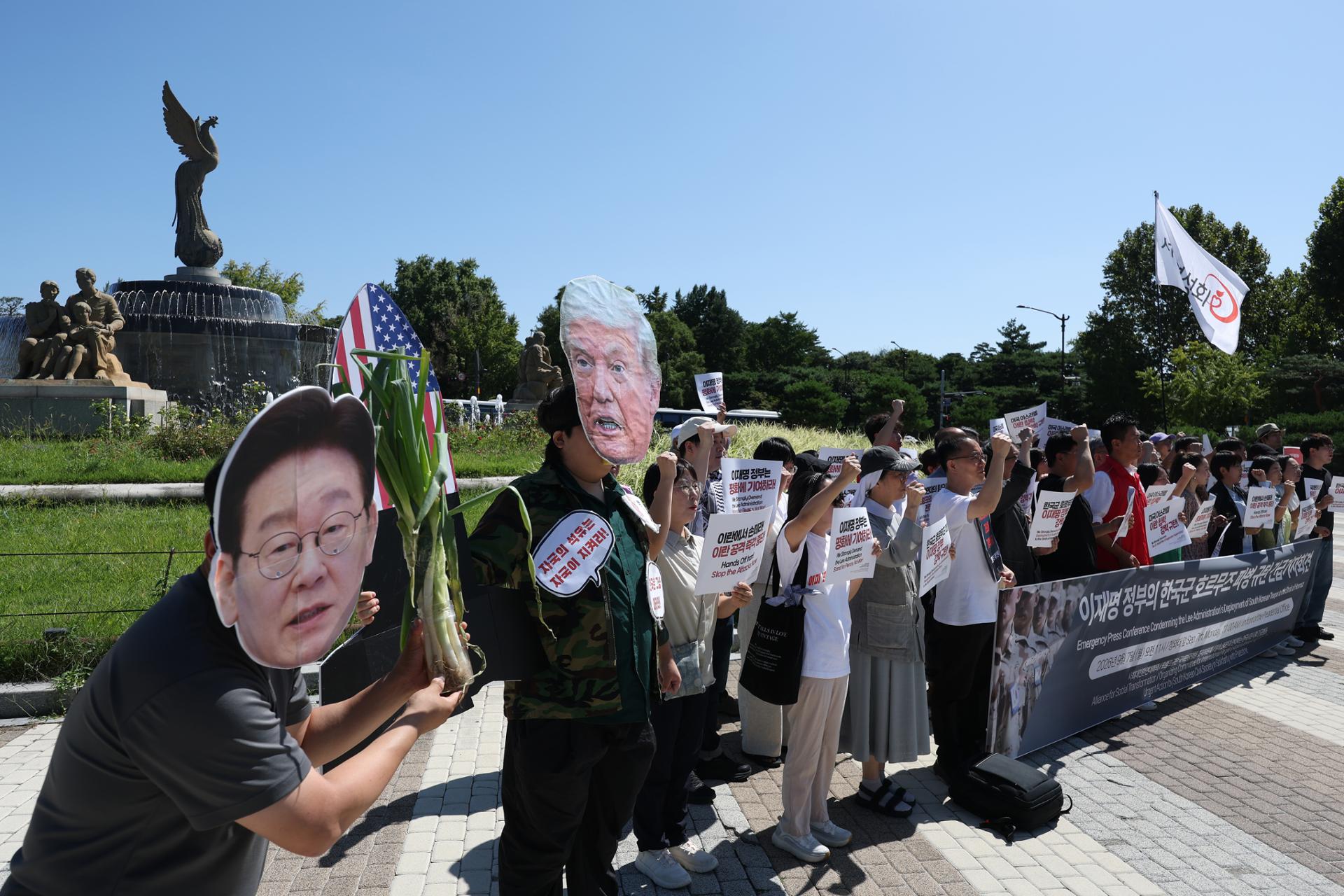
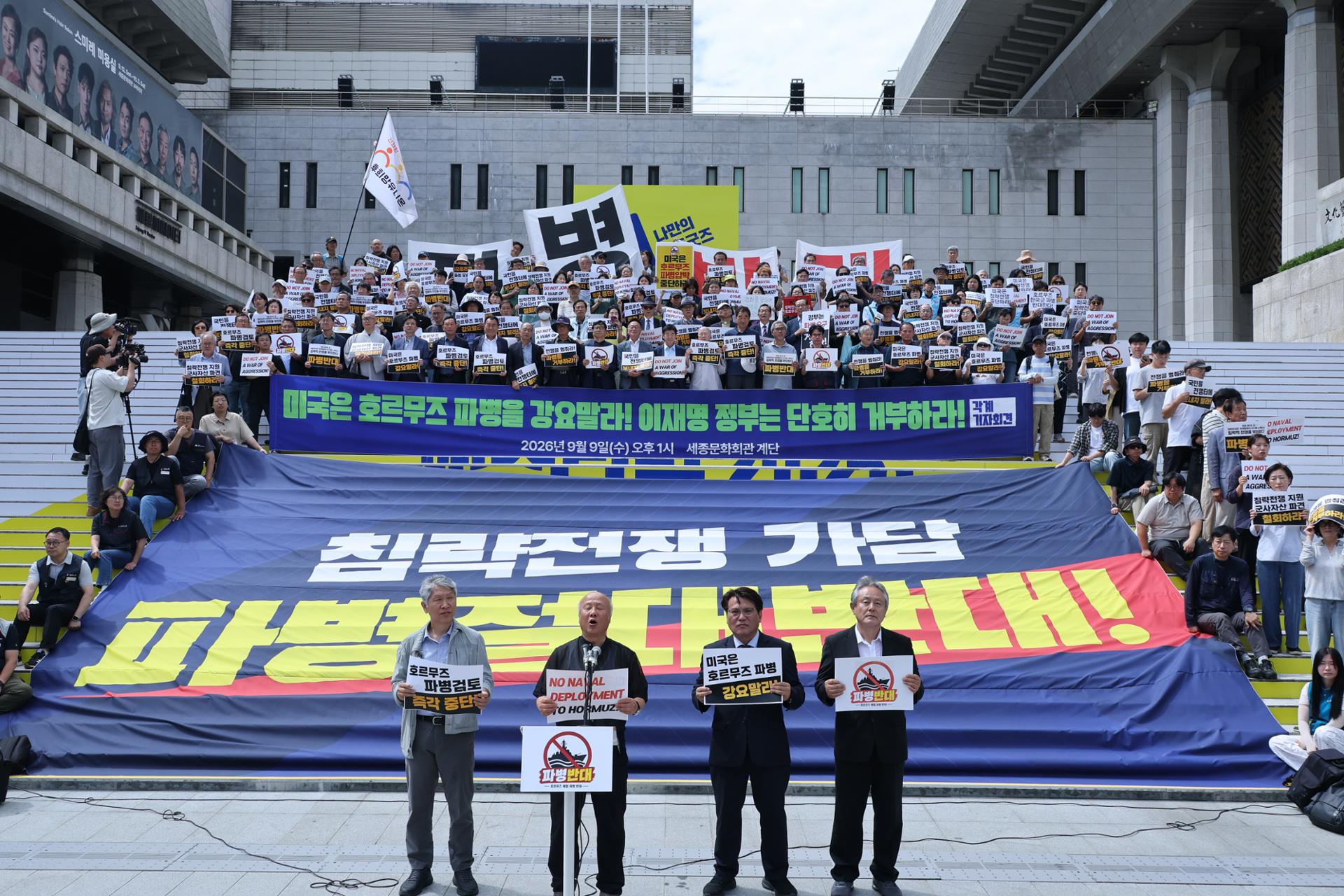
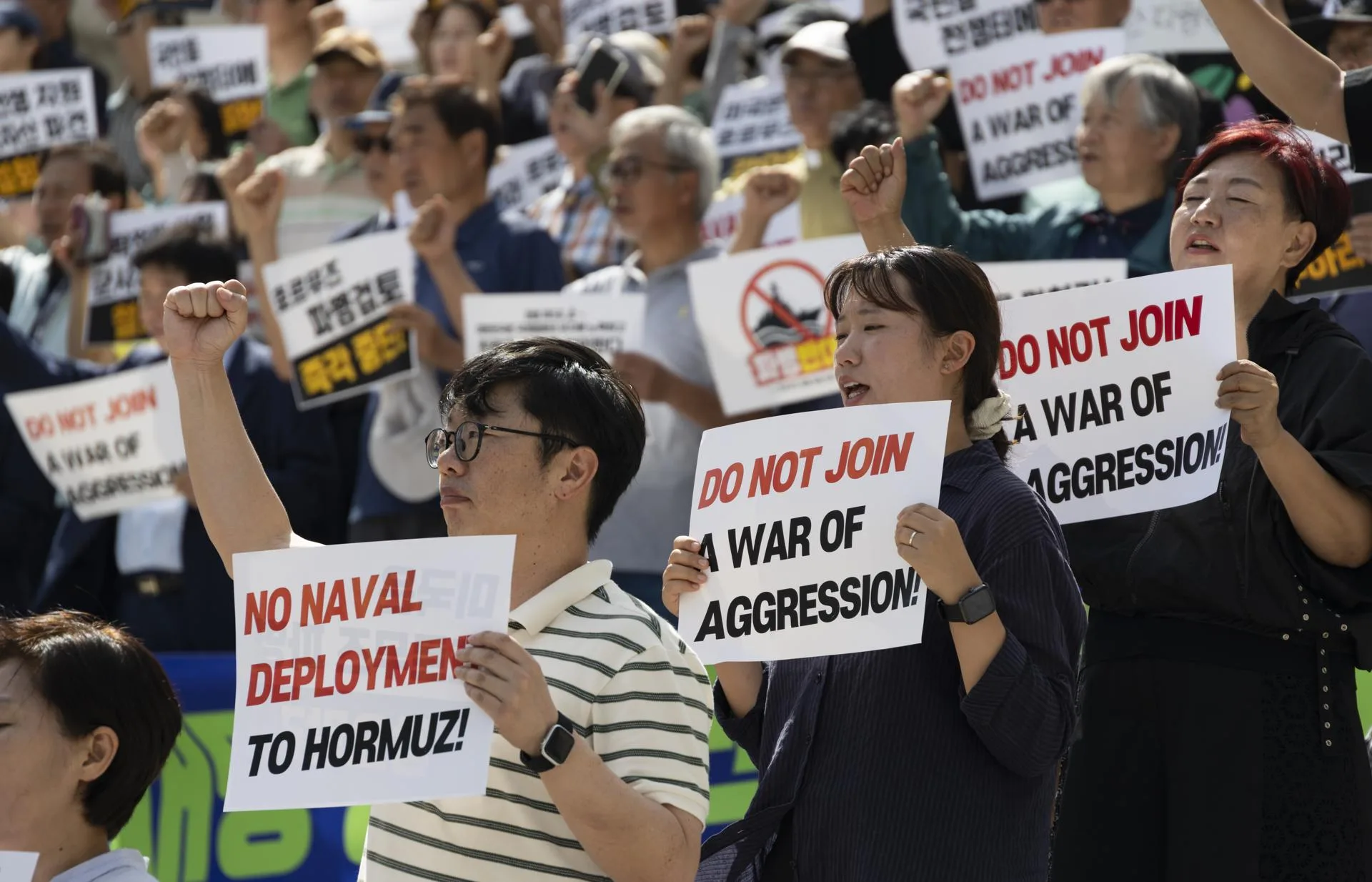
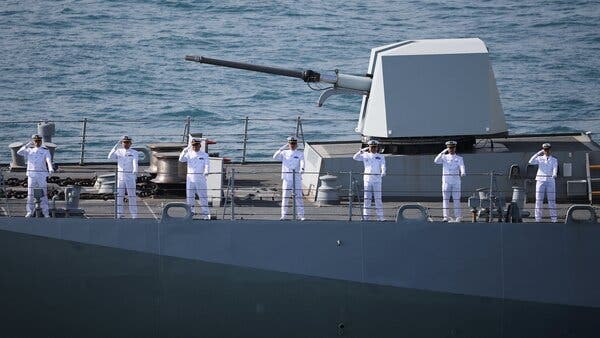
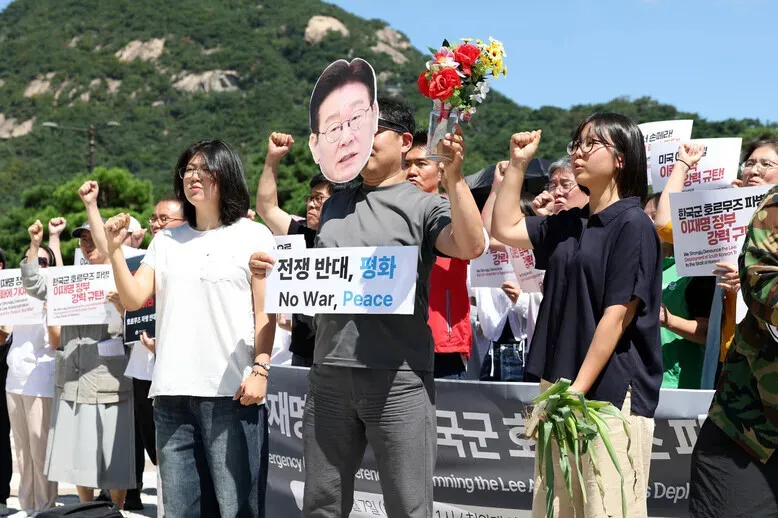
The military options the Blue House is considering as it looks for practical ways to contribute to US efforts in the Strait of Hormuz are increasingly likely to impact both the Korea-US alliance and domestic politics. Local civic groups vocally oppose participation in what they see as a “war of aggression.”The Korean government is weighing a deployment to the Strait of Hormuz as it seeks to improve relations with the US amid continuing pressure from US President Donald Trump. A senior Blue House official said on Friday, Sept. 4, that the government believes it has “some options that wouldn’t compromise our defensive readiness on the Korean Peninsula.”In an interview on Aug. 30, Trump recalled a conversation with Korean officials about Iran. “I said, ‘Do you mind giving us a little hand with Iran, the Islamic Republic of Iran?’ And they say, ‘Well, we’d rather not.’ I said, ‘OK, thank you very much. I appreciate it.’ But I think you have to remember that stuff,” he said.On Friday, Trump shared on his social media account a column arguing that Korea should sell its Cheongung-II air defense missiles to Ukraine.A senior US administration official responded on the same day to media questions about a potential Korean deployment to the Strait of Hormuz by noting that Korea is one of the biggest consumers of Middle Eastern crude oil and that the US is still waiting for Korea to deploy assets to the region.In effect, Washington is pressuring Seoul across multiple fronts.The US is growing annoyed over the delay in a major Korean investment package promised in a fact sheet from the Korea-US summit last year. As a result, little progress has been made in talks on uranium enrichment, reprocessing of spent nuclear fuel and development of nuclear-powered submarines by Korea.