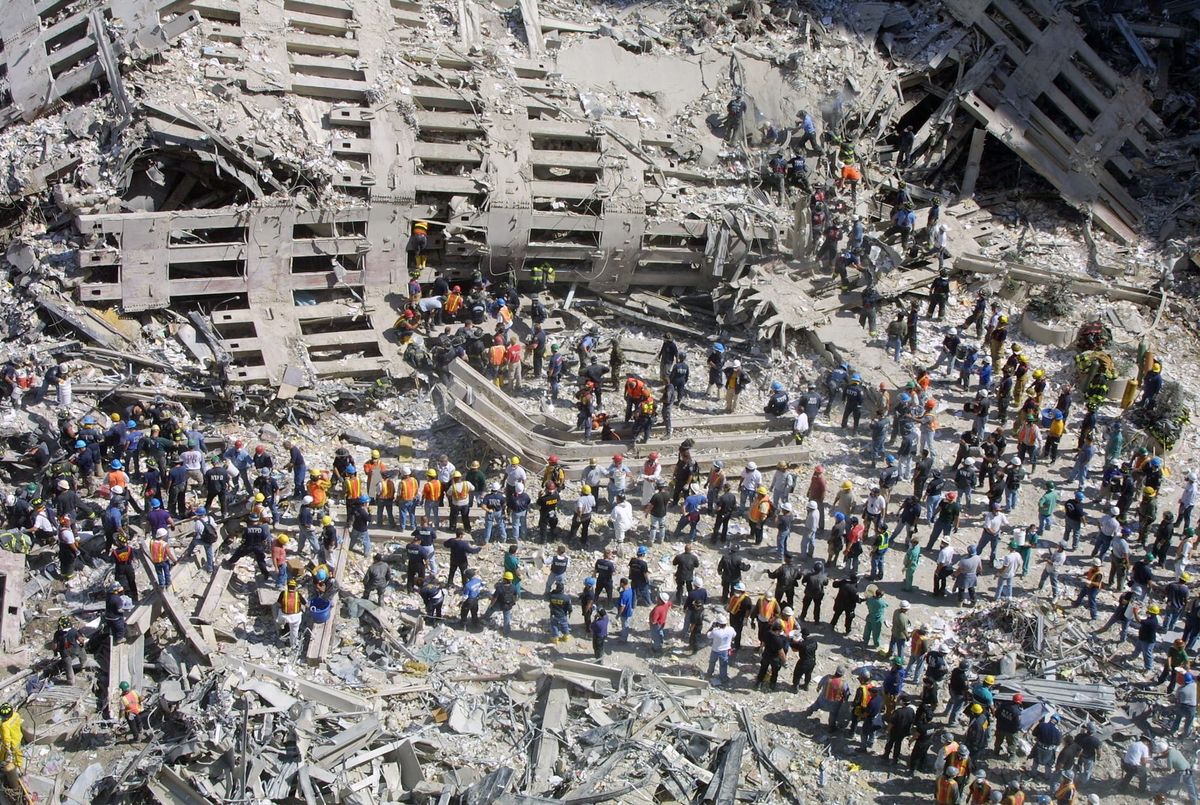
In the aftermath of the al Qaeda terrorist attacks that killed nearly 3,000 on Sept. 11, 2001, the 9/11 Commission Report lamented a “failure of imagination” on the part of the U.S. government and intelligence community. After all, the primary weapons used in the simultaneous attacks were boxcutters, knives, and ultimately, passenger jets.
Terrorists hijacking planes was certainly conceivable. Between 1968 and 1972, there were more than 130 attempted hijackings in the United States, most bound for Havana. Abroad, there were spectacular hijackings across Europe and the Middle East, often conducted by Palestinian terror groups primarily motivated by nationalism. And while these hijackings did not result in terrorists flying planes into buildings, the idea that they could had been discussed at length for decades. In fact, legendary terrorism scholar Brian Michael Jenkins warned about exactly that in 1989 at an international conference on aviation security in Israel: “The nightmare of governments is that suicidal terrorists will hijack a commercial airliner and, by killing or replacing its crew, crash into a city or some vital facility.”
In the aftermath of the al Qaeda terrorist attacks that killed nearly 3,000 on Sept. 11, 2001, the 9/11 Commission Report lamented a “failure of imagination” on the part of the U.S. government and intelligence community. After all, the primary weapons used in the simultaneous attacks were boxcutters, knives, and ultimately, passenger jets.