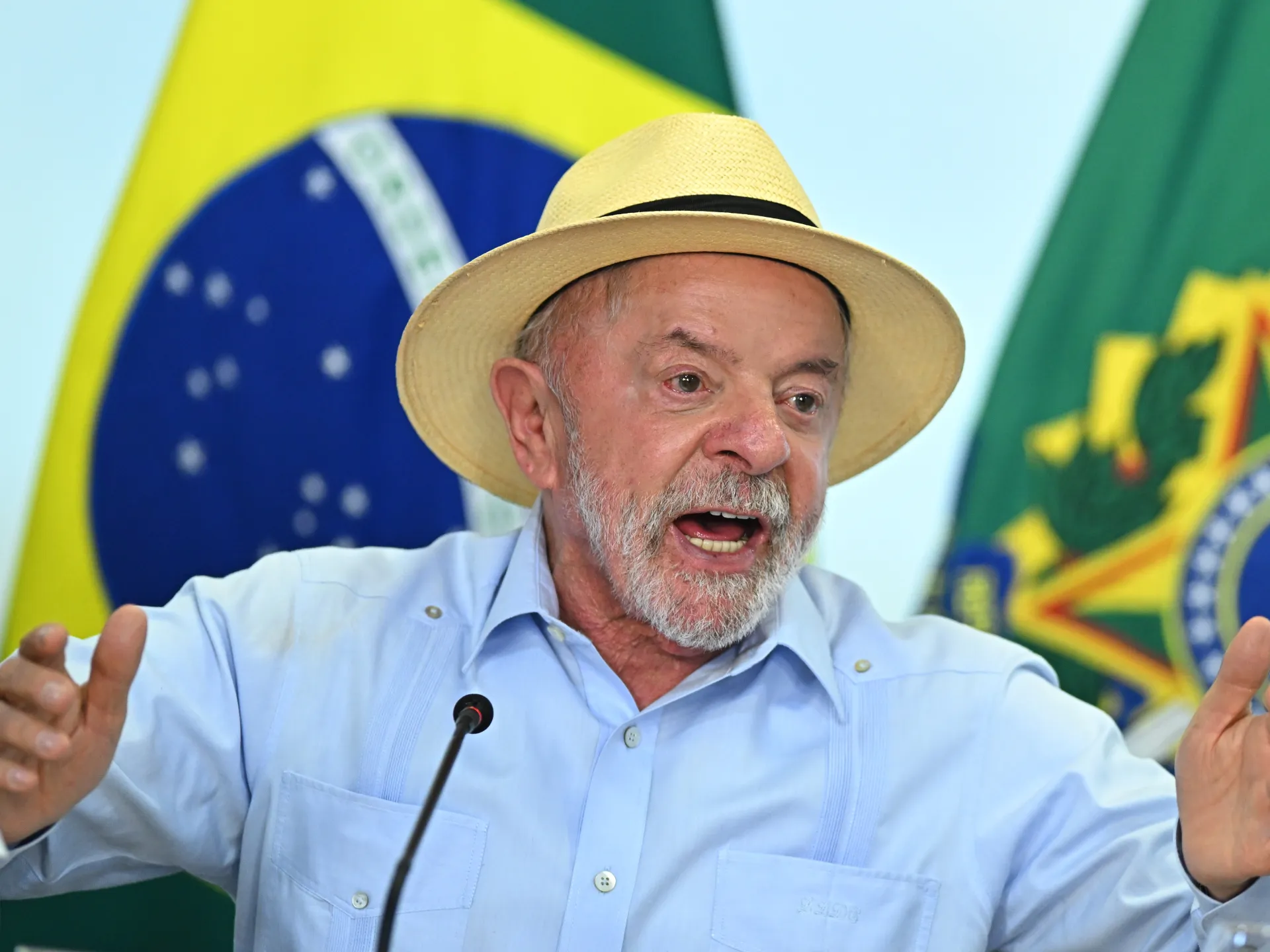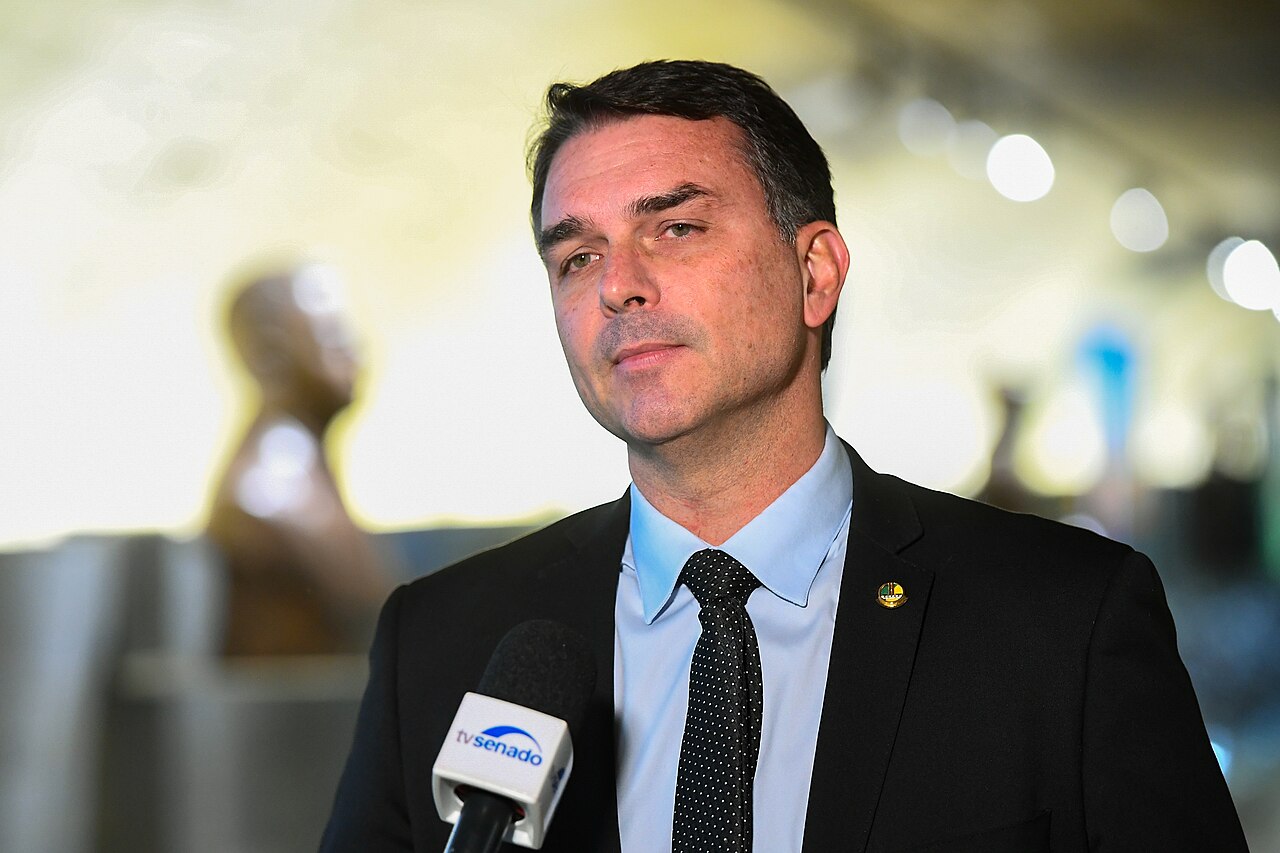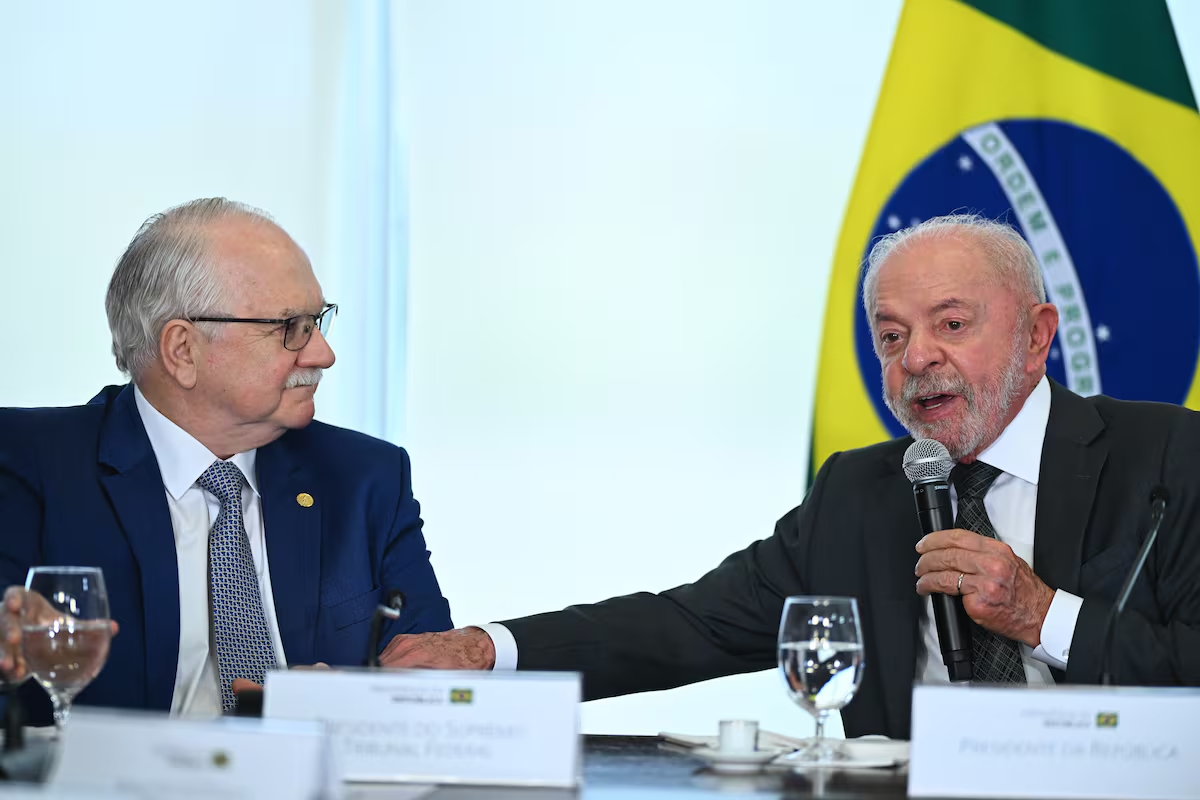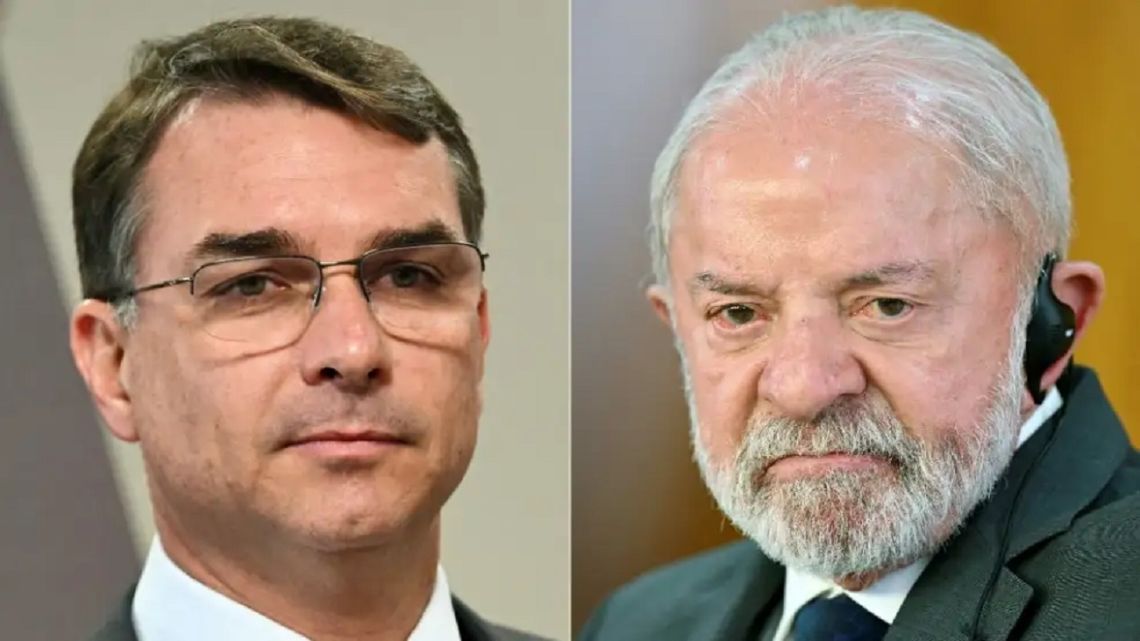
Brazil’s presidential election race was at risk of slipping from the pedestrian into the monotonous with weeks still to run before a first round of voting on October 4th. Seeking a fourth term in what is his seventh campaign, leftist president Luiz Inácio Lula da Silva has in recent months been schooling senator Flávio Bolsonaro, his less experienced rival, in how to grind out a win.In advance of the vote, the hugely experienced 80-year-old veteran has indulged in the time-honoured privilege of Brazilian incumbents of throwing open the spending taps. Behind closed doors in the capital Brasília, he has agreed a series of alliances across the political spectrum that have left his 45-year-old far-right opponent looking isolated.The brief period earlier this year when Flávio led opinion polls has been receding from memory. On the campaign trail he lacks the dark charisma that propelled his father Jair Bolsonaro to the presidency in 2018. Eight years later Bolsonaro snr is unable to help his son’s struggling bid as he is serving a 27-year sentence for a coup attempt after he lost to Lula in 2022’s election.A supporter touches a cardboard cutout of Jair Bolsonaro, Brazil's former president, centre, alongside another cardboard cutout of his son Flávio. Photograph: Maira Erlich/Bloomberg In a sign of his political difficulties Flávio even struggled to find a running mate. After a series of rejections, he finally settled on Alfredo Gaspar, a congressman from his own Liberal party. But his selection was overshadowed by allegations he had fathered a child with a 13-year old. He denies it, saying his accusers have confused him with a cousin.Then, suddenly, the contest entered a new and unpredictable phase last week when a political time bomb that has been ticking away underneath Brasília for months finally exploded. The epicentre of the blast was in the country’s supreme court, signalling its descent into full internecine warfare. But the fallout will likely blow across the political system with unforeseeable consequences for the presidential race.The campaign plot twist came last Tuesday when supreme court justice André Mendonça released more details of the investigation he is overseeing into Banco Master, a midsized lender whose collapse last year exposed the biggest financial fraud in Brazil’s history.Brazilian supreme court justice Alexandre de Moraes, right, looks on next to justice Andre Mendonça during a court session at Brazil's supreme court. Photograph: Evaristo Sa/AFP via Getty As well as a slew of the political class, the scandal had already implicated two of Mendonça’s colleagues on the court, Dias Toffoli and Alexandre de Moraes, whose lawyer wife in January 2024 signed a retainer with Master worth a potential €20 million.For months the two judges had sought to brazen out the scandal. But in an election year this was always a high-risk strategy. On Tuesday their colleague Mendonça surprisingly unsealed a police report on Master. Its contents indicate that in the days before his arrest, Master’s owner Daniel Vorcaro was in regular contact with Moraes about how to escape the net closing around him. The two men even met the day before Vorcaro’s arrest last November, following a message from the banker to the judge asking if he should flee the country. Police picked him up at São Paulo’s international airport as he prepared to board his private jet heading for Dubai.[ Trump alliance turns from asset to liability in Brazil’s presidential raceOpens in new window ]Indications that a supreme court justice was advising the target of a police investigation how to evade justice set off a political firestorm. Moraes is now facing calls to step down from the court or be removed from it by a vote in the senate. “As long as the justice remains in his seat, dishonour and discredit will accumulate upon the court,” said an editorial in the Folha de S Paulo, Brazil’s biggest-selling newspaper. Moraes has not been charged with a crime and it is unclear how an investigation into alleged wrongdoing by a supreme court justice should be handled.The crisis is a delicate one for Lula. On one hand it has caused interest in nebulous allegations against his eldest son Lulinha that obsessed the press for weeks to suddenly evaporate. But Moraes is a hero for many on Brazil’s left after he led the resistance to Jair Bolsonaro’s attempted putsch, eventually overseeing the trial that jailed the former president and his fellow conspirators.Responding to the crisis, Lula called for calm. “I am neither a federal police investigator nor a prosecutor. It is up to us to wait for the investigation to unfold,” he said. But with demands growing for Moraes to be impeached he added: “I don’t think anyone in their right mind considers it a good thing for the supreme court’s image to be vilified.”Brazil's president, Luiz Inacio Lula da Silva, during a campaign rally in the Bangu neighborhood of Rio de Janeiro. Photograph: Pablo Porciuncula/AFP via Getty Rather than actively defend Moraes, who has notably declined to publicly rebut the allegations, many on Brazil’s left have instead questioned Mendonça’s motives. The fact he was Bolsonaro’s loyal justice minister during his increasingly autocratic administration means many suspect his investigation into Moraes is being weaponised to extract revenge for the latter’s role in jailing his former boss while trying to salvage his son’s floundering campaign.Mendonça’s critics have focused on the speed with which he moved to publicly implicate Moraes – his main antagonist on the supreme court – before the election and compared it to the caution and secrecy with which he has conducted his investigation into Flávio’s own links to Vorcaro.These involve the payments of millions of euro from the fraudster to the candidate. The cash was supposedly to finance Dark Horse, a feature film about Flávio’s father. It was May’s revelation of this arrangement that caused Flávio’s brief lead in polling to crater.Brazilian Senator Flavio Bolsonaro greets supporters upon his arrival from the US at the International Airport in Brasilia. Photograph: Sergio Lima/AFP via Getty Flávio had promised to provide an audit to rebut suspicions the cash was siphoned off to bankroll his brother Eduardo’s exile in the US, from where he has lobbied the Trump administration for sanctions on Brazil. But he has notoriously failed to do so and when challenged on the matter in interviews on the campaign trail says questions about Dark Horse’s financing are “a closed book ... on the shelf”.The ability of Flávio to capitalise on the Moraes crisis is unclear. After last week’s revelations he moved quickly to demand that his father’s nemesis be immediately impeached by the senate. But he was slapped down by senate president Davi Alcolumbre who reminded him of his own dealings with Vorcaro. “Has everyone forgotten they asked for R$130 million (€22 million) from the same person to make a film?” he said when denying the opposition an impeachment vote.If, as many on the left claim, Mendonça was seeking to aid his former boss’ son, his gambit risks backfiring. Moraes, a former public prosecutor, has deep links in the federal police where there is reportedly widespread discontent at how Mendonça is handling the Banco Master investigation. An indication of the potential for blowback came the day after the revelations about Moraes when new leaks to the media sought to implicate Mendonça by revealing his own previously secret meeting with Vorcaro as he tried to rescue his bank.Even more damaging for Flávio was the news on Thursday that Brazil’s federal prosecution service had agreed a plea-bargain deal with one of Vorcaro’s bag men. In return for a reduced sentence for his role in the bank fraud he has promised to provide details about how funds supposedly for the Dark Horse film were directed instead to the Bolsonaro family. The deal was signed the day after the head of the federal prosecution service Paulo Gonet was named alongside Moraes as seeking favours from Vorcaro, asking the banker to bankroll a trip by his son to London.With the supreme court, federal police and public prosecution service now consumed in faction fighting over the handling of the Master affair, the potential for further damaging revelations from the sprawling investigation continues. Moraes has already launched his own counter-attack, demanding that the supreme court president authorise an investigation into Mendonça for abuse of authority “and favouring certain political groups”.In doing so Moraes appears to be trying to force his colleagues to choose between him and Mendonça, further deepening the conflict ripping Brazil’s top court apart. Given that impunity favours a majority occupying the higher echelons of Brazil’s institutions, it is a struggle Moraes has grounds for believing he will prevail in, despite the gravity of last week’s revelations.Polling is yet to gauge public reaction to the escalating crisis roiling Brazil’s institutions as it prepares to vote. The most recent survey before Mendonça’s bombshell had Lula on 37 per cent and Flávio on 29 per cent, with self-help guru Augusto Cury a distant third on 10 per cent. In a run-off round, scheduled for October 25th, Lula’s lead over Flávio fell to within the margin of error.But whoever wins next month will take over a state that – a decade on from the historic but ultimately futile Car Wash inquiry – is once again sunk in institutional crisis, sparked by yet another vast corruption scandal. “Brazil is going through one of the most critical moments since the return to democracy,” says Bruno Brandão, local head of anti-corruption organisation Transparency International. “This is the price of the path the country chose by burying the fight against corruption instead of correcting its mistakes. It is a price now being extracted with interest and adjusted for inflation.”
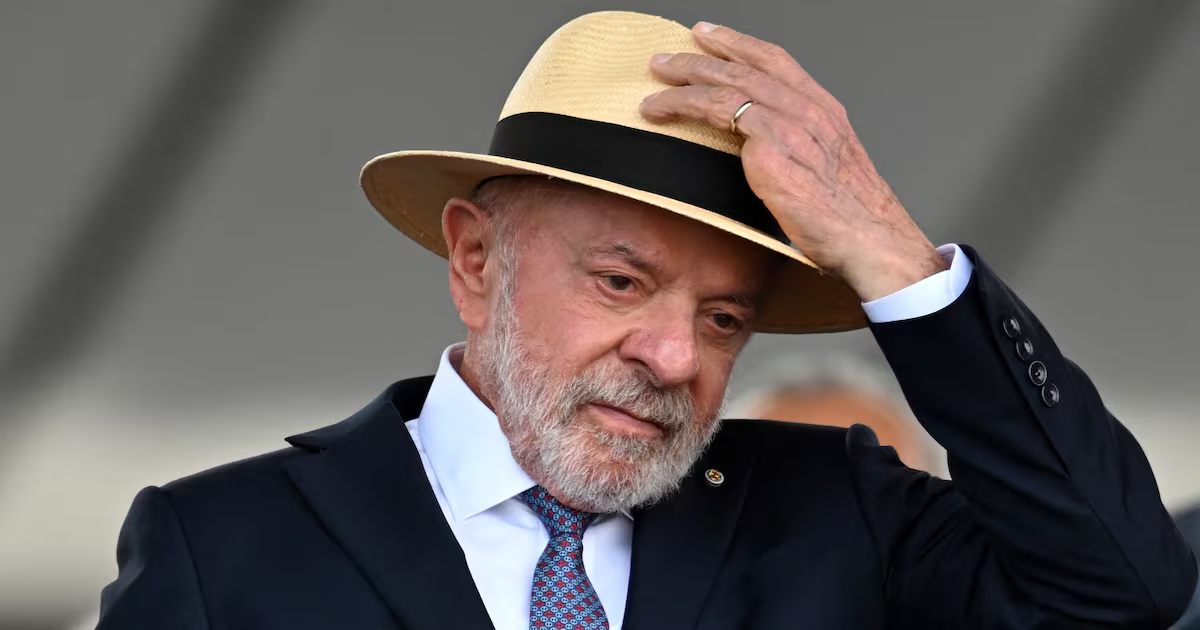
Hold on to your hat: the scandal turning Brazil’s election upside down
Lula da Silva was cruising to victory – but an explosive controversy has shaken the political establishment and altered the dynamics of the race
1,605 words~7 min read