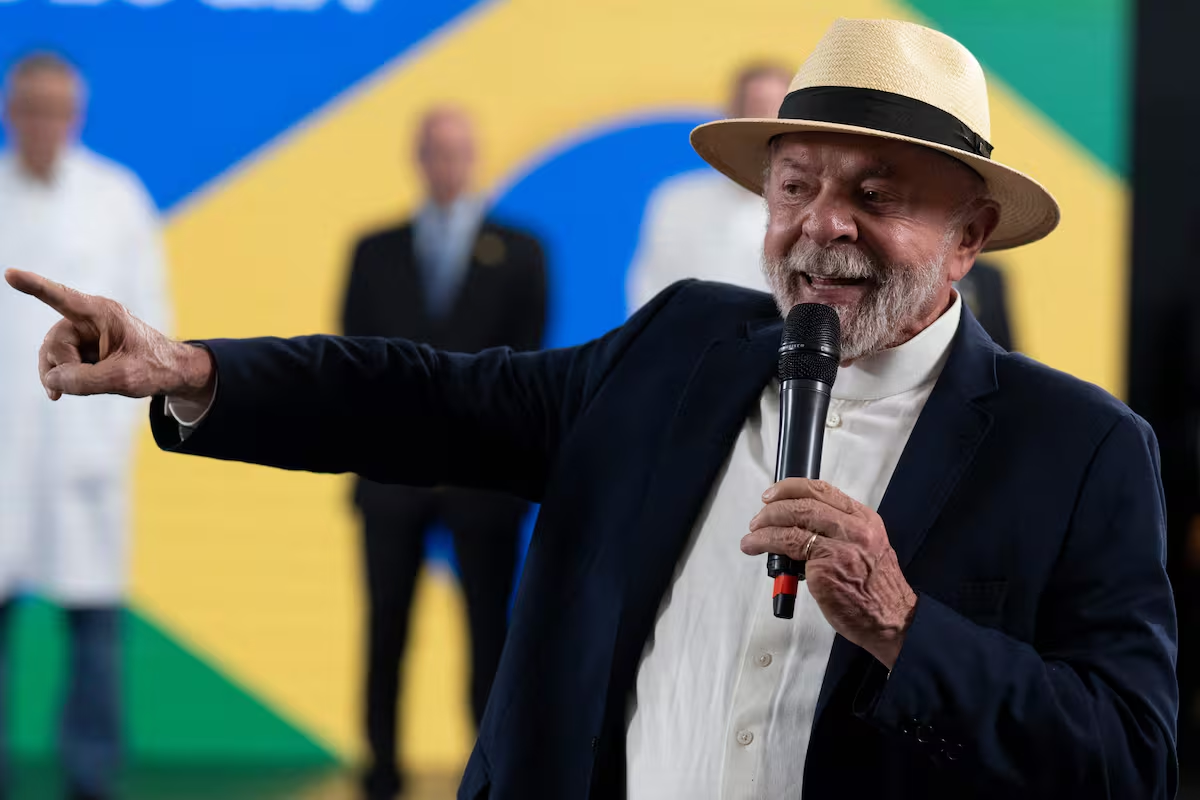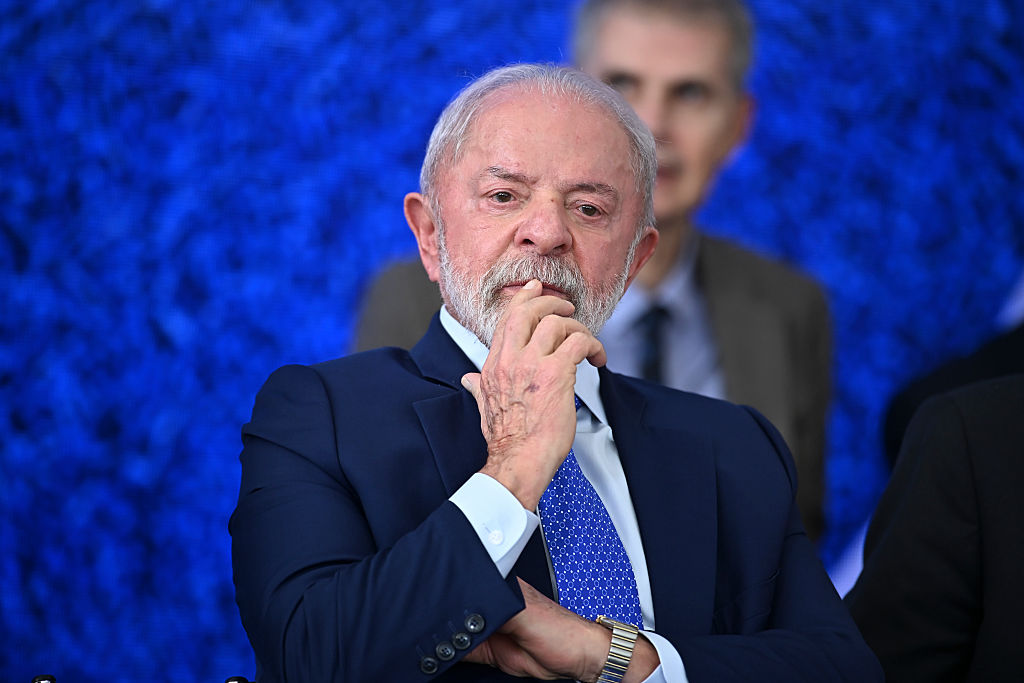
Reading Time: 4 minutesRIO DE JANEIRO—As recently as six weeks ago, President Luiz Inácio Lula da Silva seemed to be cruising to reelection. Unemployment was at record lows; the stock market at record highs; inflation had closed 2025 at its lowest level in seven years. Lula’s archrival, former President Jair Bolsonaro, was in prison—and had just chosen Flávio, widely seen as the least charismatic of his four sons, to be his preferred candidate in October’s vote. “We know it won’t be easy,” a Lula adviser told me, “but the wind is at our backs.”
Today, there is nary a breeze. A Datafolha survey published Sunday showed Lula with just a three percentage point lead in a hypothetical runoff against Flávio Bolsonaro, down from a 15-point advantage in December. Other polls have shown similar dynamics. The tightening is in some ways a return to familiar battle lines; after all, Lula won the 2022 election by just a 51%-49% margin. But there are signs that the Lula of 2026 is struggling to connect with voters, and could be at genuine risk.
Part of the problem, as others have noted, may be Lula’s age. He will be 80 on Election Day and running for president for the seventh time since 1989—giving Lula more sequels than Rocky. While he seems to be in better physical and mental shape than a certain former U.S. president, age can manifest itself in other ways: Lula proudly does not carry a cell phone. In a country with some of the world’s highest rates of social media use (an incredible 3 hours and 37 minutes a day, according to one study), Lula’s Instagram following is still only half the size of Jair Bolsonaro’s. On Sunday evening, the latest “reel” on Lula’s account was a 6-minute video—an eternity, and a sign of an operation not fully adapted to the digital era.