This is Part 1 of a two-part technical series. Rupak's article on building AI-ready data products describes the larger destination: a machine-readable context layer, governed semantics, and engineering guardrails. This post tackles the migration problem that comes first—recovering legacy knowledge and turning it into grounded SQL. Part 2 will cover natural-language questions, governed execution, and explained answers.
All examples and names below are synthetic
Moving data is often the easier part of an SAP-to-cloud migration. Moving the knowledge is harder.
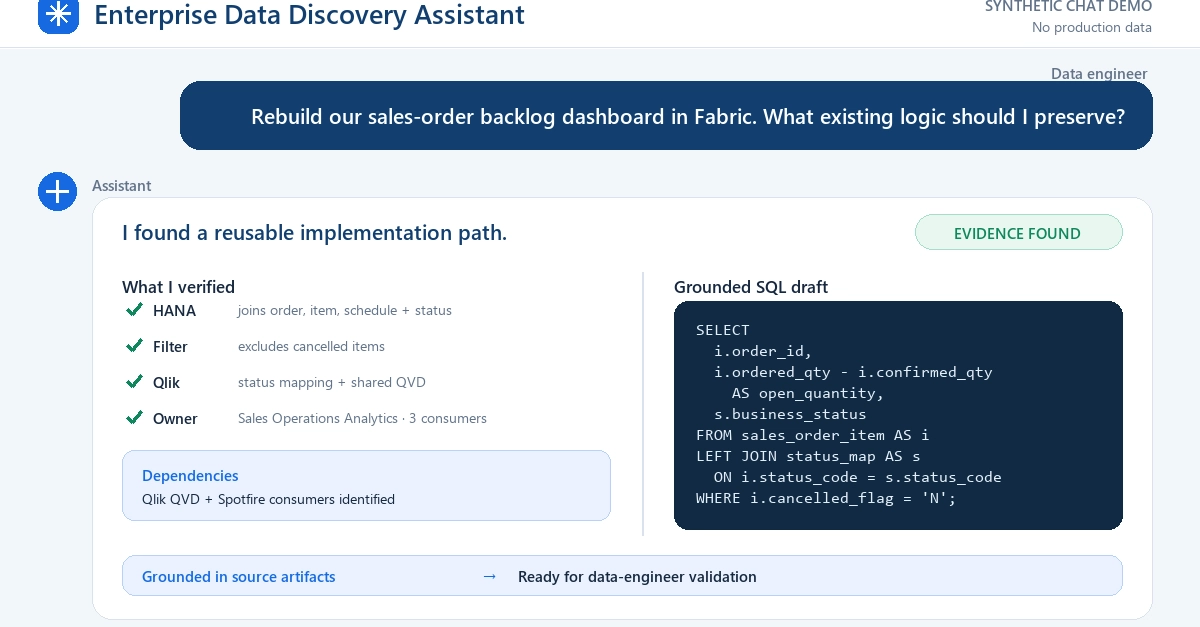
A pipeline can copy a table. It does not automatically carry forward why two tables are joined, which filter defines an open order, how technical statuses become business terms, or who owns the report.
Without that context, a new platform can produce a technically valid answer that is wrong for the business.