Moving Generative AI from a proof-of-concept sandbox into an enterprise-grade solution requires shifting our engineering focus from what AI can do to what enterprises can trust.
Modern organizations generate immense repositories of institutional knowledge—ranging from complex corporate refund policies to intricate regulatory guidelines. While data availability is rarely the issue, efficiently retrieving it remains a massive operational bottleneck. Workforce productivity drops significantly when employees are forced to manually navigate fragmented, disconnected data silos.
As companies rush to adopt Generative AI to bridge this gap, they encounter a critical barrier: trust and governance. Public, out-of-the-box LLMs operate without internal corporate context and are highly prone to hallucination. For an enterprise, an incorrect or completely fabricated answer introduces unacceptable operational, brand, and regulatory risks.
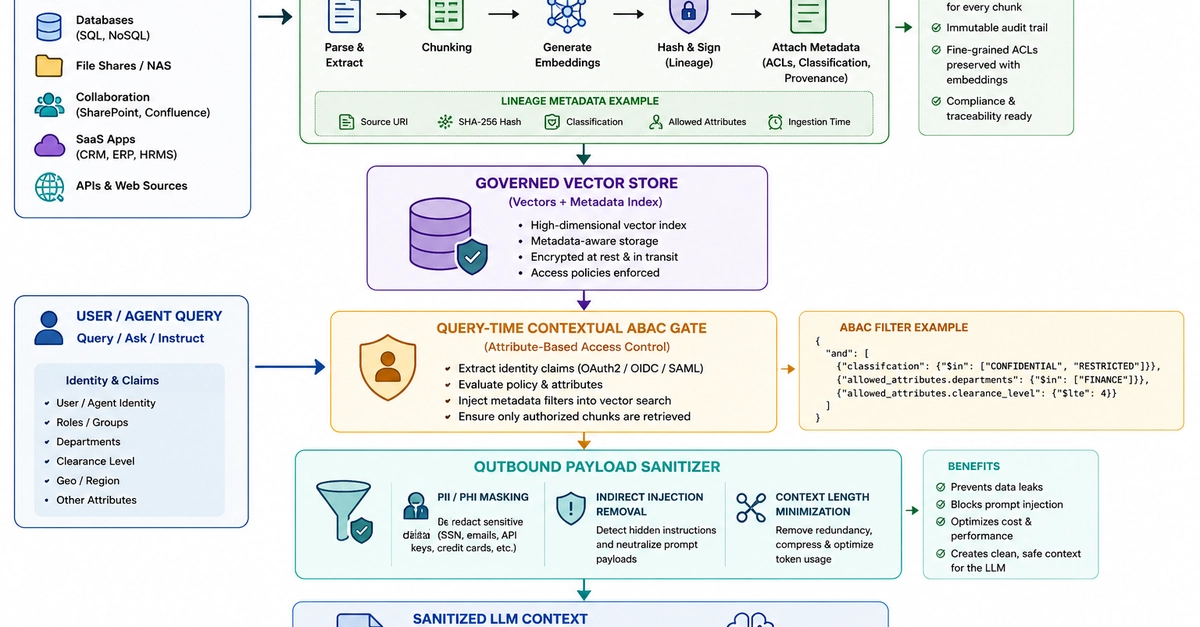
To solve this, I designed and open-sourced an end-to-end Enterprise Refund AI Assistant. Instead of relying blindly on a foundation model’s pre-trained data, this platform utilizes a robust, decoupled Retrieval-Augmented Generation (RAG) architecture. By separating data ingestion from live inference, the system ensures that every conversational output is strictly anchored, grounded, and fully traceable back to verified, authoritative enterprise documentation.