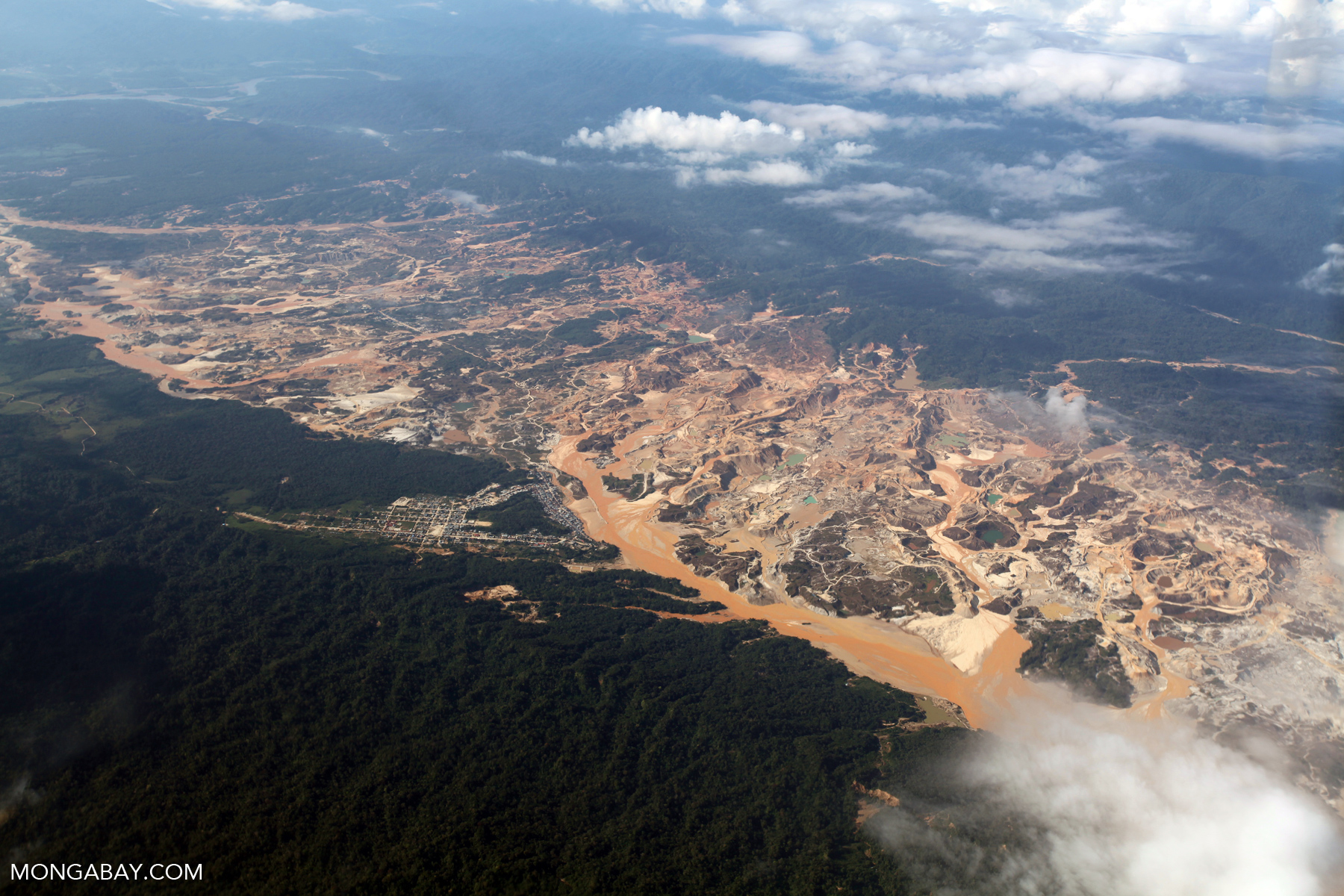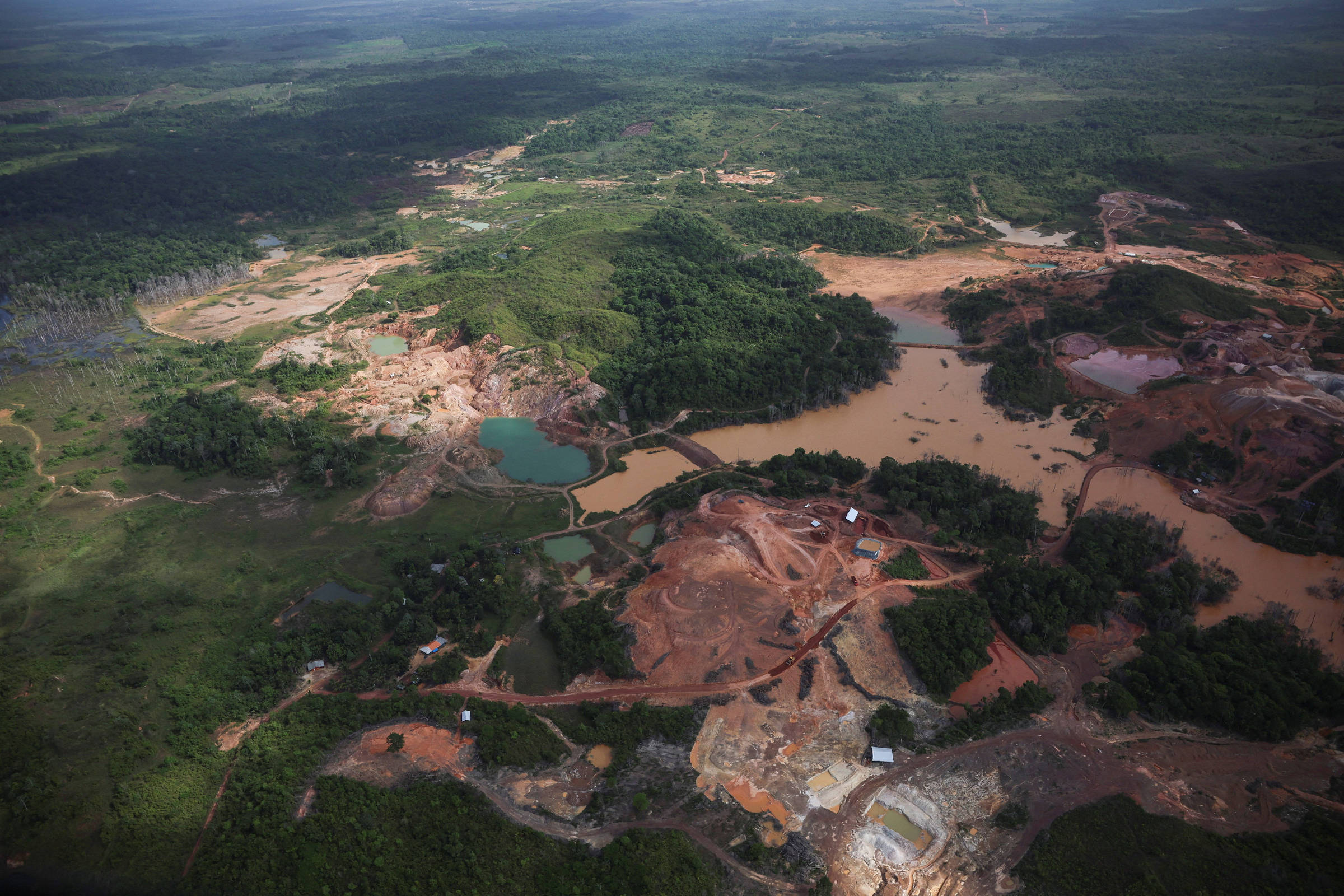
In the depths of the Amazon, the mineral that solders the microchips in artificial intelligence devices, appears on your cellphone screen, and fuels the global energy transition has become the new frontier for organized crime in the rainforest. Confidential documents from Operation Hephaestus Forge by the Federal Police and investigations by the Federal Public Prosecutor's Office (MPF), obtained exclusively by O GLOBO, reveal how cassiterite—dubbed the "black gold" of extractivism—illegally extracted from the Yanomami Indigenous Land and the Campos Amazônicos National Park allegedly supplied the supply chain of global giants such as Apple, Microsoft, Amazon, Walt Disney, and Sony, among others like Starbucks, Caterpillar, PepsiCo, Colgate-Palmolive, Victoria's Secret, and even jeans manufacturer Levi's. Identified as one of the world's largest producers and suppliers of tin and solder, the Brazilian company White Solder, headquartered in Ribeirão Preto (SP) with branches in Manaus (AM) and Ariquemes (RO), has become a defendant in court, accused of leading a scheme of receiving, refining, and laundering that moved at least R$200 million under the guise of a "green compliance" facade between 2020 and 2025. Between May and August 2021 alone, accounting records seized by the Federal Police showed the illegal flow of more than 525 tonnes of ore. Cassiterite is the raw material found in nature, from which pure tin is extracted after smelting and refining. White Solder factory in Ariquemes (RO), identified by the Federal Public Ministry (MPF) as part of the structure used in the scheme for purchasing and processing illegally sourced cassiterite. — Foto: Daniel Biasetto/Agência O GLOBO Rivaling traditional gold for its astronomical liquidity and ease of large-scale distribution, the "new rush" for tin exposes major corporations that, by purchasing hundreds of tonnes of refined tin accompanied only by formal papers and lenient audits, finance the ecocide in the Amazon, albeit under the shield of "willful blindness." In Manaus, O GLOBO followed the steps of the MPF investigation, which laid bare the fragility of international compliance. This report is the first of three in the series "Invisible Gold," focusing on how illegally extracted minerals from the Amazon feed the global technology and jewelry supply chain and why tracking them is nearly impossible. Headquarters of Coopertin, in Ariquemes (RO), identified in investigations as part of the structure used to issue documents that gave an appearance of legality to illegally sourced cassiterite. — Foto: Daniel Biasetto/Agência O GLOBO The prosecutors cross-referenced audit reports presented by White Solder with the U.S. Securities and Exchange Commission (SEC) database. The tracking revealed that the Brazilian smelter was formally listed as an active tin supplier in the balance sheets of global giants listed on American stock exchanges. In light of this finding, ten multinational companies operating in Brazil were notified in the civil investigation for serious failures in their socio-environmental and human rights due diligence mechanisms. In an unprecedented move, the MPF not only sought compensation from the defendants in the criminal complaint submitted and accepted by the 4th Federal Court of Roraima; prosecutors established compensation of R$1.7 billion as a pedagogical and reparatory measure for the entire chain involved, for collective environmental, patrimonial, and moral damages resulting from the extraction, transportation, industrialization, and commercialization of cassiterite and gold illegally mined in protected territories investigated by Hephaestus Forge, an allusion to the mythical workshop of the Greek god of fire and metallurgy. This demand, explains Prosecutor André Luiz Porreca of the 2nd Office of Western Amazon, responsible for the states of Roraima, Rondônia, and Acre, is based on legal theories for environmental damage such as "indirect responsibility for pollution" and "objective and joint liability," where companies cannot evade responsibility by claiming third-party fraud, force majeure, or lack of direct corporate links with the local refinery. It is incumbent upon large tech companies to actively demonstrate the clean origin and legitimacy of the tin they purchased. — I'm asking for these amounts based on analogous cases. My criteria were, in summary, the gravity of the facts, the sophistication of the criminal scheme, the economic capacity of the offenders, and the duration of the illicit activity — states Porreca. Watch the interview with the prosecutor of the case: Despite boasting international seals such as the LME Brand from the London Metal Exchange and the endorsement of the Responsible Minerals Initiative (RMI), White Solder operated under "willful blindness" and greenwashing, according to the MPF. Messages and documents seized from the cellphone of partner-manager Alessandro Torrente revealed that the smelter itself funded the costs of the facade branch in Roraima and managed the freight of clandestine ore. White Solder did not comment before the publication of this report. Indigenous people in an improvised structure in an area affected by illegal mining — Foto: Reproduction In the Yanomami territory, in Roraima, extraction operated with a technical division of labor. In the Baixinho and Pupunha mines, excavators and pumps were operated by organized groups: raizeiros cleared the vegetation, jateiros built containment structures, and maraqueiros operated sediment suction. Field coordinators like Valdeci Aparecido Cardoso, a miner known as "Keké," organized the teams and reported daily extraction volumes to financiers and operation partners, including Jidalias dos Anjos Pinto, known as "Tiziu" (a former state deputy), and Felipe José da Silva Galvão, who acted as an aircraft pilot. The structure relied on its own clandestine aviation logistics, operating from runways opened in the forest, as well as the use of mercury in associated gold mining. Como minerais extraídos ilegalmente da Amazônia abastecem a cadeia global da tecnologia The next step was to legalize the product. Cassiterite collected by intermediary Nelcides de Almeida Mello (who died last month in a traffic accident) was registered with false papers provided by the Cooperative of Tin Producers of Brazil (Coopertin). The cooperative maintained a headquarters in Boa Vista without operational activity or employees but issued guides and invoices to simulate that the ore came from authorized mining by the National Mining Agency (ANM). Of the total moved by the cooperative over a five-month period, R$166.3 million came from White Solder. According to investigations, the almost exclusive destination of the cassiterite was White Solder, which accounted for 97.6% of the cooperative's credits during the period. Once it reached the smelter's high-temperature furnaces in Rondônia, cassiterite was converted into high-purity ingots. The industrial process eliminates the physical characteristics of the product's origin. With documentation regularized on paper and compliance seals, the tin entered the international market. Improvised support structure for mining in an exploration area in the Yanomami Indigenous Land, Pupunha mine. — Foto: Reproduction The structure relied on its own clandestine aviation logistics, operating from runways opened in the forest, as well as the use of mercury in associated gold mining. The exploitation trail left native vegetation destroyed on Union lands and contamination without any recovery plan—environmental and social damages whose impacts persist to this day. According to Dario Kopenawa, president of the Hutukara Yanomami Association, miners are still present, and today the rush for cassiterite is driving devastation. — Until three, four years ago, we had no idea that the demand for cassiterite was strong. Now that's all we hear about here — he tells O GLOBO. Kopenawa states that even after the removal operations, illegal mining decreased, but the "rush for cassiterite" is bringing new invasions. In light of the scheme, the MPF filed charges against businessmen and operators Alessandro Saccoman Torrente, Filipe José da Silva Galvão, Jidalias dos Anjos Pinto, Nelcides de Almeida Mello, Rodrigo Martins de Mello, and Valdeci Aparecido Cardoso. In addition to the individuals, companies White Solder, Coopertin, Cataratas Poços Artesianos, and TARP Táxi Aéreo became defendants. The MPF is seeking a minimum compensation of R$43 million for material damages and R$100 million in collective and social moral damages to be paid directly to the Yanomami people. To understand how illegally extracted ore from Roraima became an export product with a certificate of compliance, O GLOBO's report went to the neighboring state of Rondônia, to the municipality of Ariquemes. Located 200 kilometers from Porto Velho, the municipality and the Bom Futuro district—home to the world's largest open-pit tin mine—not only served as the backdrop for the investigation but were also the operational and financial center of the scheme dismantled by the Federal Police. The criminal network chose the city based on Rondônia's own economic vocation, historically responsible for nearly half of the national tin production. At the intersection of BR-364 and BR-421, just a few kilometers apart, were the two ends of the fraud: at km 1.1, the Coopertin headquarters; further ahead, almost opposite, the White Solder plant, locations visited by the report. The disguise was "almost" perfect, investigators tell O GLOBO. Cassiterite extracted from the Yanomami Indigenous Land was mixed with legally extracted ore from Rondonian deposits—such as Massangana Dam 01—and received fake invoices issued by local cooperatives to obtain a "clean passport." Ariquemes also housed the group's command center. It was in the smelter's headquarters that the Federal Police seized the cellphone of partner Alessandro Torrente, unveiling the freight management and financing of mining operations. The city was home to field manager Valdeci Aparecido Cardoso, "Keké," whose cellphone contained satellite mapping of the fronts in the forest. The city also hosted Catiguá, Torrente's machinery company that rented excavators for the Pupunha clearing, and was the address of Nelcides de Almeida Mello, a 40-year veteran of mining in the region. The Rondonian branch was not limited to cassiterite. Forensic analysis of cellphones captured photos of high-purity gold bars smelted in Boa Vista reappearing 48 hours later in a luxury condominium in Ariquemes, ready to enter the formal market. According to investigations, they belonged to Torrente. Alessandro Torrente, a partner at White Solder, was monitored during the transport of gold bars from Boa Vista (RR) to Ariquemes (RO). — Foto: Reproduction/Federal Police The Bars of Torrente — Foto: Reproduction/Federal Police Material associated with the waste from tin separation analyzed in the Federal Police investigation — Foto: Reproduction The trip to Ariquemes and the analysis of the Federal Forensic reports revealed an even more valuable development in the wake of environmental destruction: the presence of high-tech strategic minerals associated with cassiterite. The Federal Police analyzed samples from the "waste" of the tin separation and identified high concentrations of monazite and ilmenite. Monazite is the main source of rare earth elements—such as lanthanum, cerium, neodymium, and praseodymium—as well as carrying thorium and uranium. It detected the presence of columbite, a mineral from which niobium and tantalum are extracted, essential for superconductors, aerospace alloys, and advanced capacitors. Spectrometry analyses confirmed the presence of yttrium, a high-value heavy rare earth. The experts found that miners no longer discarded this waste: using equipment such as jigs and magnetic separators, the criminal network began "washing" the old waste to concentrate and commercialize these highly valuable by-products, following the global race for technological transition minerals. In addition to supplying the global market, cassiterite marks a strategic shift in the ecosystem of illegal mining in the Amazon, rivaling gold in operational and financial relevance. Unlike the precious metal—whose extraction requires complex mercury handling and poses a higher risk of seizure—cassiterite offers continuous, predictable, and industrial-scale exploitation, driven by hydraulic excavators at mining fronts, as verified by O GLOBO at the "Bom Futuro" mine. Equipment used in the cassiterite exploration area in the Yanomami Indigenous Land, Pupunha mining site; investigation indicates the advancement of mining on an industrial scale — Foto: Reproduction The raw material gives rise to refined tin, an indispensable element in soldering microchips, cloud servers, artificial intelligence, and energy transition technologies. Quoted on the London Metal Exchange (LME) at levels orbiting US$55,000 per tonne (approximately US$55 per kilo, equivalent to R$250), the so-called "black gold" has begun to ensure immediate liquidity and constant flow to mining. This economic shift has transformed the ore into one of the main financing vectors for organized crime in the forest, connecting the predatory infrastructure on indigenous lands directly to global supply chains. In the Campos Amazônicos National Park, the devastation caused by cassiterite and gold mining has taken a different judicial course. A civil inquiry initiated by the MPF exposed the crime trail after an on-site inspection by a federal prosecutor in August 2024. At the site, inspectors found clandestine camps and destroyed streams. Images from Censipam confirmed the scale of the damage: 193 hectares of devastated forest and 15 illegal landing strips operating in the park and its buffer zone. These findings were attached to the new Public Civil Action filed by the MPF against White Solder, Coopertin, and their partners to support the thesis of "recidivism." For prosecutors, the destruction within the conservation unit proves that the machinery dismantled in Operation Hephaestus Forge remains active and expanding. Even after initial arrests, the smelter acquired over 12,000 tonnes of cassiterite from the cooperative between 2022 and 2024 without proof of origin, channeling the ore from the reserve directly via BR-421 to Ariquemes (RO). Faced with the ongoing hemorrhage, the MPF requested an urgent injunction to compel the companies to prove the physical and geospatial origin of all ore under threat of immediate suspension of industrial activities. — The question remains: how do these tonnes move in this manner from one end to the other until exportation? Who 'turned a blind eye' to this is what we need to understand — states Pablo Cesário, President-CEO of the Brazilian Mining Institute (Ibram). The Geological Service of Brazil (SGB), a federal agency linked to the Ministry of Mines and Energy, states that so far, there are no traceability studies for cassiterite, as have been developed for gold. SGB specialists confirm the high potential of Rondônia's tin province and the massive presence of rare earths in the state deemed "strategic" for the country's future. Experts consulted by O GLOBO say the most urgent measure needed is the establishment of a traceability system for cassiterite and rare earths. — We have made a recommendation to various federal public agencies for this public policy to be implemented urgently. Despite the confirmed scientific feasibility, there has been no conclusive response indicating this will be done. Quite the opposite. What has been said is that, due to budgetary, financial, and other reasons, the construction of this project will not be done at this time — says Prosecutor Porreca. “So, can we say that in Brazil, there are no mechanisms for cassiterite traceability?” asked the report. — Absolutely none — he concludes. In a note sent to O GLOBO, the National Mining Agency (ANM) admitted that there is currently no national traceability system for cassiterite capable of tracking the ore from extraction to industrial transformation and that it is also the responsibility of smelters and buyers to verify the legal and documentary origin of the ore. The ANM further stated that it does not comment on ongoing investigations and that the legality of cassiterite continues to depend on the cross-referencing of invoices, mining titles, and occasional inspections. Amazon claims to have no direct commercial relationship with White Solder but is reinforcing verification requirements with suppliers associated with the smelters identified in the report. "We will continue to work with them to strengthen audit and traceability mechanisms," it says in a note. The Walt Disney Company Brazil, which was not mentioned in the inquiry, will not comment on the content or progress of the investigation. Representatives of the multinational companies did not respond by the time this report was published. The defendants' defenses denied their involvement. (Contributed by Jônatas Levi) * The "Invisible Gold" series—examining how illegally extracted minerals from the Amazon feed the global technology supply chain and why they are untraceable—is supported by the Institute for Press and Society (IPYS) and the Spanish Agency for International Development Cooperation (AECID).
Invisible gold: How illegal cassiterite from the Amazon supplies global giants without leaving a trace
First report in the series reveals the 'new tin rush' amid mineral exploitation in indigenous territories and conservation units without Brazil having any traceability system
2,617 words~12 min read