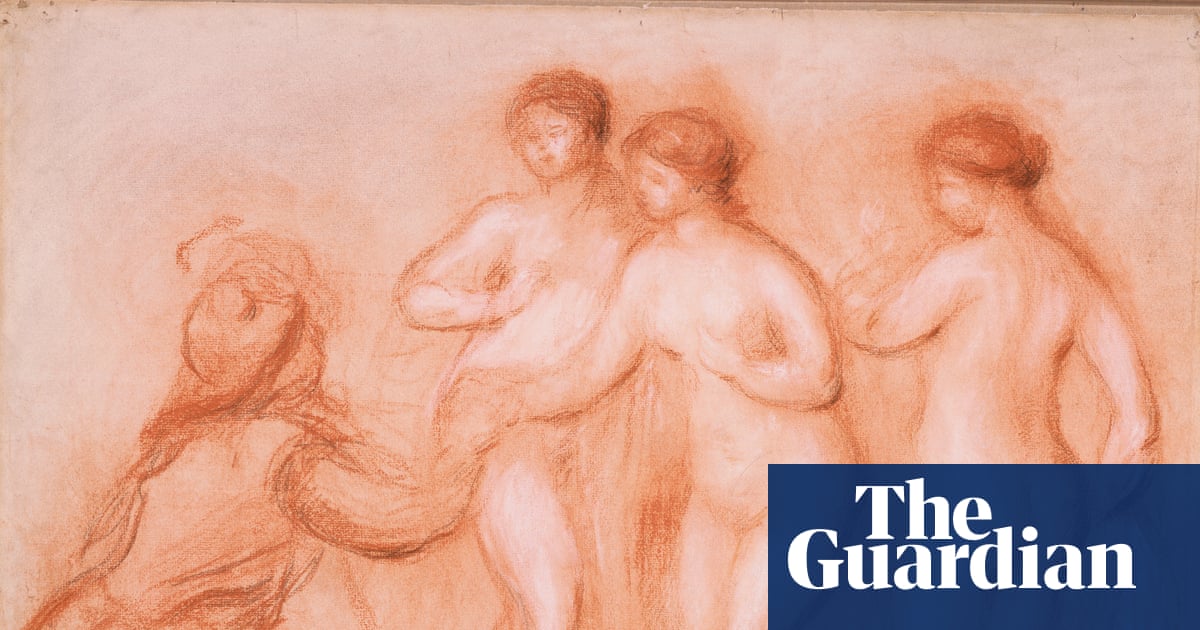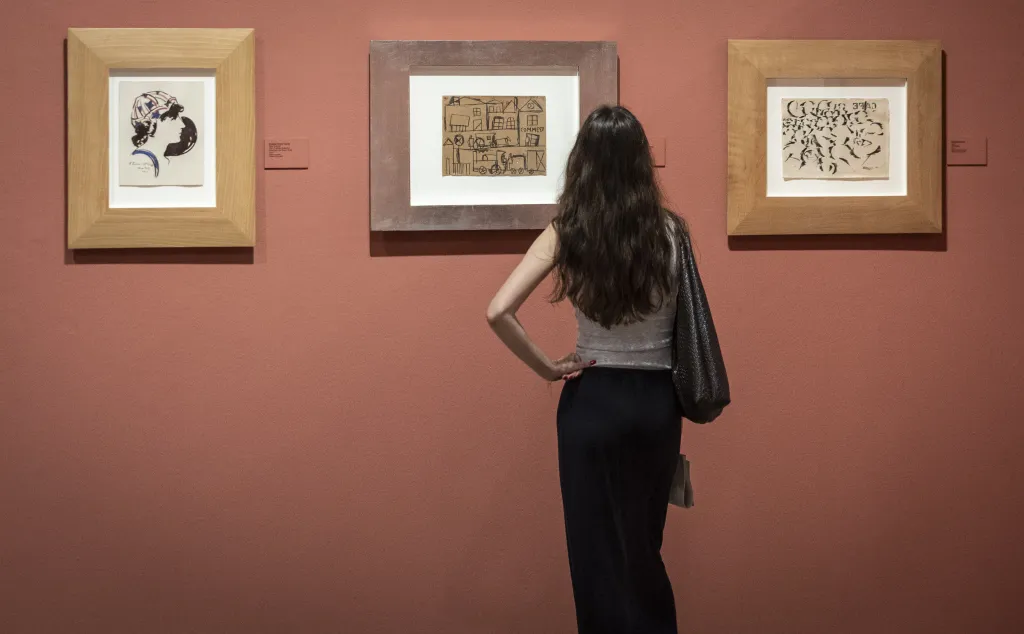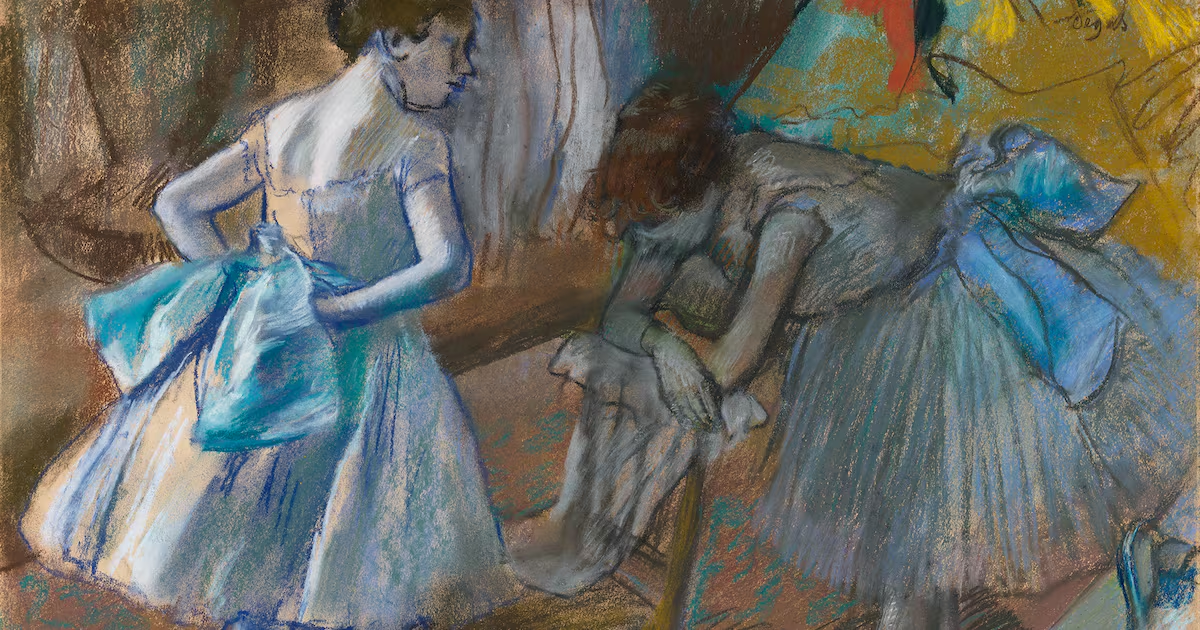
According to Henri Matisse, “painting and drawing say the same thing”, but “a drawing is a painting made with reduced means”. Is that true? Is drawing the undersung younger sibling of paint? If that’s the case, Rembrandt to Matisse, the exhibition of European works on paper at the National Gallery of Ireland, shows that perhaps drawing’s limelight moment has come.Through lines on paper made with chalk, pastel, etching, ink and graphite, there is something enticingly intimate about a drawing. Those lines, the mind knows, were made by a hand, just like our own, and the sense of connection may be more believable than when looking at so many of art history’s highly polished paintings. “It’s the initial idea of the artist, down on paper,” the exhibition’s curator, Niamh MacNally, says. “You’re looking at the artist’s mind working.”Whereas history’s celebrated canvases tend to require a stepping back to assess them, drawing invites you in. And if colours continue to glow in oil paint across time, the ways in which men and women, angels and demons, castles and collapsing cottages can come to life through the gap of centuries, with little more than a clutch of lines and patches of shading, is almost more miraculous when looking at works on paper.Take the transubstantive magic in silverpoint. To make a silverpoint etching, according to MacNally, you would have needed to burn animal bones to ash and mix them with glue, probably made with boiled horse hide and hooves. Covering the page with this unpleasant-sounding and, most likely, unpleasant-smelling substance, you would then draw with a silver tip, perhaps using something as fine as a wire held by a wooden rod. Initially your lines would be almost invisible, but as the silvered markings oxidised – a process that could take months – your image would emerge. So transcendent beauty comes about through the sense of belief required to make invisible marks in the very materials of life and death. It’s quite the metaphor.That ethereal beauty of silverpoint, so at odds with the physicality of its ingredients, is definitely the case with Lorenzo di Credi’s A Female Head, in which the downcast gaze of a young woman is held in a few spare lines. The resulting image is delicate and timeless, and it takes an imaginative leap to acknowledge that it was made in the 1480s, more than 500 years ago. Di Credi trained in the same studio as Leonardo da Vinci, and you can see the elements of style that echo between the pair. Di Credi was clearly a prodigy; he would inherit the workshop of his master, Andrea del Verrocchio, when he was still in his 20s, although it is obviously Leonardo who is the best remembered of the old masters today.A Female Head is among the 57 works on show, which MacNally selected from the National Gallery’s collection of more than 15,000 works on paper, which includes drawings, prints, photographs and miniatures, and which spans works from the 15th century to the present day. Armand Seguin (1869–1903): Trees Above the Estuary, 1892. Photograph: National Gallery of Ireland Jean-Antoine Watteau (1684–1721): Woman Seen from the Back, circa 1716. Photograph:
‘You’re looking at the artist’s mind working’: Marvels of the National Gallery’s works on paper
As well as showing treasures from its collection, the National Gallery of Ireland has made all of its prints and drawings available for individual viewing
1,858 words~8 min read