Skip to Content Subscribe My Account Manage My Subscriptions FAQ Newsletters Canada Canadian True Crime Canadian Politics Health World Israel & Middle East Financial Post NP Comment Longreads Puzzmo Diversions Comics NP News Quiz New York Times Crossword Horoscopes Modern Life Eating & Drinking Style Sponsored Play for Ontario Travel Travel Canada Travel USA Travel International Cruises Travel Essentials Culture Books Celebrity Movies Music Theatre Television Business Essentials Advice Lives Told Tails Told Shopping Buy Canadian Home Living Outdoor Living Kitchen & Dining Tech Style & Beauty Personal Care Entertainment & Hobbies Gift Guide Travel Guide Deals Savings National Post Store More Sports Hockey Baseball Basketball Football Soccer Golf Tennis Driving Vehicle Research Reviews News Gear Guide Obituaries Place an Obituary Place an In Memoriam Classifieds Place an Ad Celebrations Working Business Ads Archives Healthing Epaper Manage Print Subscription Profile Settings My Subscriptions My Offers Newsletters Customer Service FAQ Newsletters Canada World Financial Post NP Comment Longreads Puzzmo Diversions Modern Life Shopping Epaper Manage Print Subscription HomeNewsCanadaMark Carney runs into backlash over push to build Canadian data centresCarney and other government officials have also presented data centres as an opportunity to bolster Canada’s digital sovereigntyAuthor of the article:A woman protests against data centres outside the Guelph Data Centre in Guelph, Ont., on Thursday, Aug. 13, 2026. Photo by Peter Power/Postmedia NewsThe data centre backlash that has gripped U.S. politics is spreading north, complicating Prime Minister Mark Carney’s efforts to attract investment in the rapidly expanding artificial intelligence infrastructure.Enjoy the latest local, national and international news.Exclusive articles by Conrad Black, Barbara Kay and others. Plus, special edition NP Platformed and First Reading newsletters and virtual events.Unlimited online access to National Post.National Post ePaper, an electronic replica of the print edition to view on any device, share and comment on.Daily puzzles including the New York Times Crossword.Support local journalism.Enjoy the latest local, national and international news.Exclusive articles by Conrad Black, Barbara Kay and others. Plus, special edition NP Platformed and First Reading newsletters and virtual events.Unlimited online access to National Post.National Post ePaper, an electronic replica of the print edition to view on any device, share and comment on.Daily puzzles including the New York Times Crossword.Support local journalism.Create an account or sign in to continue with your reading experience.Access articles from across Canada with one account.Share your thoughts and join the conversation in the comments.Enjoy additional articles per month.Get email updates from your favourite authors.Create an account or sign in to continue with your reading experience.Access articles from across Canada with one accountShare your thoughts and join the conversation in the commentsEnjoy additional articles per monthGet email updates from your favourite authorsSign In or Create an AccountorIn many respects, Canada is an alluring alternative for Silicon Valley firms: it has a cooler climate, abundant energy resources and plenty of open land. But a growing number of Canadian communities are looking to slam the brakes on server farm projects.Two municipalities — Oakville, Ontario and Rocky View County, Alberta — have implemented one-year moratoriums on data centre developments. In the sparsely-populated province of Manitoba, Premier Wab Kinew vetoed a project that would have been built outside of Winnipeg, saying the drawbacks outweighed the benefits.Get a dash of perspective along with the trending news of the day in a very readable format.By signing up you consent to receive the above newsletter from Postmedia Network Inc.A welcome email is on its way. If you don't see it, please check your junk folder.The next issue of NP Posted will soon be in your inbox.We encountered an issue signing you up. Please try againA huge 7.5 gigawatt proposal by Canadian entrepreneur and Shark Tank personality Kevin O’Leary has also sparked pushback, while protestors have marched against data centres proposed in Vancouver which have been championed by all levels of government.The Canadian hesitancy mirrors the skepticism toward data centres that has led to hundreds of local bans in the U.S., as well as a statewide moratorium in New York. Supersized data centres are loud and energy-hungry, and many people are still not convinced about the benefits of AI the facilities are meant to support.Carney and other government officials have also presented data centres as an opportunity to bolster the country’s digital sovereignty. But tech policy critics warn that efforts to store Canadians’ data domestically aren’t always a protection against U.S. influence, while the economic benefits of these projects may be more modest than some claim.Although the number of local bans in Canada is limited for now, public polling suggests the hesitancy is more widespread. An Angus Reid Institute poll found 68% of respondents would oppose a large AI data centre near their home, while a survey by Leger found four in five respondents said they’re concerned about potential increases to electricity bills and environmental impacts.Two of the three petitions with the most signatures gathered to submit to Canada’s House of Commons are calling for a stop to data centres. The left-wing New Democratic Party is calling for a nationwide pause.“I don’t think their concerns are groundless, but I don’t think we can put the brakes on progress,” said Jim Balsillie, the former head of BlackBerry Ltd., who has become an outspoken advocate for Canadian technological sovereignty.Canadian AdvantageCanada’s AI data centre expansion is still in its early stages, but it’s poised to ramp up fast. Recent research from Toronto’s York University shows there are only five operational hyperscale data centres, defined as 50 megawatts or above, but 159 more are announced or under construction. That push is also showing up in trade data: Canadian imports of U.S. goods hit a record high in June driven by a surge in the computer parts used for data centres.The federal government argued in its AI strategy that Canada is “uniquely positioned to lead in building this infrastructure responsibly and sustainably.”“As demand for AI compute grows, Canada’s approach will be to link new data centre development with clean energy expansion, robust environmental standards, and tangible benefits for local communities,” the document said.Balsillie said the challenge with data centres is that, unlike other forms of capital investment, they don’t necessarily spur the same kind of economic benefits to people, while the negative spillovers can be material for communities.“It’s a fine line between being strip-mined for low value-add, metaphorically, and capturing high value-added sovereign participation in this era of AI,” Balsillie said.Carney’s government unveiled a framework on Thursday to help guide communities’ decisions on data centre development. It said such projects must create lasting local benefits, limit environmental impacts and ensure electricity costs are not pushed onto residents. Tech giants including Amazon.com Inc., Meta Platforms Inc. and Anthropic PBC signed on to the principles.BCE Inc. Chief Executive Officer Mirko Bibic applauded the framework, which he said acknowledged the critical nature of AI infrastructure and the need for more domestic compute capacity.“On the other hand, there’s an acknowledgement that while we do that, we need to engender trust amongst all stakeholders in the country — citizens, communities, investors,” Bibic said in an interview Friday on BNN Bloomberg.Provincial governments are also trying to address concerns surrounding energy costs. British Columbia is restricting electric grid use for data centres and forcing operators to compete for access.Energy-rich Alberta’s government has been particularly bullish about data centres and attracted the bulk of Canada’s proposals. Nonetheless, it’s stipulated operators must supply their own power. The province will be home to a $13-billion Meta data centre, set to be the largest in the country.Even so, an analysis by the Pembina Institute suggested Albertans could see their electricity bills rise by as much as $460 per year, because the centres would be allowed to connect to the grid before their own generation comes online. The Brookings Institute found data centres create a modest amount of jobs and workers see no wage gain, while home prices tend to rise by 2-5% in communities that harbor the infrastructure.“Canada has always been seduced by this promise of jobs, and we’ve given away a lot historically in the past in order to get jobs here. And data centres don’t really have that promise,” said Vass Bednar, managing director of the Canadian Shield Institute, a public policy think tank.The Trump FactorFederal and provincial officials have also pitched data centres as a necessity to bolster Canada’s sovereignty at a time when tensions are high with the U.S.“Ontario has a choice: we can build the economy of the future and ensure Canadians’ data stays in Canada and out of President Trump’s hands, or we can get left behind and risk Canadians’ data being sent down to the U.S.,” Premier Doug Ford said in August.But Balsillie said holding Canadians’ data domestically doesn’t necessarily protect it from the Trump administration. Under the Cloud Act, U.S. law enforcement can compel American tech companies to hand over electronic data, regardless of where it is stored.“It’s not sovereign if you haven’t got sovereign governance,” he said.The Canada-U.S.-Mexico Agreement, signed in 2020, also blocks some restrictions on cross-border information transfers.That complication applies to the supply chain, too. Balsillie argued that CoreWeave Inc., a New Jersey-based company, is in line to receive a portion of federal funding for “sovereign” computing infrastructure, awarded to Cohere Inc., a Canadian AI company. The government declined to comment and CoreWeave didn’t respond to a request for comment.Cohere spokeswoman Amanda Taggart said: “Training frontier models requires highly specialized infrastructure, and at the time no Canadian vendor had the experience, timelines or chipsets required to train large language models from scratch at this scale. Those capabilities are still developing in Canada, and we want to help build them. That effort is already underway, and we look forward to sharing more soon. In the meantime, we are working with partners from across the world in order to continue our growth and build a generational AI company from Canada.”Patrick Searle, the head of the Council of Canadian Innovators, which represents tech CEOs in the country, said in a statement that there are “active conversations ongoing between government and industry exploring how to build digital infrastructure in a way that responds to public concerns.”“At the same time, this is increasingly an issue of economic sovereignty,” he added. “As compute becomes increasingly important to our economy, national security and competitiveness, Canada needs sufficient infrastructure and technological capacity here at home.”Our website is the place for the latest breaking news, exclusive scoops, longreads and provocative commentary. Please bookmark nationalpost.com and sign up for our daily newsletter, Posted, here. Join the Conversation This website uses cookies to personalize your content (including ads), and allows us to analyze our traffic. Read more about cookies here. By continuing to use our site, you agree to our Terms of Use and Privacy Policy.
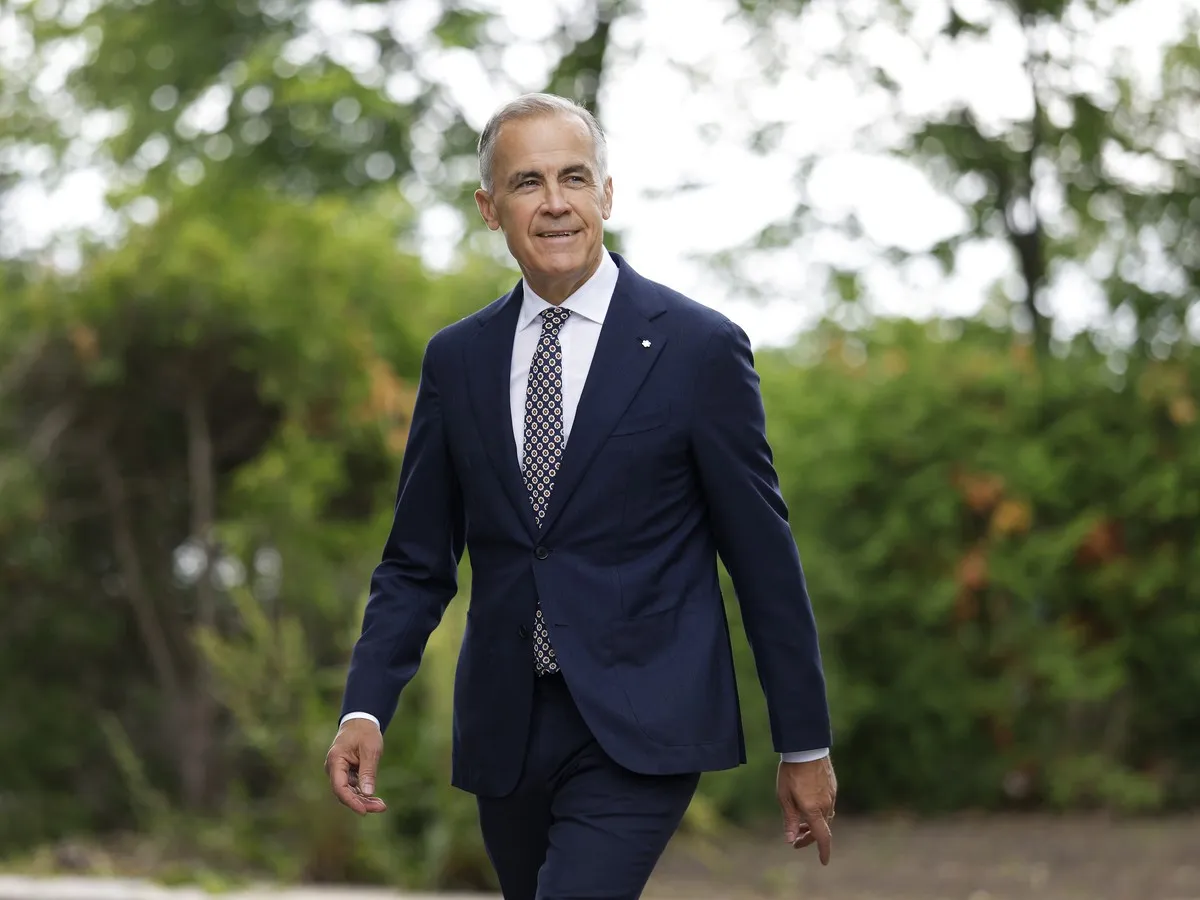
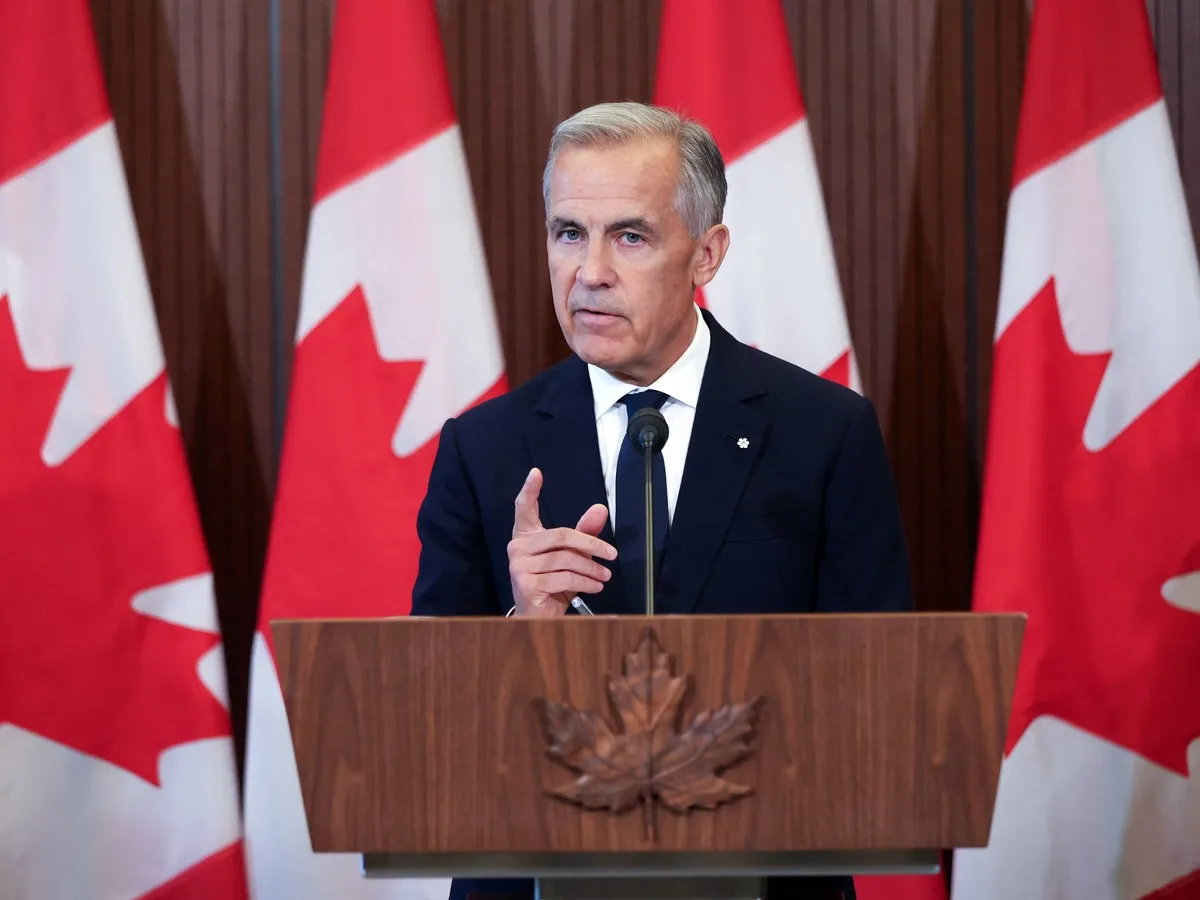
Mark Carney runs into backlash over push to build Canadian data centres
Carney and other government officials have also presented data centres as an opportunity to bolster Canada’s digital sovereignty.
1,780 words~8 min read