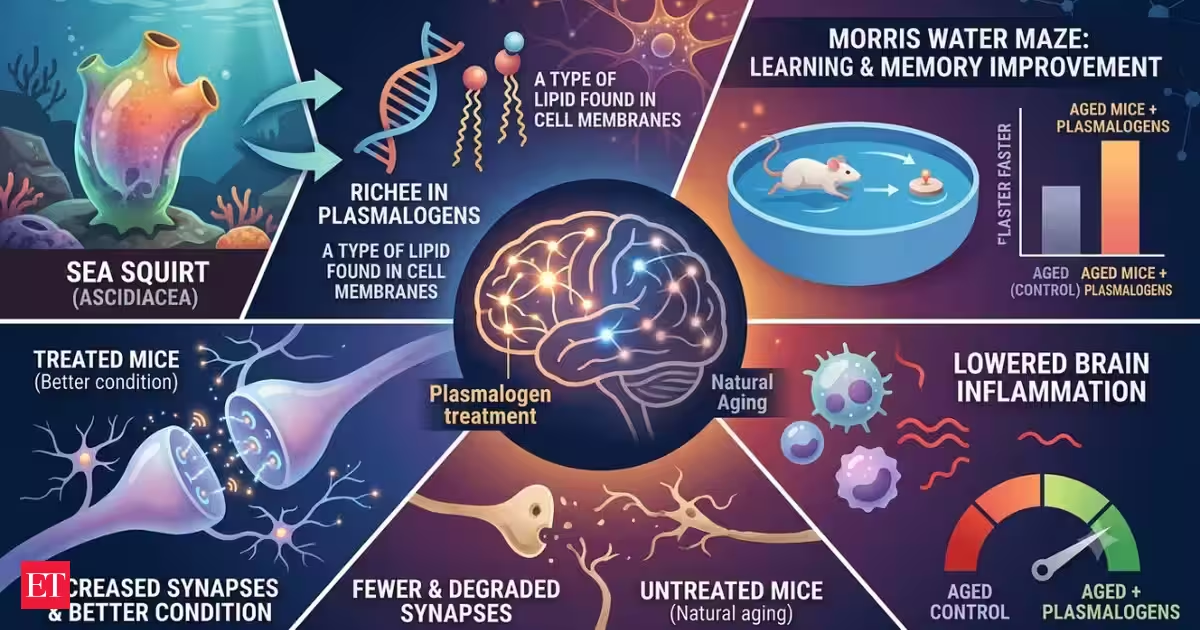
Anti-aging brain research: A marine animal eaten in parts of Asia may have given scientists an unusual clue about changes that occur in the aging brain.Researchers from Xi'an Jiaotong-Liverpool University, Stanford University, Shanghai Jiao Tong University and the University of Chinese Academy of Sciences studied compounds called plasmalogens, which are found at high levels in sea squirts. In experiments with aged mice, the compounds were associated with improvements in learning and memory as well as several physical changes.The findings suggest that plasmalogens may influence some brain functions that decline with age.Why scientists are studying sea squirtsSea squirts, also known as Ascidiacea, are marine animals eaten in parts of Asia. In Korea, they are known as meongge, or 멍게, while in Japan they are called hoya, or ホヤ.They contain high levels of plasmalogens, a type of lipid that forms part of cell membranes. These molecules occur naturally in the human body and are particularly abundant in the brain, heart and immune cells.You Might Also Like:Plasmalogen levels tend to decline as people grow older. Reduced levels have also been observed in several neurodegenerative diseases, including Alzheimer's disease and Parkinson's disease.These observations led researchers to examine the effects of plasmalogens in aged mice.Older mice learned more quicklyThe researchers used the Morris water maze to measure learning and memory.The mice were placed in a pool containing a hidden platform where they could rest. After five days of training, aged mice receiving plasmalogens reached the platform significantly faster than aged mice that did not receive the supplement.You Might Also Like:Their performance was much more similar to that of younger animals.When the researchers examined the animals' brains, they found more synapses in the treated mice. The connections also appeared to be in better condition than those in untreated aged mice.Synapses are the tiny junctions through which nerve cells communicate. They allow signals to pass through neural networks and are important for learning and memory.The treated mice had less brain inflammationThe researchers also found substantially lower levels of inflammation in the brains of mice that received plasmalogens.You Might Also Like:Inflammation is part of the body's normal immune response, but chronic or excessive inflammation in the brain can become harmful. As the brain ages, immune activity can become dysregulated, potentially damaging nerve cells and disrupting communication between synapses.The researchers said the reduction in inflammation could help explain the differences seen in the learning and memory tests.Researchers identified several possible mechanismsThe scientists do not yet know exactly how dietary plasmalogens produced the observed effects.One possibility involves molecules associated with the growth and development of neurons and synapses. The researchers found that plasmalogens significantly increased these molecules, which they said suggests that plasmalogens may promote neuroregeneration.Another possibility involves the structure of synapses.According to Professor Lei Fu, plasmalogens may affect the structural properties of synapses by increasing the fluidity and flexibility of synaptic membranes. This could influence the transmission of impulses between neurons.The researchers also identified the gut-brain connection as another possible pathway.Some studies have shown that dietary plasmalogens affect microorganisms in the gut. The researchers suggested that their effect on the connection between the gut and brain could contribute to the improvements in learning and memory observed in the study.The findings have not been shown in humansThe results came from experiments in aged mice.The findings do not establish that eating sea squirts or taking plasmalogen supplements can reverse aging in people. Further research would be needed to determine whether similar effects occur in humans, what doses might be effective and whether long-term supplementation is safe.For now, the study gives scientists another way to investigate how plasmalogens may affect changes associated with aging.In the mice studied, the compounds were associated with better performance in a learning and memory test, more synapses that appeared to be in better condition and lower levels of brain inflammation.You Might Also Like:
Scientists find an anti-aging effect hidden in a seafood eaten in Asia
Anti-aging brain research: Discover how researchers are exploring the effects of plasmalogens from sea squirts on aging brains, improving memory and learning in aged mice through reduced inflammation and enhanced synaptic health.
636 words~3 min read