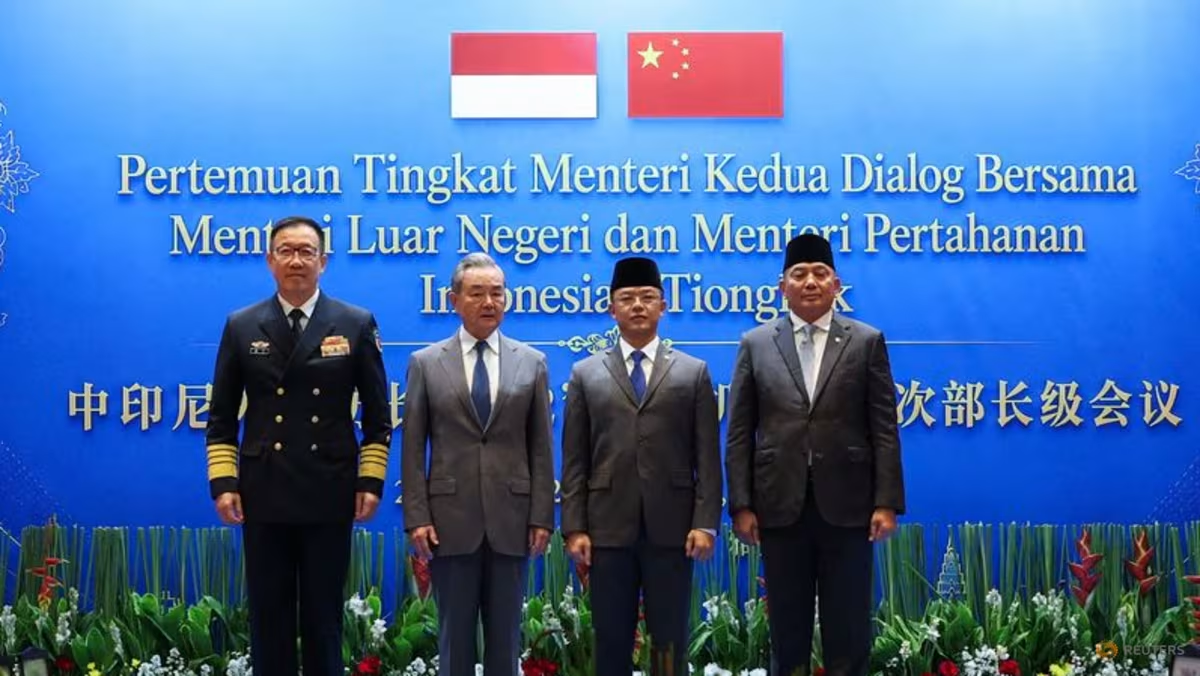
As ASEAN’s only G20 member, a critical global mineral supply chain node, and occupying strategic maritime space, massive Indonesia is an especially consequential “fulcrum of order” in the Indo-Pacific and Global South. Like most ASEAN states, it remains committed to strategic autonomy while notably drifting toward China. However, Jakarta’s shift is especially consequential.
“Free and active,” or bebas aktif, remains Indonesian foreign policy’s sincerely prized core. Yet beneath this high-level continuity, Beijing’s influence has rapidly grown, especially economically, overtaking the United States and key alternative partners like Japan and South Korea. Indonesia is not yet China-aligned, but the material bases for a “free and active” foreign policy are eroding.
Jakarta’s preferred orientation requires not just intent but robust options. China’s role within Indonesia’s economy may become so indispensable and entrenched that Jakarta cannot meaningfully tell Beijing no, hollowing out free-and-active rhetoric. Indonesia’s high-priority, ambitious growth goals and mixed economic picture sharpen this dilemma. Given its strategic importance, a functionally China-aligned Indonesia would have profound regional consequences.