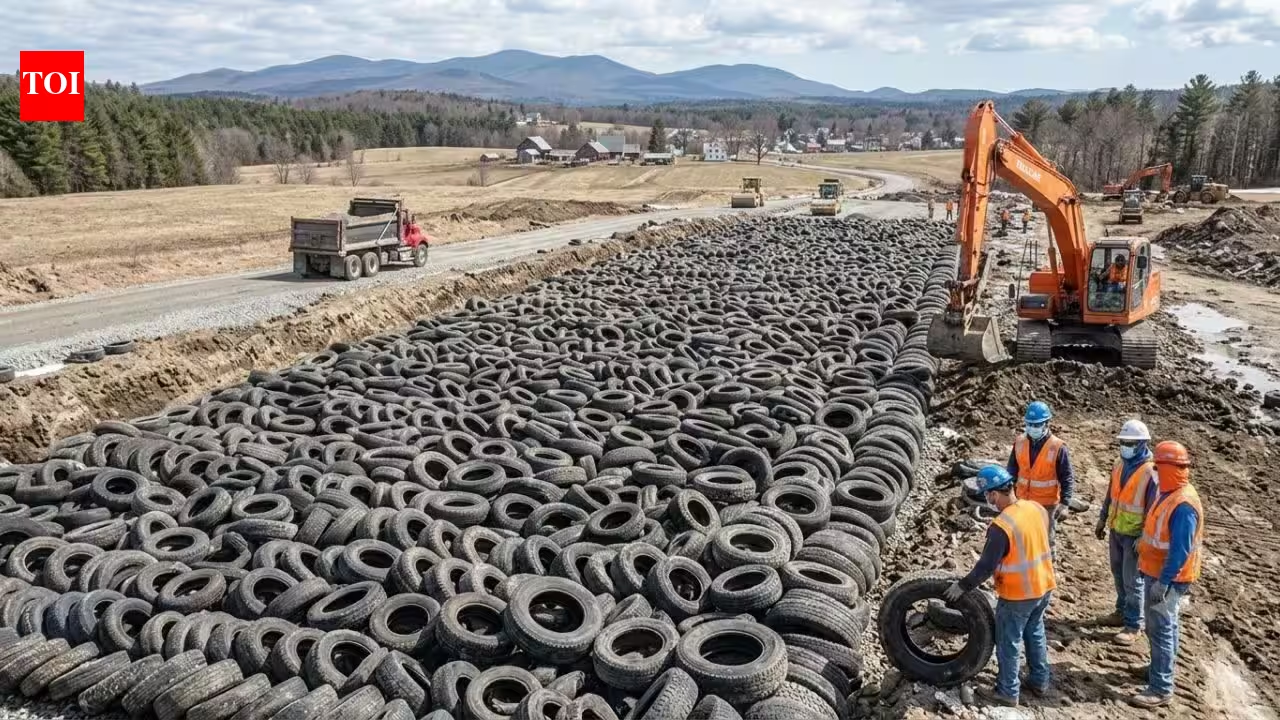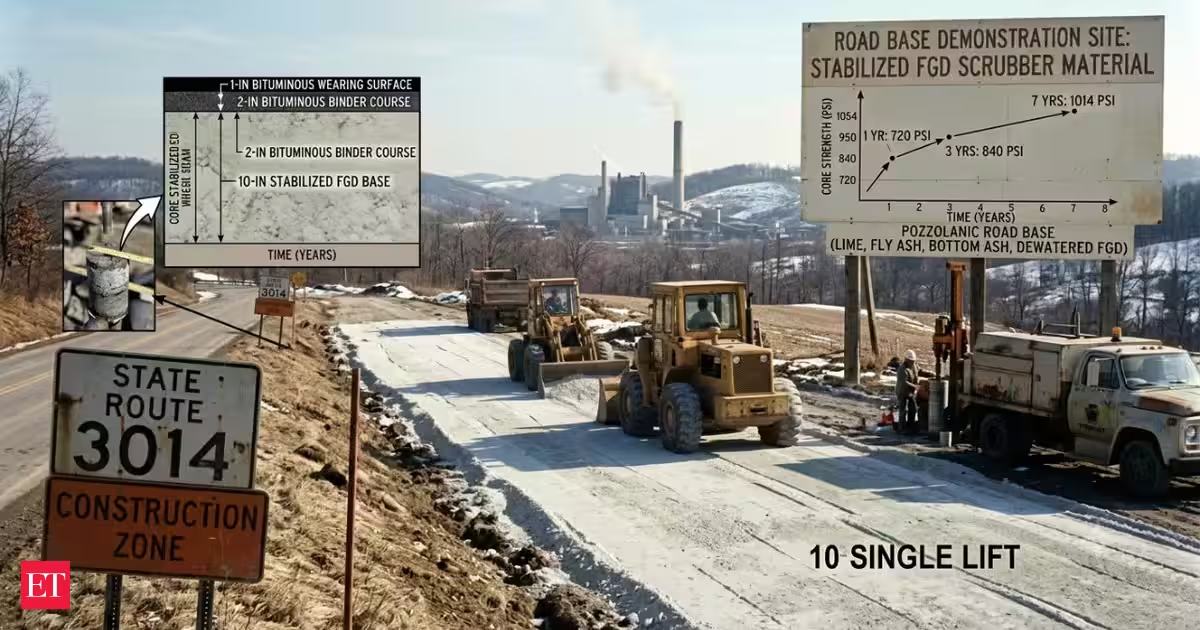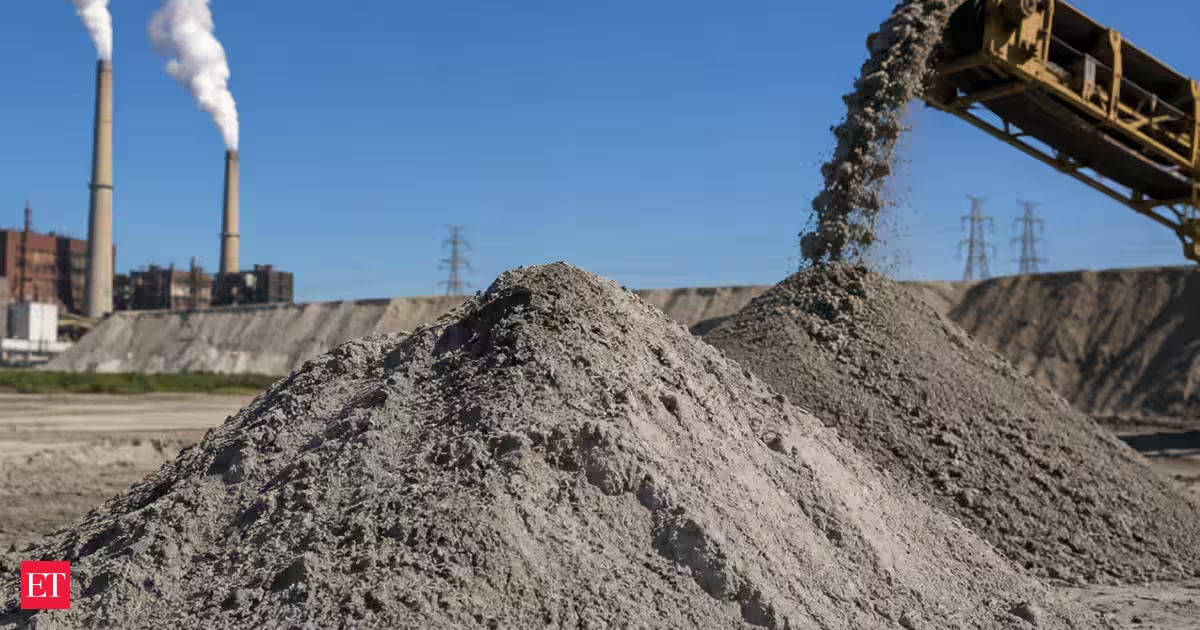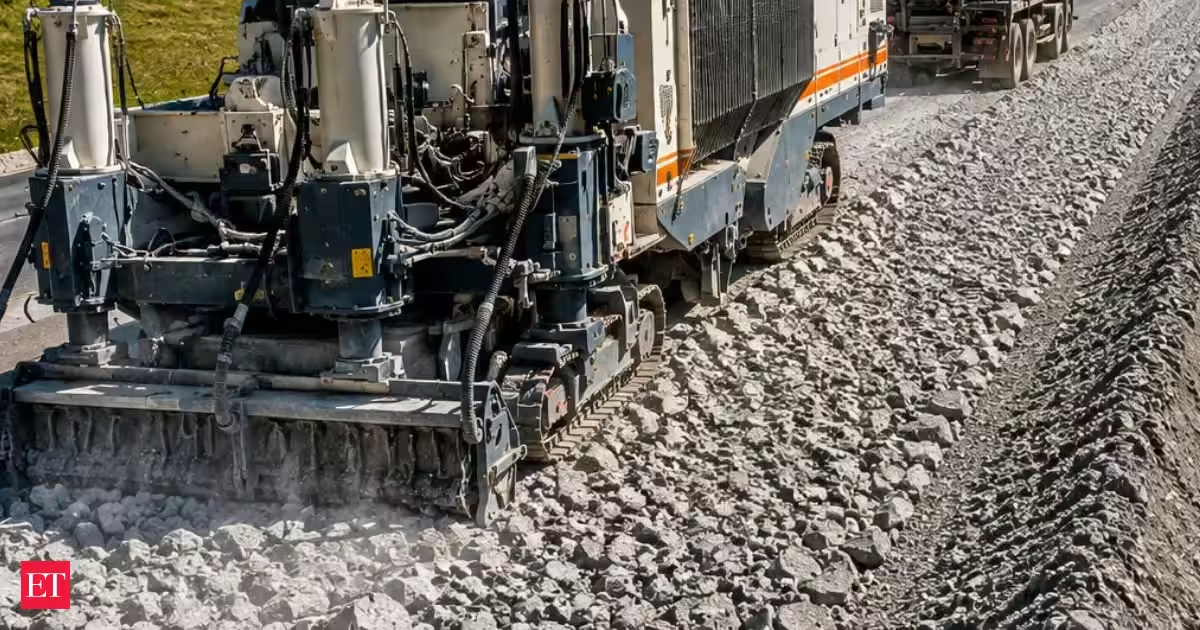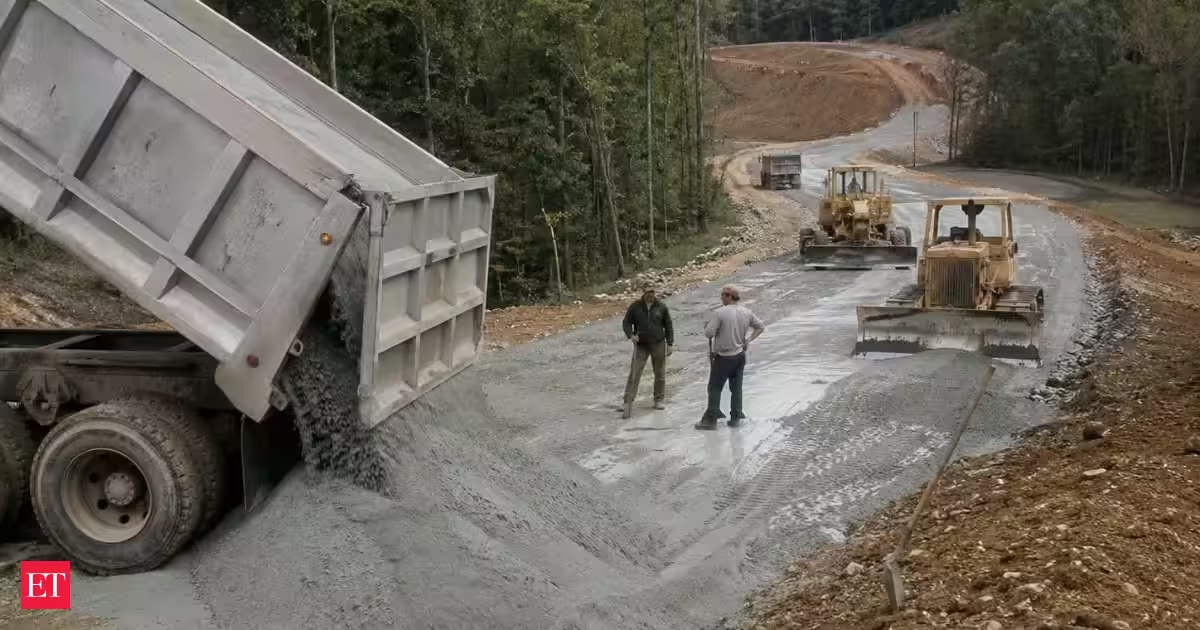
In a bald strip of asphalt in rural Kentucky, there's a simple experiment: a road base that is, to some degree, composed of the old residue of a coal plant. There was no ribbon cutting, no press conference, just 750 feet of highway making a point that America's infrastructure conversation hasn't fully embraced. According to a 1989 research report titled “Preliminary Engineering, Monitoring of Construction, and Initial Performance Evaluation: Use of Ponded Fly Ash in Highway Road Base,” from engineers David Hunsucker and R. Clark Graves of the Kentucky Transportation Center, roughly 80 tons of the fine, water-logged byproduct of coal-burning electric generating plants called "ponded fly ash" were used to form this experimental base course in May 1988. They added it to the road, rather than sending it to a landfill.What's actually in this pavementThe recipe was not picked out of the hat. According to the same Kentucky Transportation Center report, the engineers tested three different mixes in the lab and finally landed on the mix that they felt worked best: 84 percent dense graded aggregate, 11 percent ponded fly ash, and 5 percent hydrated lime. That mix achieved the highest compressive strength in the laboratory and was preferred for an in-the-field test.Bricks made of fly ash. Image credits: Wikimedia CommonsIt was laid as one continuous 8-inch thick layer, and was checked for compaction and moisture using nuclear density gauges, and then checked at a later date with core samples and deflection testing to measure the ability to handle the traffic and weather elements. The researchers themselves came up with the verdict that the fly ash section was doing a very good job in comparison to the control section next to it that was paved traditionally.This isn't a one-time Kentucky occurrenceOne test road constructed of literal industrial trash sounds like a fluke, but it's not. Fly ash has been used in American highway construction since the early 1950s, and federal agencies have promoted it as a construction material since the 1970s. Specifically, the Federal Highway Administration issued a notice in 1974 urging states to allow fly ash to substitute for cement in concrete pavement whenever feasible. Separately, in fly ash–stabilized base courses like Kentucky's, the FHWA's own guidance puts typical fly ash content in the 12 to 14 percent range — close to the 11 percent used in this project. It is used in concrete for bridges, in asphalt as a filler, and in structural fills behind retaining walls. It's not a new green experiment; it's been load-bearing America's infrastructure in a literal sense for roughly 70 years.The part you ought to knowHowever, here's the part of the story that isn't quite so neat. Fly ash is a good thing, if used correctly, and "ponded" fly ash, that is, the ash that accumulates in wet storage lagoons at power plants, has a decidedly unsightly history. The EPA's overview of coal combustion residual reuse also notes that "encapsulated" applications, such as mixing fly ash into concrete or road base, are safer, exactly because they keep the fly ash in a solid form where less can leach out into soil or water.Fly ash being used as a construction material. Image credits: Wikimedia CommonsThat's a different storage method entirely from what failed at Tennessee's Kingston Fossil Plant in December 2008, a comparison worth making carefully, since the two aren't quite the same kind of risk. The Kingston site held its ash unencapsulated, as loose, wet slurry behind an earthen dike, in a pond that had been accumulating ash for roughly 50 years before that dike gave way. National Geographic reported that more than a billion gallons of toxic ash slurry poured into the Emory River, and cleanup workers who came in contact with the sludge have reported serious health problems. The same compound, but completely different results, depending on how it was engineered into something stable or left in an earthen pond for decades.What does this mean for us?This Kentucky test strip is surprisingly useful to a generation that is being indoctrinated with "reduce, reuse, recycle" as a slogan, and may be affected by anxieties about climate change and failing roads and bridges. But it's not a magic bullet cure, and it is not a cure-all, and it does not justify coal power. It is a reminder that some waste can be repurposed safely when engineers plan for durable containment and reuse, instead of letting it become an environmental disaster in a leaking pond. The more significant question is, "Do fly ash roads work?” Apparently, the decades of data say they can. It is whether or not we are ready to construct the unglamorous, boring systems like proper encapsulation, right monitoring, and honest regulation that determine which outcome we get.
In 1989, Kentucky engineers built a 750-foot road base using about 80 tons of ponded fly ash; the 11% ash section was reported to perform well against the conventional control
Explore the groundbreaking use of ponded fly ash in Kentucky's highway construction, showcasing its potential benefits and implications for sustainable infrastructure. Understand the balance between innovation and safety in utilizing industrial byproducts, and what it means for future road development.
788 words~4 min read