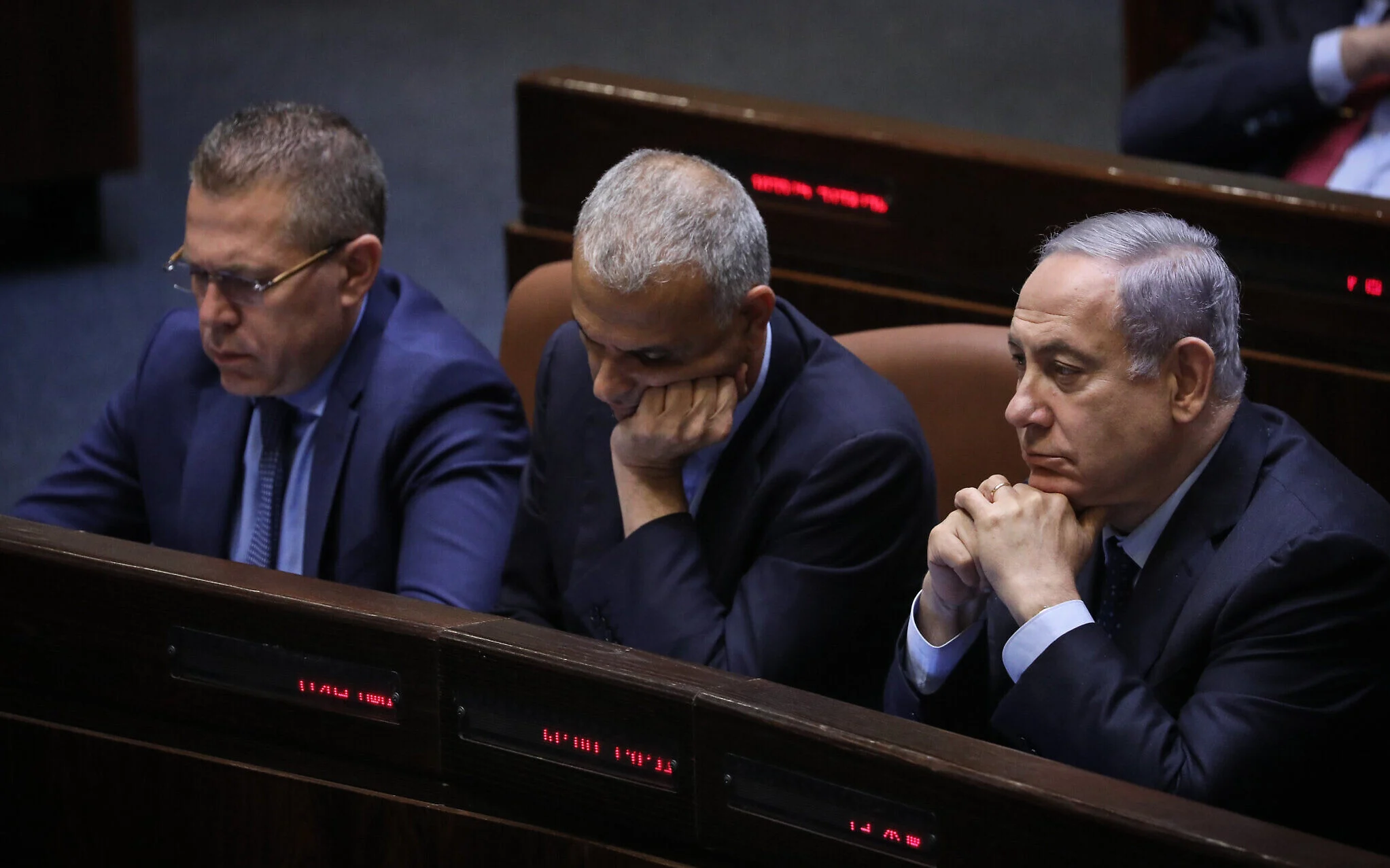
More than a decade ago, to much fanfare, the popular ex-Likud minister Moshe Kahlon announced that he was founding a new party focused on lowering the cost of living.
The center-right party, Kulanu, was treated as a potential kingmaker that could deliver the election to Benjamin Netanyahu’s opponents. In 2015, as now, the conventional wisdom among opposition voters was that the sitting prime minister had been in office too long and was a divisive, even destructive, presence in Israeli politics. Kulanu attacked Netanyahu’s Likud in its campaign ads, and reportedly had even reached a deal to join a government with the premier’s top rival, Isaac Herzog.
But when the election results came out, Likud emerged with by far the most votes. Kulanu, with its 10 seats, joined Netanyahu’s coalition, delivering him a bare 61-seat majority of the Knesset. Four years later, Kahlon’s party officially folded into Likud.
Kulanu was one of a litany of relatively centrist swing parties that have generated hype — and hope for Israel’s center-left — only to end up keeping Netanyahu in office, particularly at moments when his defeat seemed imminent. Those parties have also served Netanyahu’s ideological interests, acting as a moderate counterweight in government to his Haredi and far-right allies, with him in the middle.