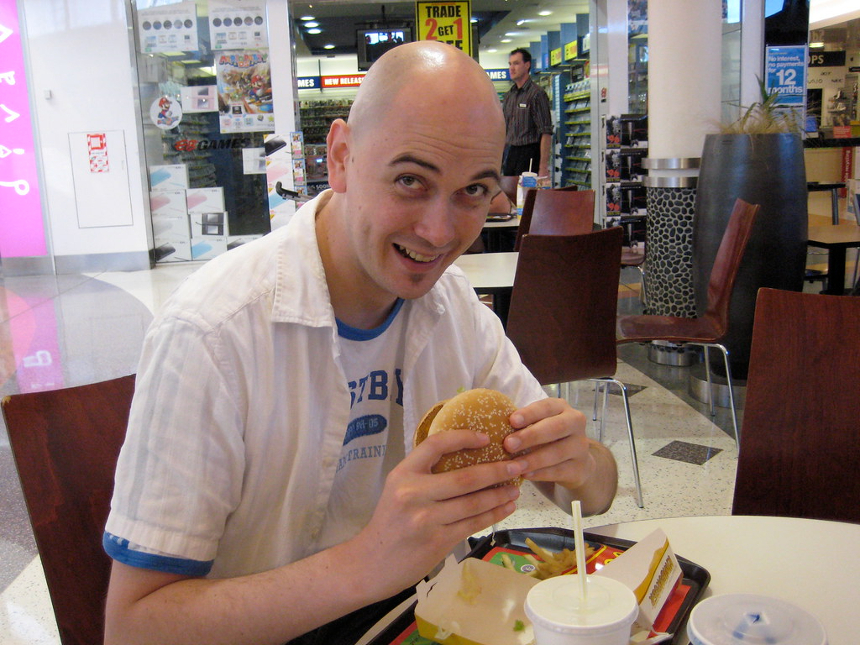
"Macdonalds' Kiwiburger" by Squirk is licensed under CC BY 2.0.
Support CleanTechnica's work through a Substack subscription, on Patreon, or on Stripe. Help us produce all of the high-quality, original content we publish week after week despite the challenges of content-scraping AI, antisocial media, inflation, and other hurdles.
If you’ve been following my work recently, you know that I’ve been celebrating several fine authors who have contributed to a Media Education Lab special issue. The August edition of MediaEd Insights was titled, “What’s for Dinner? Food as an Ecomedia Literacy.” The fourth essay in this series is a research brief by food policy advisor Elysabeth Alfano, who describes how we need to revise the “neutral language” we have come to use to describe our food choices. She argues that the food system on which we depend is in real trouble, and “industry rhetoric and press initiatives to control the conversation” can’t change that fact.
This topic is consistent with media literacy analysis, which moves beyond merely asking what the message is within a media publication. We must also determine who has the power to make that message visible, repeated, and accepted. By adopting a “common language” about how we talk about food, Alfano says we can become “healthier and more resilient from a larger systems perspective.” Such a realistic approach has the potential to inform consumers and sustain supply networks.