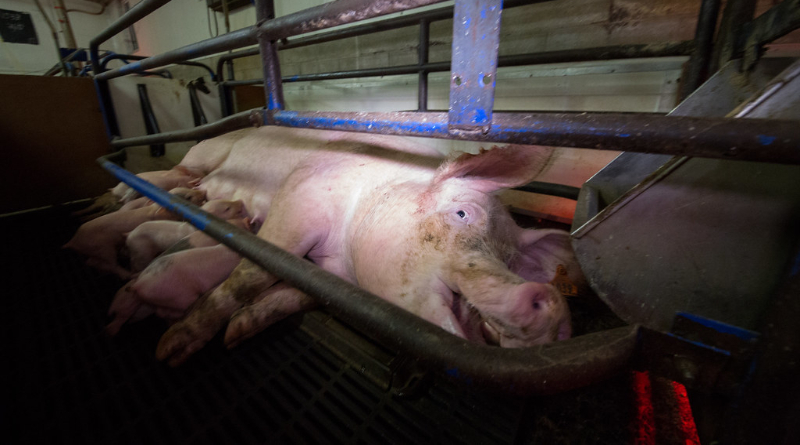
"Waikato pig farm 2015" by Farmwatch is licensed under CC BY 2.0.
Support CleanTechnica's work through a Substack subscription or on Stripe.
Clinton Monchuk, executive director of Farm and Food Care Saskatchewan, is trying to persuade Canadian farmers to share more information about their growing practices in order to dispel misinformation that is circulating on social media. Monchuk states, “It’s just telling the truth and being transparent about what we do so consumers can actually understand what we do and really why we do it.”
At first glance, these statements seem to be honest approaches to counter food disinformation, which is becoming rampant. “If you have social media accounts,” Monchuk continues, “feel free to post some of the things that you’re doing, from sorting cattle, to picking eggs, to planting your crop, just so that information gets out there.”
The plea is to the small holder farmer, whose ability to be self-sustaining is becoming increasingly rare. Like many agricultural sites across North America, the number of large Canadian farms increased more than doubled from 1976-2021 — 7866 to 16,966. Roughly 86% of US farms are small family farms; they operate about 40% of US farmland and make less than $350,000 per year.