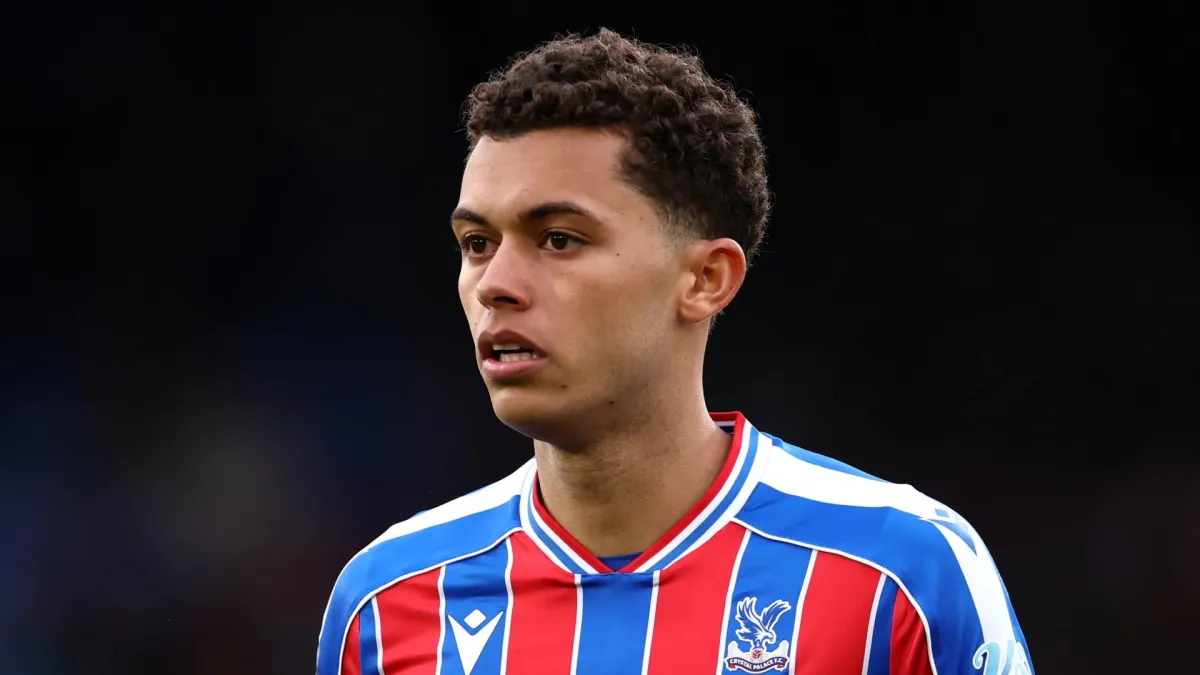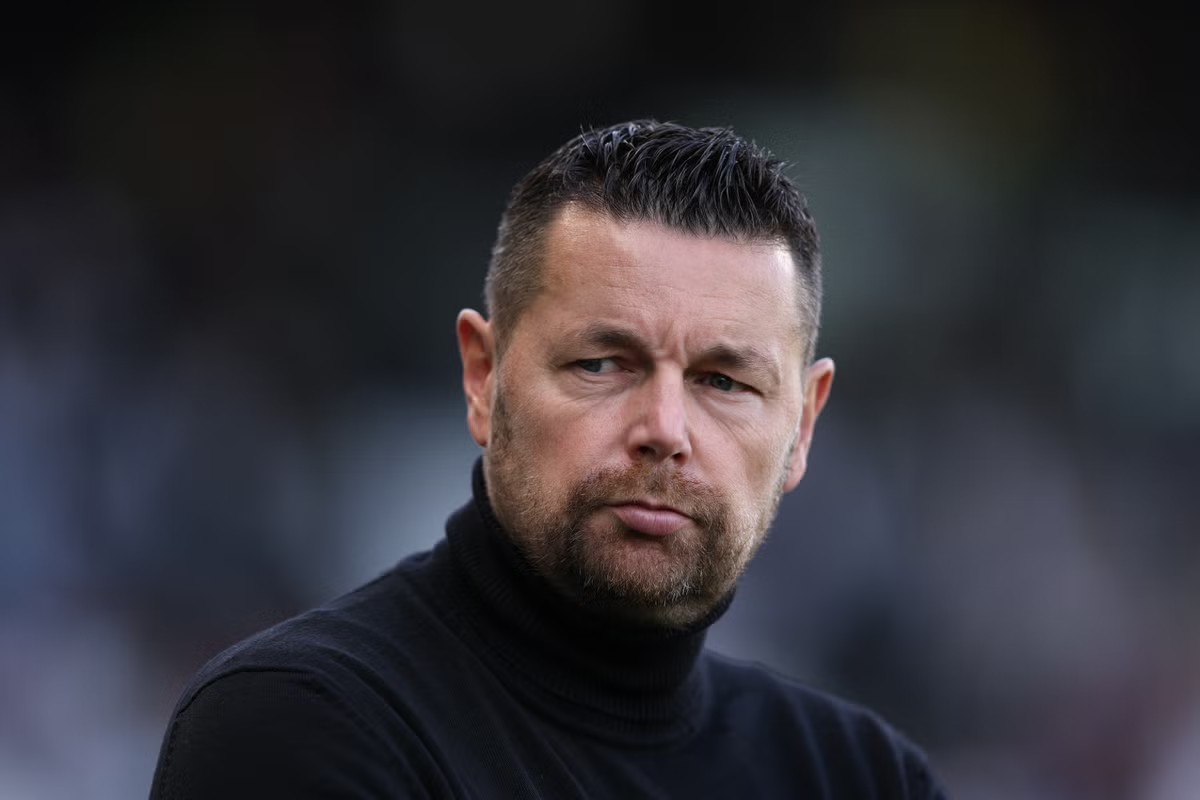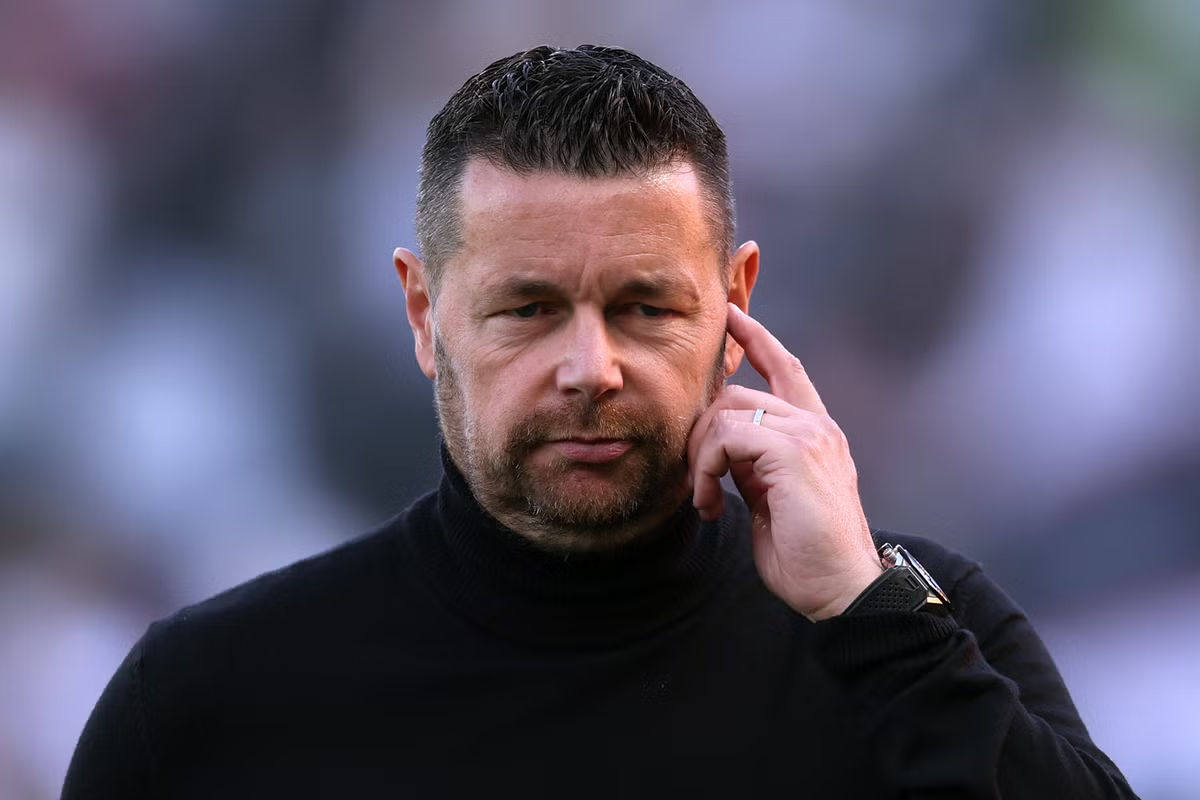
Even by Crystal Palace’s standards, the final 24 hours of the summer transfer window were chaotic.Upstairs in the club’s offices in Soho, central London, Palace’s hierarchy, recruitment team, secretaries and other staff worked frantically under pressure as the 11pm deadline ticked ever closer.It was a blur of late-night emails and phone calls, medical checks and dealsheets. A private jet was even put on stand-by for one transfer target.With only a few hours of the window remaining on Tuesday, Palace were concluding an extraordinary 10 incoming and outgoing deals. Some were related to fringe players or youngsters who were surplus to requirements; others were additions designed to give new manager Pierre Sage a deeper squad.Most dramatic of all was the on-off deal for the Lyon attacker Malick Fofana, with Sage heavily involved in trying to persuade the 21-year-old to join as Palace tried to hijack his move to Sunderland, ultimately to no avail.In the end, Palace brought in four players on the final day, bringing their final tally of incomings to 11 across their busiest window since 2013, the year they gained promotion to the Premier League. They returned to familiar faces in Dwight McNeil, Evann Guessand and Ben Chilwell, former targets such as Dario Osorio, and leveraged existing relationships with Chelsea to sign Axel Disasi and their future centre-back Honest Ahanor.Just as significantly, Jean-Philippe Mateta and Ismaila Sarr, both unhappy, did not secure the moves they desired, with interest from Aston Villa and Liverpool respectively rebuffed. Two other senior starters, Maxence Lacroix and Daniel Munoz, were permitted to leave for significant sums.For all the unbridled joy at winning the Conference League in May, that success placed financial limitations upon Palace in the form of UEFA Squad Cost Ratio (SCR) rules at a time where they required a larger squad to compete in Europe. Those restrictions determined their approach throughout the summer.The Athletic has spoken to multiple sources with knowledge of Palace’s transfer business, all of whom spoke anonymously to protect their positions, to understand how the club’s remarkable window unfolded.Palace’s intention was to correct the mistakes made in January and learn from last season by establishing a squad capable of competing in the Europa League without impacting their Premier League form. Depth was achievable but they do not have the financial strength to have two players of equal ability and experience in each position. On the window’s final morning, with the SCR rules in the back of their minds, Palace anticipated completing maybe one or, at most, two deals, with the Marseille midfielder Quinten Timber an option alongside Osorio, a 22-year-old winger from Danish side FC Midtjylland. But Fofana was in their sights too. They had admired him for some time, albeit when John Textor was still involved at both Palace and Lyon. If a deal could be done, he would likely have been their only addition.After learning of Sunderland’s offer, Sage became increasingly eager to secure a player with whom he had worked at Lyon. Palace dispatched a private jet to France in anticipation of hijacking Sunderland’s deal, their confidence bolstered by Sage’s strong relationship with the forward.The pair spoke several times, but while the transfer fee was settled at £30million ($40.5m), the overall cost of the deal increased significantly over the course of the negotiations due to spiralling demands surrounding Fofana’s salary and agent fees.Palace were also concerned by an ongoing ankle injury. Both they and Sunderland persuaded Lyon to conduct a medical on their behalf to ensure a quick decision should it flag anything that would scupper a deal. In the end, it was Sunderland — whose chairman and majority owner, Kyril Louis-Dreyfus, was in Lyon to speak directly to the player — who concluded the deal.At Palace there is an appreciation that Sage will be disappointed not to have secured Fofana, and an acknowledgement that — if he stays fit — he is an outstanding talent who will command a huge future fee.Palace missed out on a deal for Malick Fofana (Benoit Pavan/Hans Lucas/AFP via Getty Images)There was, however, significant consolation as the money saved was committed to deals for Osorio — a long-standing target dating back to the days when Dougie Freedman headed Palace’s recruitment operation — and Timber, the twin brother of Arsenal right-back Jurrien.Sage had been keen on signing the Dutch international, a box-to-box midfielder with the ball-winning runner profile he felt Palace had been lacking, and he joined for only £12m, albeit on significant wages. Jefferson Lerma is seen by Sage as centre-back cover.But they were not done. Chilwell, who spent the second half of the season on loan at Palace in 2024-25, was available for a minimal fee. He offered left-back cover after Borna Sosa was loaned to FC Koln, leadership skills and the added bonus of counting as a homegrown player.All three transfers strayed beyond the deadline, with dealsheets required, but amid the incomings Palace were also working on shifting fringe players — a strategy with which they had entered the window but only concluded late on.David Ozoh completed a permanent move to Derby County, with a loan offer from FC Copenhagen knocked back and a slightly higher permanent offer from Al Ahli on the table, but the final call was left to the player.Justin Devenny joined Stoke City while Romain Esse, who has featured only intermittently since joining from Millwall in January last year and for whom Palace had a deal in place to join Club Brugge before the Belgian club pulled out, returned to his former club on loan.Jesurun Rak-Sakyi saw a £4m move to Charlton Athletic collapse late in the window and had interest from Cercle Bruges on deadline day but remains in south London for now. More surprisingly, Will Hughes was an option for Burnley, although that did not come off. Overall, they raised around £15m from those sales.Their main departure, however, was Lacroix.Earlier in the summer Palace were aware of interest from Arsenal and Chelsea. As it was, Palace ended up negotiating a deal worth £52m with the west London club for the France international, who played at the World Cup. That sale was done to help Palace with UEFA SCR rules and to bring in liquidity in order to make new signings.Defender Maxence Lacroix was sold to Chelsea (Richard Heathcote/Getty Images)They therefore sought two centre-backs; a direct replacement for Lacroix and a younger talent as cover who could develop over time to become a regular starter. Chrislain Matsima, the Augsburg centre-back, was their main target as a replacement but they were unable to conclude a deal for the 24-year-old.Trabzonspor’s Chibuike Nwaiwu was an alternative but was never fully pursued. The younger player they sought to bring in initially was the Brest teenager Raphael Le Guen but he, too, was never the subject of a formal offer.Former Arsenal centre-back Takehiro Tomiyasu joined on a one-year contract to provide quality cover cheaply, but also as a utility player with the option to potentially use him across the back line. The short-term deal was a result of his injury history, but there are conditions which, if met, would trigger a further year.After a 2-0 defeat by Everton on the opening weekend of the season they completed the loan move for Disasi, with any uncertainty over that deal dispelled when Chadi Riad suffered an anterior cruciate ligament injury that will rule him out for months. Disasi added the leadership that Sage had said was required in defence. Axel Disasi has joined Crystal Palace until the end of the season (Richard Heathcote/Getty Images)A loan move for Ahanor, who had signed a deal to join Chelsea from Atalanta next summer, was completed on deadline day after Palace pulled out of a deal for Club Brugge centre-back Joel Ordonez, having hijacked Aston Villa’s attempts to sign him.They were excited but cautious when presented with the opportunity to sign Ordonez, for whom they had seen a bid rejected in January. That deal was an initial loan which had meant there would be limited financial outlay for a year before the deal became permanent if Palace retained their Premier League status. His medical then flagged complications around a foot injury. They will consider returning to the deal in January.They always planned to sell Munoz, a hugely influential and popular player, but one who turned 30 in May and suffered injury problems last season. Everton had offered £18m with a further £2m in possible add-ons, before dropping back down to £15m. In the end, he reunited with former manager Oliver Glasner at Nottingham Forest in a £22m deal.Forest also came in with an offer for goalkeeper and captain Dean Henderson, but that was dismissed.Munoz’s replacement was 21-year-old Anan Khalaili from Union Saint-Gilloise, who had also attracted interest from Forest. This was Palace returning to the strategy of signing players with potential who could command big fees in the future — a policy jettisoned in January.Despite the departure of Nathaniel Clyne, whose contract was not renewed, the arrival of Oscar Mingueza on a free transfer early in the window after his Celta Vigo contract expired meant that Palace now had sufficient cover on the right side of the defence.Anan Khalaili (left) replaces Daniel Munoz at Crystal Palace (Henry Nicholls/AFP via Getty Images)The trickier issue was that of Mateta and Sarr.Palace had become accustomed to Mateta’s long-standing desire to leave, but his dispute with the club surrounding an option to trigger an extension his contract, dismissed by an independent Premier League tribunal and then ruled out of FIFA’s jurisdiction, made things more complicated.Aston Villa offered £25m for the French striker but were told it would take £40m for Palace to sell. There was still scope for negotiations, but a hamstring injury picked up in training scuppered any prospect of that move being pursued.Palace would consider selling him in January, in the same way they did with Marc Guehi when he joined Manchester City for £20m eight months ago. Mateta staying and his injury prevented any move for Eddie Nketiah: there was tentative interest in the forward, whom Palace were open to selling.Sarr was another problem. After Galatasaray expressed their interest in signing the Senegalese forward, Liverpool signalled their interest in the final week of the window. Palace understood the Merseyside club were willing to offer £45m with £5m in add-ons, but the notion of selling for that price was dismissed out of hand. Liverpool were informally told it would take an astronomical offer to sell and none was forthcoming.From Palace’s perspective, a high valuation on Sarr was more than justified given his contribution to the side last season, when he scored 21 goals in all competitions, as well as his fine displays at the World Cup for Senegal and the fact he has three years remaining on his contract. It would have taken a significant outlay to replace him; in addition to exploring Fofana and Osorio, Palace had also considered a move for the Real Betis forward Abde Ezzalzouli if they lost Sarr, who would have cost over £40m.But the timing of Liverpool’s expression of interest in Sarr, their valuation and the effect it had on his state of mind frustrated Palace. There have also been repeated public outbursts from Diomansy Kamara, Sarr’s agent, about Palace’s handling of his client while Sarr himself removed all references to Palace on his social media platforms. It is not the first time Sarr’s time at a club has soured — similar situations occurred at Watford and Marseille earlier in his career — and re-integrating him presents a major challenge to Sage. Palace cannot afford for Sarr to spend the coming months in a sulk. Reintegrating Ismaila Sarr will be a challenge for Pierre Sage (Daniela Porcelli/Getty Images)Palace were aware they were light in attack and also conscious they lacked a player with individual brilliance after selling Eberechi Eze and Michael Olise in recent seasons. That led them to push for Osorio once Fofana’s move fell through.He performed well in Denmark but there is an acknowledgement it is not a guarantee he will succeed.But he offers a different profile as a rapid ball carrier who scores goals, and that potential for star quality is what they were looking for.Dario Osorio can provide Crystal Palace with some X factor (Ahmad Mora/Getty Images)Osorio’s move being an initial loan with an obligation to buy if certain criteria are met is another example of the club working around the financial limitations that were a consequence of UEFA’s rules. Minimal up-front money was expended. The same problem took them back to another loan move for Guessand from Aston Villa.They did not initially intend to bring Guessand back, and had allowed the May 31 deadline to sign the Ivory Coast international for £28m after last year’s loan stint in south London pass.But Guessand was still available late in the window and, while they did not feel he was outstanding last term, Palace acknowledge there is still potential there. He is also an option as a No 9, significant as Mateta rehabilitates from his hamstring injury. Triggering the option to buy requires a significant number of starts.Brennan Johnson was sold to Everton and McNeil came in the other direction for the same fee, with Palace seeing the latter as a better fit for Sage’s style of play and offering more versatility. Palace will save around £8million on wages.There is an acknowledgement internally that signing Johnson in January was a costly mistake which hampered them in this window. In mitigation, club sources point to the context of Johnson’s signing, alongside that of Jorgen Strand Larsen, at a time when Glasner’s disenchantment was spiralling. There was a sense that only significant deals could stave off the double threat of the Austrian’s outbursts over transfers destabilising the team midway through the campaign and Palace tumbling into a relegation battle. Financially limited in what they could do, but eager to sign a future prospect to develop, they paid £11m to sign forward Zavier Gozo from MLS side Real Salt Lake. The hope is that, like Osorio, the 19-year-old might eventually bring that individual brilliance to a team that was one-dimensional, if often supremely effective, under Glasner.Ben Chilwell has returned to Palace for a second spell (Paul Ellis/AFP via Getty Images)Palace’s ambition in the window was to walk back from January’s mistakes, and not try to muddle through a congested season with a small squad for a second year in succession. They feel their business means they will be able to better cope with the physical and mental demands of a European campaign that hindered them so much last year.Sage was given his midfield target, they pursued his forward option in Fofana and, while that did not pay off, he has at least been given cover in every position.As ever, the success of a transfer window can only ever be judged 12 or 18 months further down the line. But while questions will linger, Palace feel they have assembled a pool of players which has both depth and quality. Now it is over to Sage.
Inside Crystal Palace’s transfer window: A frantic final 24 hours, a minor mutiny and fixing January’s errors
Palace were determined to add greater squad depth with a Europa League campaign ahead, but also to add an X Factor to Pierre Sage's options
2,503 words~11 min read