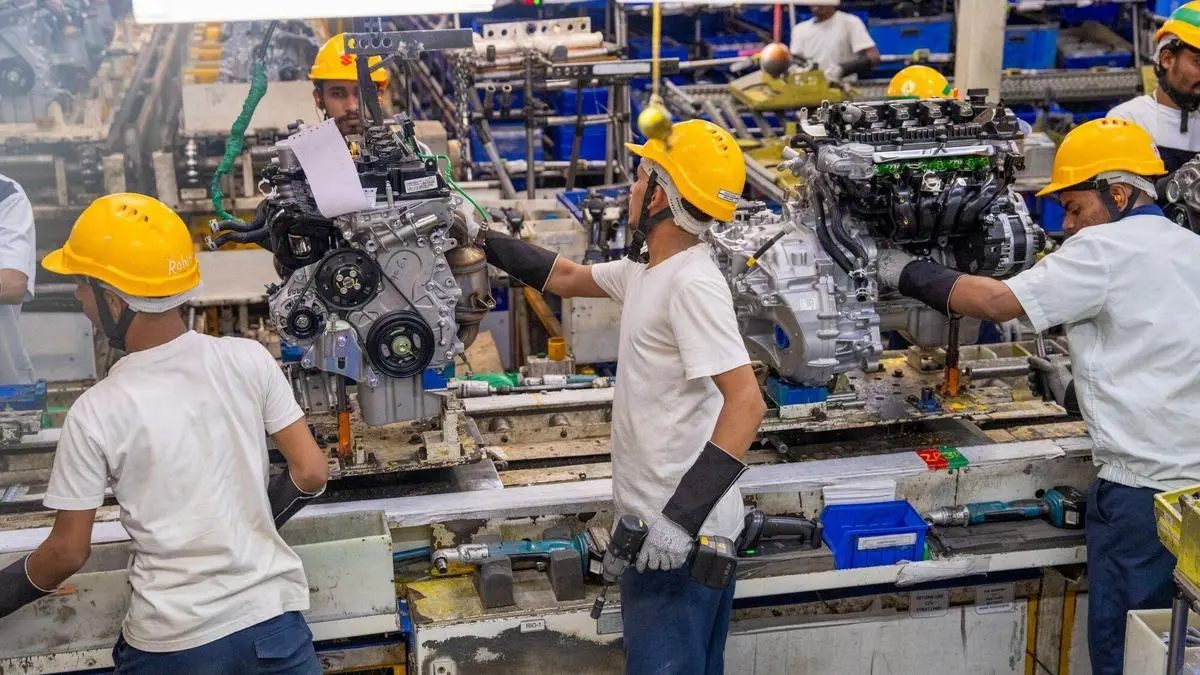
Workers assemble engines at a manufacturing plant in Hansalpur, Gujarat;
| Photo Credit:
Bloomberg/ABEER KHAN
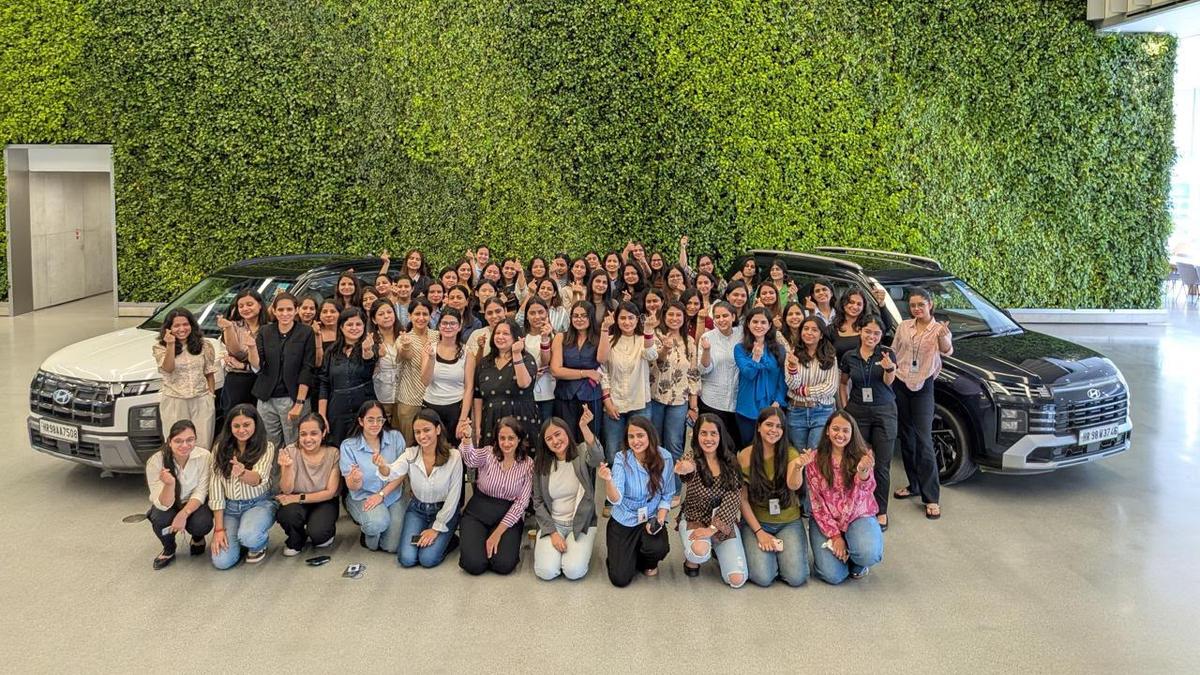
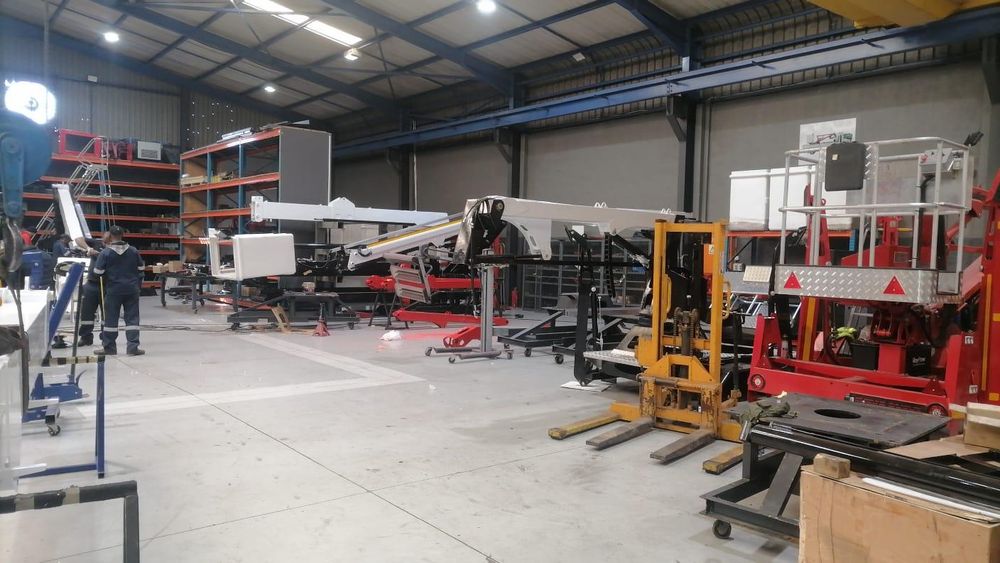
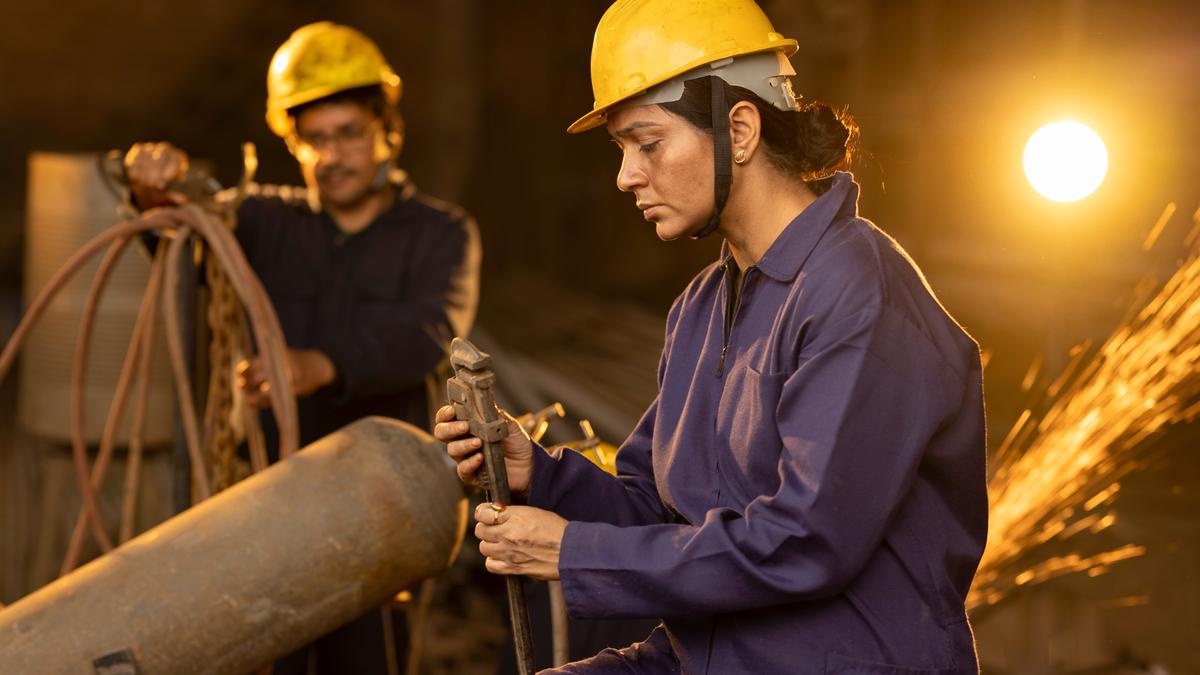
India’s auto industry faces two shortages at once: the skilled workers it says it cannot find, and the women workers its employment system still struggles to see, hire and deploy. Women account for just 8.7% of the combined OEM and component workforce and more than 91% of automotive shopfloor roles remain with men, according to a three-year Good Business Lab study conducted from 2023 to 2026 in partnership with the Automotive Component Manufacturers Association of India and supported by the Gates Foundation.The disadvantage persists after women enter factories. Women in blue-collar automotive roles earn roughly ₹70 for every ₹100 earned by men, say industrial relations experts. Women can also be channelled into supposedly “easy” jobs based on perceptions rather than technical assessments, while assumptions around marriage and motherhood can restrict high-visibility assignments and career investment.INDUSTRY STARTS TO MOVESome of India’s biggest automakers show the equation can change. Women constitute 80% of JSW MG Motor India’s Halol battery assembly shop and work across all three shifts; Tata Motors employs more than 6,500 women shopfloor technicians; and Hero MotoCorp has 3,500 women on factory floors.“The challenge is to turn these company-level successes into a much broader pipeline of trained women across manufacturing, dealerships, servicing and emerging automotive technologies,” said Vinkesh Gulati, Chairman of the Automotive Skills Development Council.ASDC and Hero MotoCorp have set out to train 20,000 women for automotive roles, while other industry programmes are opening pathways into servicing, mechanical trades and driving. But skilling alone cannot close the gap if barriers before and after training remain unchanged.BARRIERS START BEFORE THE FACTORYWomen were just 6.2% of engineering-ITI enrolment in 2025. Only 27–28% of women surveyed in NCR and 22–40% in Bengaluru knew automotive companies hired women, while recruitment remains heavily dependent on contractors, referrals, WhatsApp groups and word of mouth.Another ceiling emerges after hiring: the clock. Most manufacturers covered by GBL’s fieldwork did not deploy women on night shifts. Companies told researchers that restricting women to a single shift reduces line-balancing flexibility and ultimately caps how many can be employed in factories organised around three-shift production.The challenge becomes tougher deeper in the supply chain, where smaller manufacturers have less ability than large OEMs to absorb fixed costs associated with infrastructure and other measures needed to expand women’s employment.FROM TRAINING TO JOBSNot every fix requires heavy capital. Early findings from an ongoing GBL experiment involving more than 1,200 women found that allowing candidates to bring a peer or assigning them a woman supervisor increased job acceptance by 11–13 percentage points.GBL has also piloted a “Skills Passport” at two Chakan plants — a portable, employer-verified record of the operations workers can perform and their proficiency. Such records could help women carry capabilities acquired on one shopfloor to another instead of being treated as freshers when they change employers or return after a career break.“The industry does not only need to train more women; it needs to create pathways that take them from training and apprenticeships into actual shopfloor roles and allow the skills they acquire there to travel with them,” said Munira Loliwala, former TeamLease Vice-President and now an HR and skilling expert.“Companies and skill-development agencies can map roles, certify on-the-job capabilities and create common skill standards so that an experienced woman does not have to start again as a fresher every time she changes a factory,” she said.As automation and electronics reshape traditional factories, Loliwala said the same approach can broaden opportunities beyond newer EV operations.“If we recognise and reskill for the capabilities these new jobs require, women need not remain concentrated only in EV or electronics plants,” she said. “The same talent pool can increasingly move into the wider automotive manufacturing ecosystem.”Published on September 3, 2026