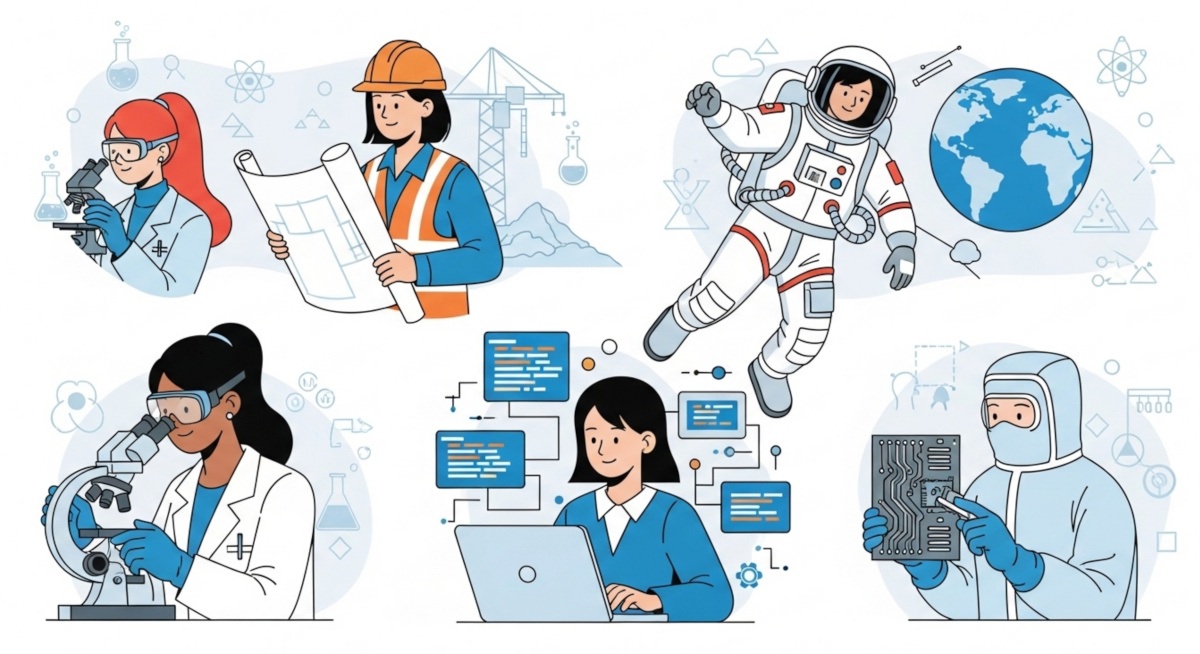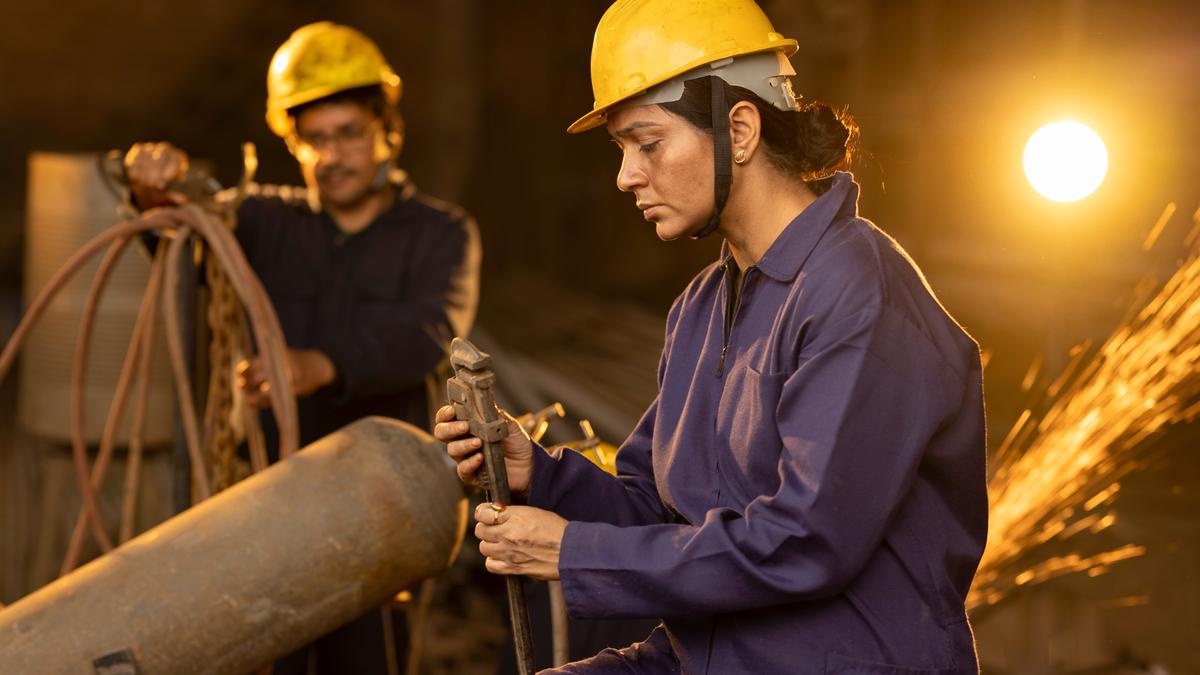
It’s not just that women are under-represented in Engineering broadly. Within Engineering itself, they are being funnelled into a narrow slice of the field.
| Photo Credit: Getty Images/iStockPhoto
India’s higher education story over the past decade has been one of transformation. Women are entering universities in unprecedented numbers. In several disciplines, enrolment has crossed 50%. The gender gap, by many measures, is closing. Engineering is the exception. Let’s look at numbers. Women account for roughly 28-30% of undergraduate Engineering enrolment, according to the All India Survey on Higher Education 2021–22. That number has barely moved in years. While overall engineering enrolment expanded significantly in the early 2010s, women’s share didn’t keep pace. The rest of higher education tilted toward gender parity. Engineering stayed still.But even that number flatters the reality. Women in Engineering are heavily concentrated in Computer Science and Electronics. In Mechanical, Civil, and Electrical Engineering, which are the backbone disciplines, female enrolment is often in the single digits at many institutions. So it’s not just that women are under-represented in Engineering broadly. Within Engineering itself, they are being funnelled into a narrow slice of the field.Beyond graduation, the numbers fall off a cliff. Women make up close to a third of Engineering graduates but less than one-fifth of the research and development workforce in Science and Engineering. Somewhere between the degree and the job, a large proportion of women exit and don’t come back. This is the “leaky pipeline” problem and it shows up at nearly every stage. The easy explanation is individual preference. Women choose other fields or they opt out. But that explanation doesn’t hold up well under scrutiny, because choices don’t happen in a vacuum.A closer lookIn rural and semi-urban settings, girls consistently receive less encouragement in Maths and Science. Access to coaching, which is practically a prerequisite for India’s competitive Engineering entrance exams, skews heavily toward boys, constrained by both money and mobility. Even at the IITs, where active interventions have increased female enrolment in recent years, the proportion has stabilised at around one-fifth. The floor has risen, but the ceiling is staying put.Then there’s the economics of household decision-making. Engineering is expensive. Families making hard choices about where to invest often do so along deeply gendered lines; sons toward high-cost, high-return professional degrees; daughters toward disciplines perceived as safer, more flexible, more compatible with the life she’s expected to lead later. These decisions aren’t made maliciously. They’re made pragmatically, within a set of assumptions that nobody stops to question.Interestingly, the workplace is where the pipeline leaks most visibly. Core Engineering sectors such as manufacturing, construction, and heavy industry remain stubbornly male-dominated, and not just in perception. Safety infrastructure is often inadequate. Work-life flexibility is minimal. Career advancement is slow and opaque. Women who graduate with Engineering degrees and enter these environments often migrate toward non-technical roles or leave the field altogether.There’s also the absence of role models, which matters more than people usually credit. Women are under-represented in Engineering faculty, in industry leadership, and in the rooms where technical decisions get made. That under-representation isn’t just a statistic; it shapes what younger women imagine is possible for themselves. When you rarely see someone who looks like you succeeding in a space, it’s rational to wonder whether that space is really for you.What makes this paradoxical is that India actually performs reasonably well in terms of women’s overall participation in STEM. The aggregate numbers look decent by international standards. But those numbers obscure a stark internal divide: women entering Science in large numbers, while Engineering, especially its core branches, remains a different story entirely. Policy so far has focused mainly on access: scholarships, outreach, and reserved seats. These matter, but they’re not enough. Getting more women into Engineering programmes doesn’t solve the problem if the structures governing what happens next remain unchanged.Looking aheadSo, what’s actually needed is intervention across the full arc: school through career. Gender-sensitive teaching in Maths and Science. Affordable preparatory pathways that don’t require a family to pay for private coaching. University environments that don’t subtly channel women into a handful of “acceptable” specialisations. Most critically, workplaces that are actually built for a diverse workforce: flexible structures, real anti-harassment mechanisms, clear re-entry pathways for women returning after breaks. The deeper issue isn’t access. It’s that the entire system, from classroom to boardroom, is still configured around assumptions that don’t include women as full participants in engineering. Until that changes, the problem won’t.The writer is former professor and dean, Christ University, Bengaluru. Published - July 04, 2026 12:59 pm IST