Rotor sails claimed to deliver fuel and emissions savings of 21%
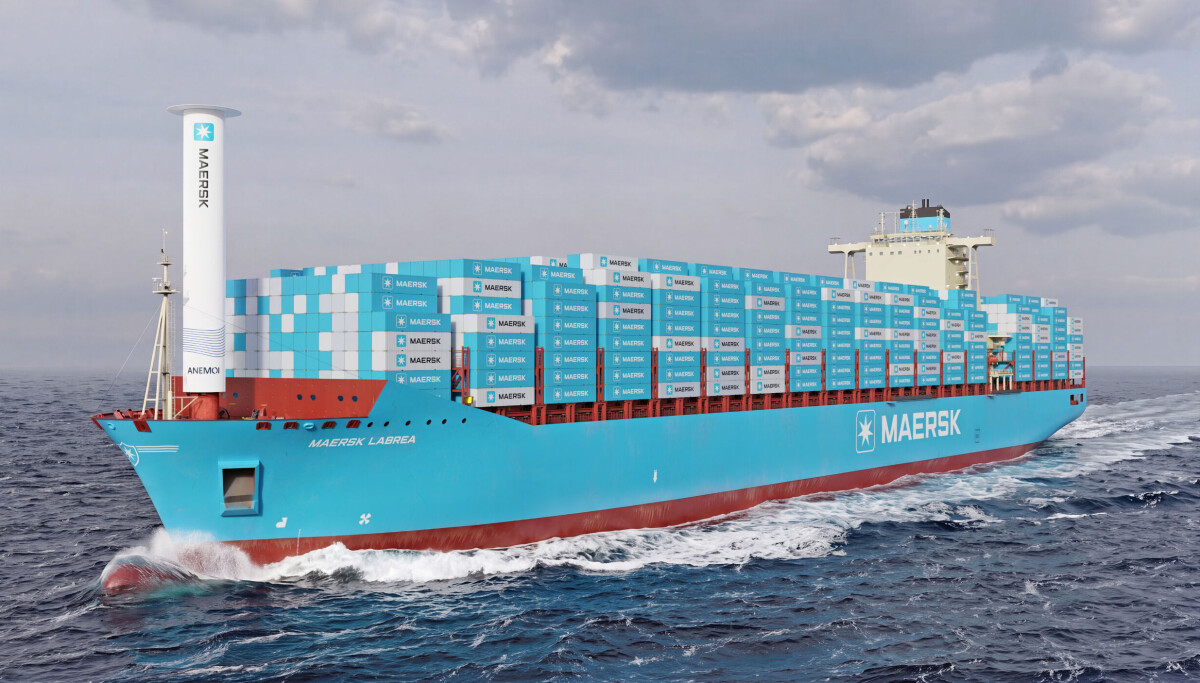
Shipping giant Maersk is testing a modern rotor sail from British firm Anemoi Marine Technologies in an effort to cut fuel consumption and greenhouse gas emissions.Anemoi says Maersk will fit one of its rotor sail systems to an 8,700 TEU Lima-class container ship. TEU, or twenty-foot equivalent unit, is the standard measure of container-carrying capacity.That makes the Lima-class vessels relative tiddlers in the container-shipping world. Rival MSC's Irina-class ships measure 400 m (1,312 feet) long and can carry 24,346 TEU.
Under the agreement, Anemoi will design and manufacture a rotor sail measuring 5 m (16 feet) in diameter and 35 m (115 feet) high. Promotional images identify the vessel as the Maersk Labrea.
Anemoi will provide the engineering and installation support needed to integrate the sail with the ship's existing systems. Installation is scheduled for mid-2027, after which it will be tested during regular voyages across the North and South Atlantic.Rotor sails, also known as Flettner rotors, differ radically in appearance and operation from traditional sails. They use the Magnus effect, in which a spinning body moving through an airstream generates lift.The rotor's surface moves with the airflow on one side and against it on the other, creating a pressure difference and a force perpendicular to the apparent wind. When that force has a component in the ship's direction of travel, it provides additional thrust and reduces the load on the engines.