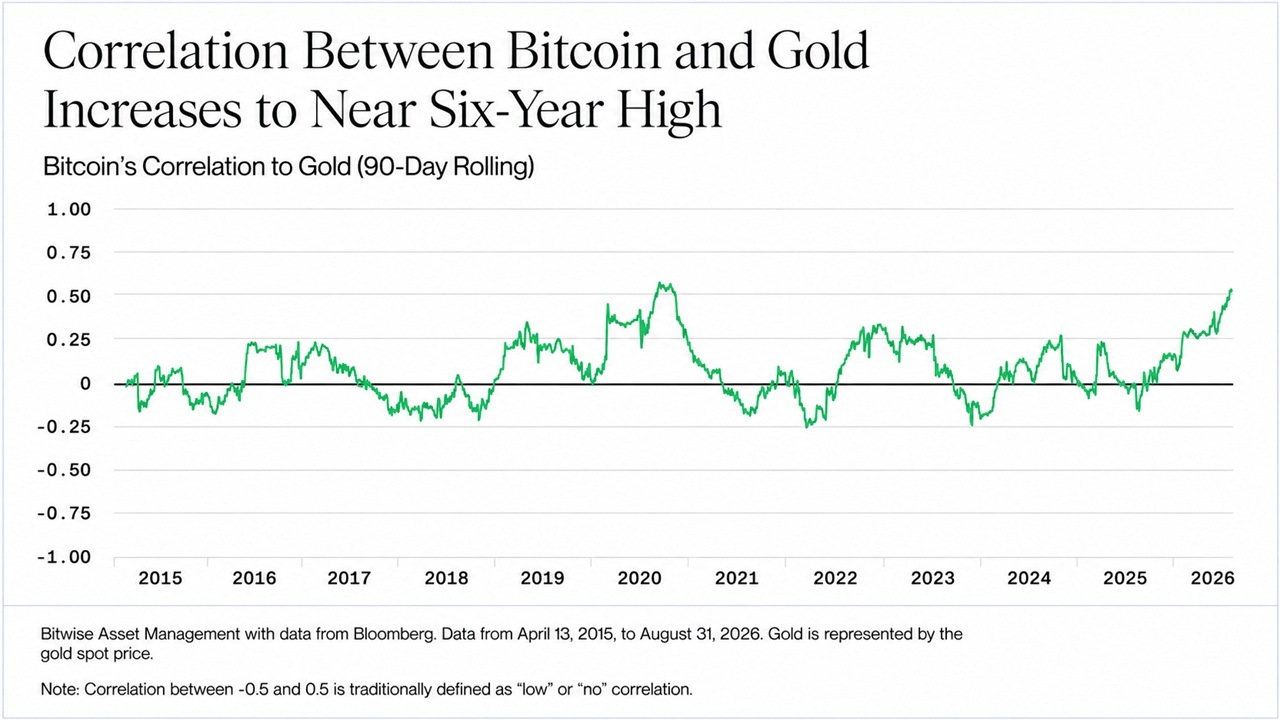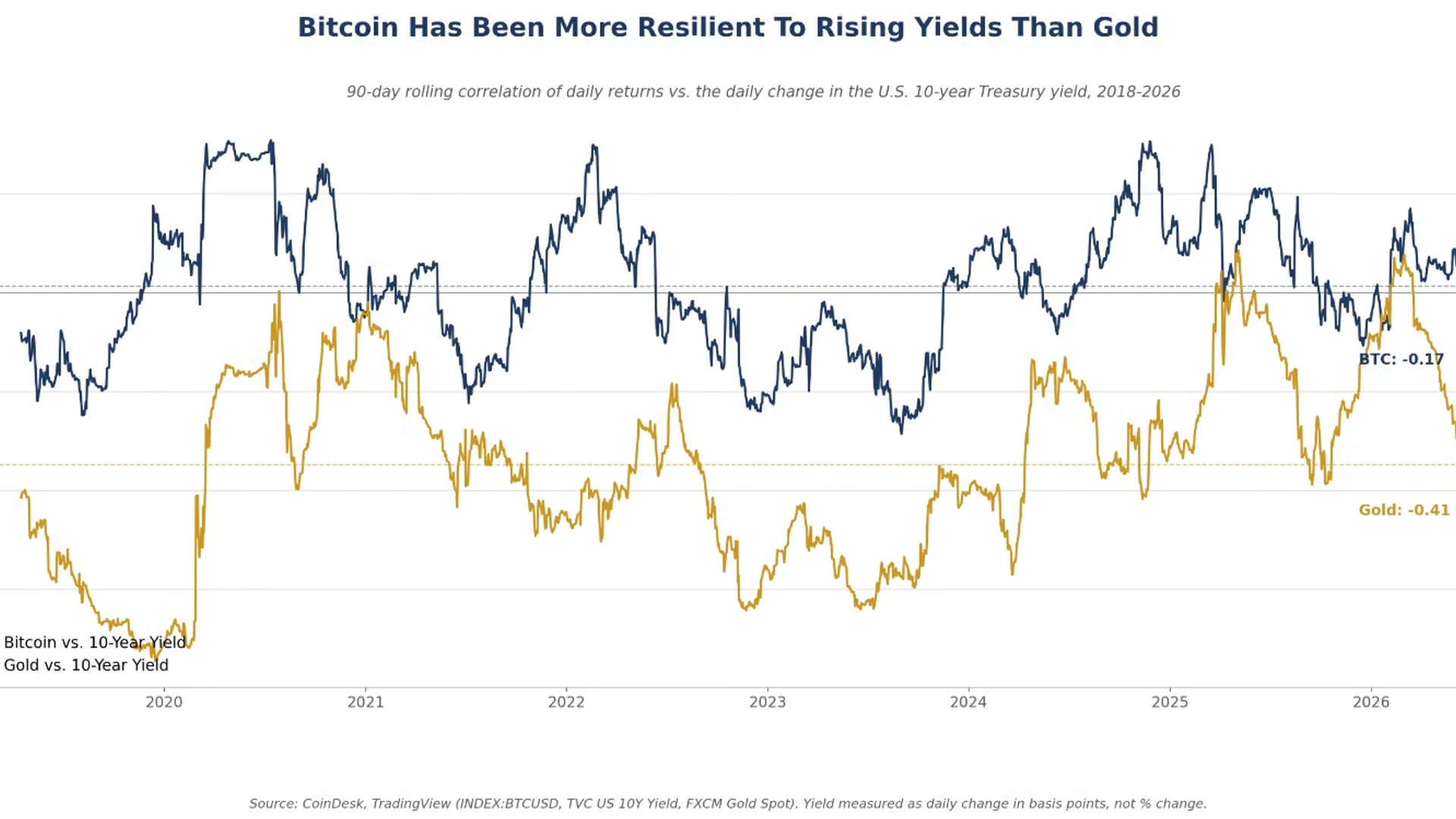
For years, Bitcoin critics had a reliable punchline: it trades like a leveraged tech stock. When the Nasdaq sneezed, Bitcoin caught pneumonia. That dynamic is now breaking down in a meaningful way, and the numbers behind the shift are hard to dismiss.
Bitcoin’s 90-day rolling correlation with the Nasdaq 100 has fallen to approximately 33%, down from above 60% earlier in 2026. At the same time, its correlation with gold has climbed above 50% on a 90-day basis and hit 0.8 on the 30-day measure as of September 1, an all-time high. Grayscale Research has flagged this as a structural behavioral shift rather than statistical noise.
What’s driving the realignment
The timing is not accidental. US gross federal debt crossed $40 trillion around August 18, 2026, and the projected annual fiscal deficit sits at roughly $1.9 trillion. When governments spend more than they collect at that scale, investors start hunting for assets that can’t be printed. Gold has historically been that asset. Bitcoin, with its hard-coded 21 million coin cap, is making a credible case to be its digital equivalent.
August told part of the story in price terms too. Bitcoin gained 28% over the month and traded in the $77,000 to $80,000 range in late August and early September. That kind of move, happening simultaneously with gold’s own strength and against a backdrop of fiscal anxiety, reinforced the narrative for institutional allocators looking at both assets in the same portfolio context.