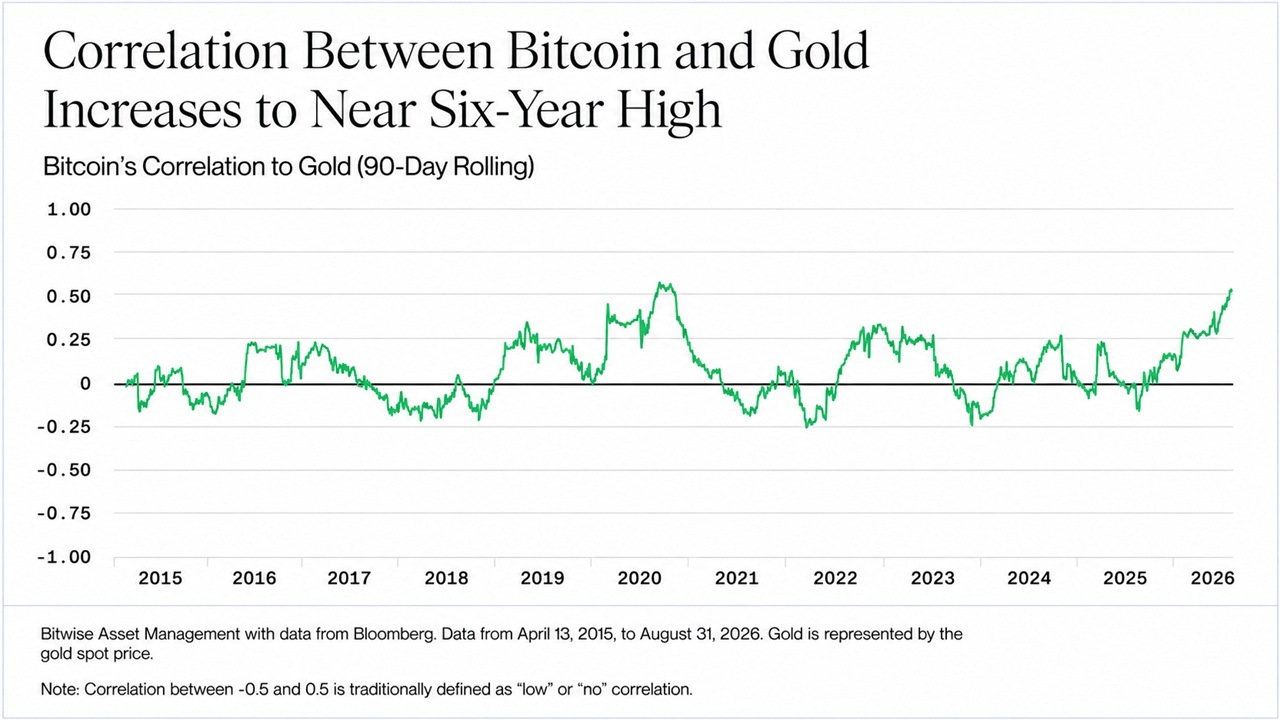
Bitcoin’s 90-day Pearson correlation coefficient with gold reached an all-time high, and the 30-day metric reached a yearly high of 0.8. The correlation coefficient measures how closely two assets’ prices move together; the higher the figure, the more the prices resemble one another.
This metric is important for BTC. For most of this year, bitcoin (BTC) has correlated with gold and equities to the downside, meaning when stocks drop, Bitcoin drops, but when stocks go up, bitcoin doesn’t perform as well.
This recent price appreciation in bitcoin and gold has been fueled by the debasement narrative. The notion is that the dollar and effectively all government-backed assets will lose value, and investors are looking for shelter in hard assets. Traditionally, this shelter has been in gold but has recently expanded to include bitcoin. Indeed, some macro analysts suggest the U.S. faces a set of challenges that make debasement inevitable.
Both gold and bitcoin ETFs have been among the strongest, with both ETFs in the top 10 by inflow. Last week, Bitcoin ETFs drew nearly $1 billion in inflows. Despite a few strong weeks of inflows, Bitcoin ETFs are still sitting at $1.89 billion year to date. However, individual ETFs, including BlackRock's IBIT, are up $1.2 billion in inflows for the year.