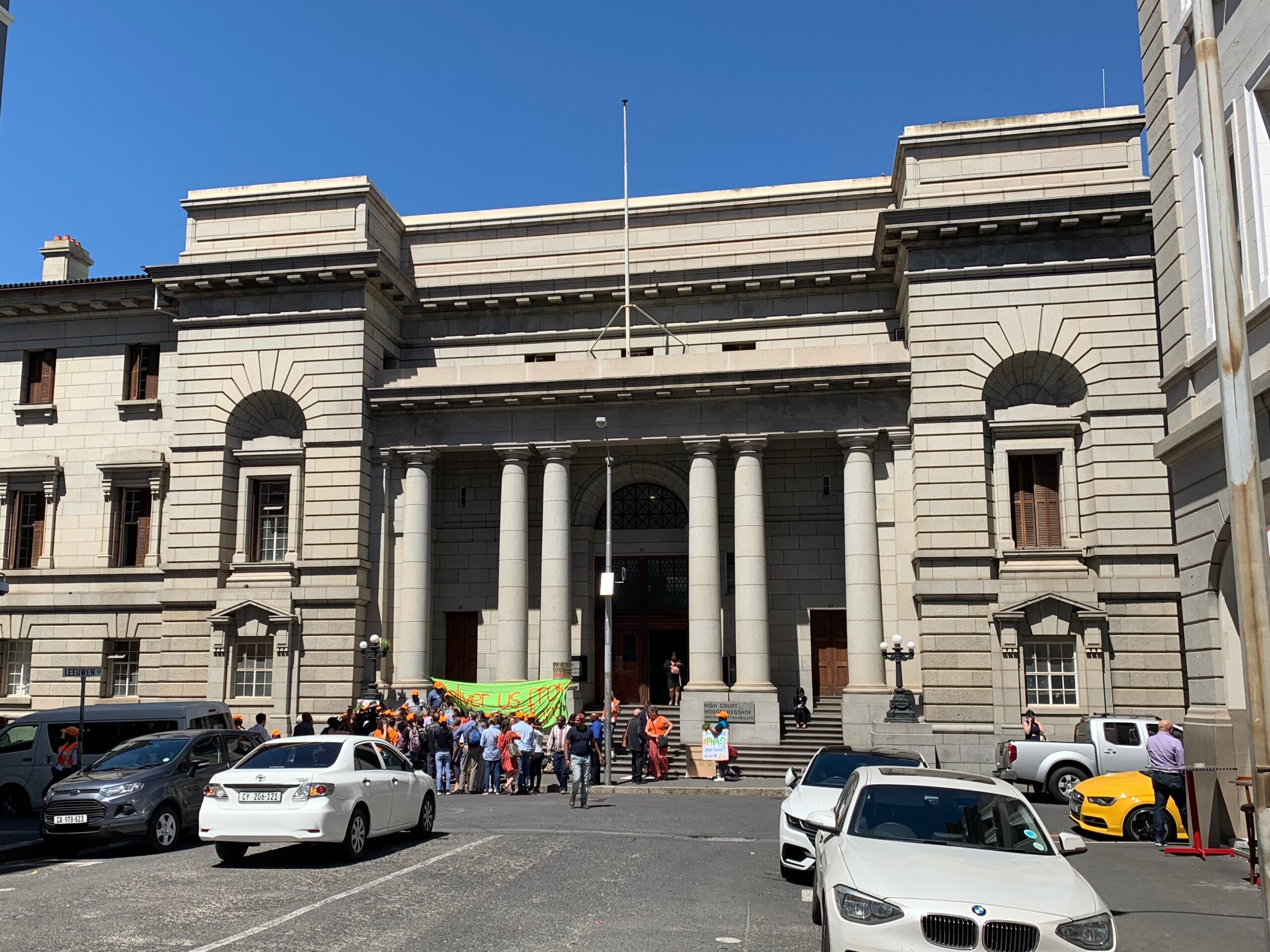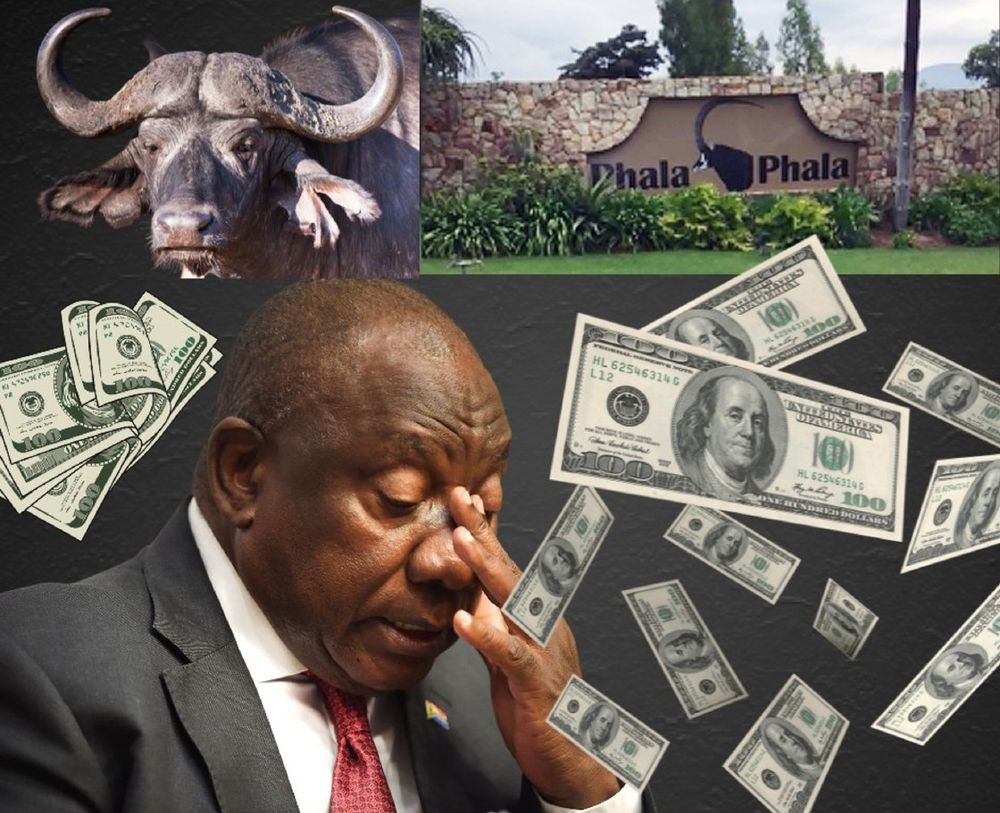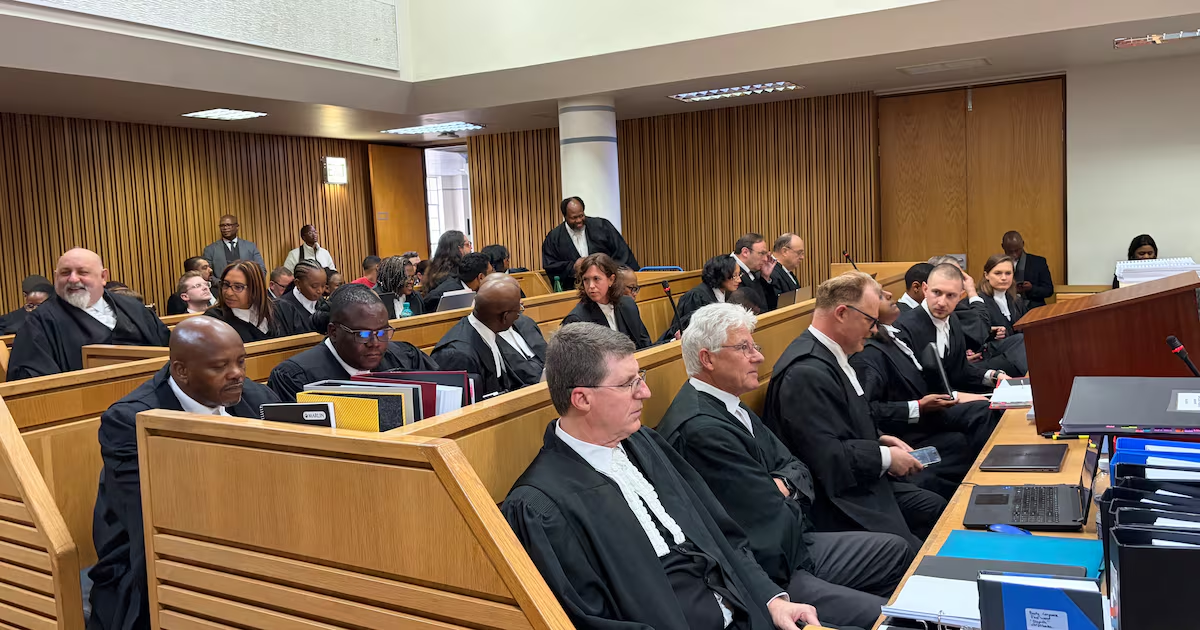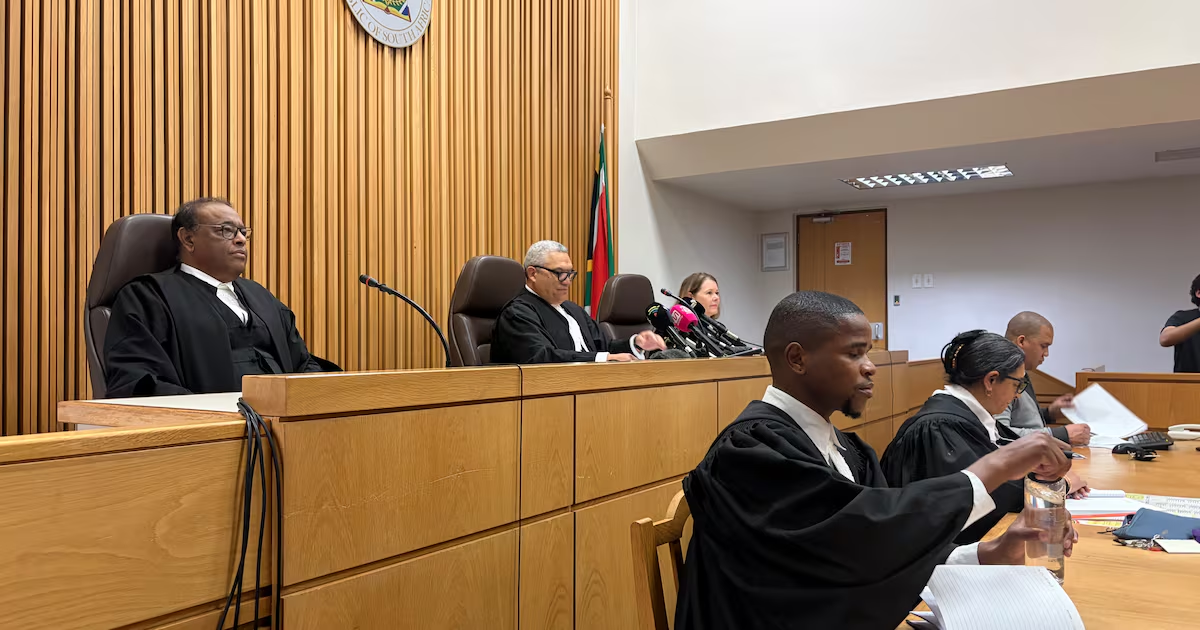
President Cyril Ramaphosa’s legal team has argued that the independent panel that found he had a case to answer over Phala Phala applied the wrong legal test, exceeded the scope of the charges against him and failed to consider whether he acted intentionally or in bad faith.Wim Trengove made the submissions in the Western Cape High Court on Wednesday as Ramaphosa’s review application against the section 89 panel’s findings got under way. Ramaphosa is seeking to have the report reviewed and set aside before parliament proceeds with an impeachment inquiry.At the centre of Trengove’s argument was the panel’s finding that there was “sufficient evidence” to proceed with an impeachment process. He argued that the panel wrongly treated this as equivalent to the lower threshold of establishing a prima facie case.According to Trengove, the independent panel was intended to act as a filter between an initial complaint and a full impeachment inquiry. This was particularly important, he argued, because the subsequent committee would be made up of politicians, including the president’s political opponents.Judge president Nolwazi Mabindla-Boqwana questioned that submission, noting that the impeachment committee would not make the final decision on whether to remove a president from office. “But it’s the National Assembly, ultimately, that will make a decision,” she put to Trengove.He said he was not criticising the impeachment rules or the committee but argued that the political and public consequences of an impeachment inquiry explained why parliament had created an independent panel to assess whether there was sufficient evidence.EvidenceAsked by Mabindla-Boqwana what constituted sufficient evidence, Trengove said the panel had to assess and weigh the evidence against the president and his explanation. “Sufficient” meant enough evidence to warrant a public inquiry, he said.He argued that the panel instead repeatedly found only that there was a prima facie case against Ramaphosa.Trengove argued that the panel was required to confine itself to the four charges against the president. The question was whether there was sufficient evidence that he had committed serious constitutional violations or serious misconduct as alleged in those charges.Supplementary material and the panel’s own findings, he argued, had introduced allegations that went beyond their scope, raising questions of procedural fairness.Another central argument was that the panel had failed to consider whether Ramaphosa acted intentionally and in bad faith. Trengove said serious misconduct required more than establishing that the president had committed the act complained of. The panel should have considered whether he committed the act, knew it was wrong and acted intentionally or in bad faith.Mabindla-Boqwana repeatedly questioned whether the panel had, in fact, failed to weigh the evidence. She referred to passages in the report setting out both the allegations against Ramaphosa and his version before reaching conclusions.Trengove argued that recording the president’s explanation did not necessarily amount to properly weighing it. He said the panel had, in places, interpreted Ramaphosa’s version and relied on its own interpretation in reaching its conclusions.The first charge concerned Ramaphosa’s interests in cattle and game farming and whether he had contravened the constitutional prohibition on members of the executive undertaking other paid work.Trengove argued that the panel had asked the wrong legal question by focusing on whether Ramaphosa had a business interest in a farm. The constitutional provision prohibited other paid work, he said, but did not prevent members of the executive from holding business or financial interests.The relevant question was whether Ramaphosa had received remuneration for work performed for the farming business, he argued.Mabindla-Boqwana questioned whether the review court was concerned with the correctness of the panel’s interpretation or the rationality of its reasoning process.Trengove agreed that the court was not being asked to substitute its own conclusion for that of the panel.“If you ask the wrong question, it doesn’t matter what your answer is, because you asked the wrong question,” he said. “We’re not testing the answers to the question. We’re challenging the question.”The second charge concerned whether Ramaphosa had failed to comply with a statutory obligation to report the theft of foreign currency from his Phala Phala farm.Trengove argued that the panel had accepted that Ramaphosa reported the burglary to Maj-Gen Wally Rhoode and expected him to deal with the matter in accordance with police procedures.Mabindla-Boqwana questioned how far the duty to report extended and whether it was sufficient for Ramaphosa simply to tell another person.Trengove said Ramaphosa had informed a senior police official and expected him to take the necessary steps. Even if he had misunderstood the precise legal obligation, there was no basis for finding that he had intentionally and in bad faith sought to evade it, he argued.The remaining charges concerned the alleged use of the presidential protection unit and Rhoode in the investigation of the burglary.Trengove argued that the panel had again exceeded the scope of the charges by relying on the subsequent conduct of the investigation. The charges concerned Ramaphosa’s alleged instruction to Rhoode, while the panel’s findings extended to alleged improprieties in how the investigation was conducted, he said.Ramaphosa’s position was that he had reported the burglary to Rhoode, asked him to attend to it and expected him to follow the appropriate police processes.The court also heard arguments over whether the panel’s report could be reviewed before the impeachment process had been completed.Some respondents have argued that the report was not a final decision because parliament would ultimately decide whether Ramaphosa should be removed from office.Trengove argued that the report nevertheless had immediate consequences because a finding of sufficient evidence triggered the next stage of the impeachment process.Mabindla-Boqwana questioned whether there was a distinction between prejudice arising from the allegations already being public and the additional prejudice of requiring the president to appear before an impeachment committee.Trengove argued that both the public airing of the allegations and the reputational consequences of formally facing an impeachment inquiry constituted prejudice. The panel’s report was therefore not an inconsequential preliminary step, he said, because it determined whether Ramaphosa would proceed to the next stage of the impeachment process.The review follows a Constitutional Court ruling that revived the section 89 impeachment process. The high court subsequently halted parliament’s public impeachment proceedings pending the outcome of Ramaphosa’s review application.Business Day
Phala Phala panel asked wrong questions and applied wrong test, says Ramaphosa lawyer
Wim Trengove tells high court in Cape Town that independent panel used the lower prima facie threshold
1,022 words~5 min read