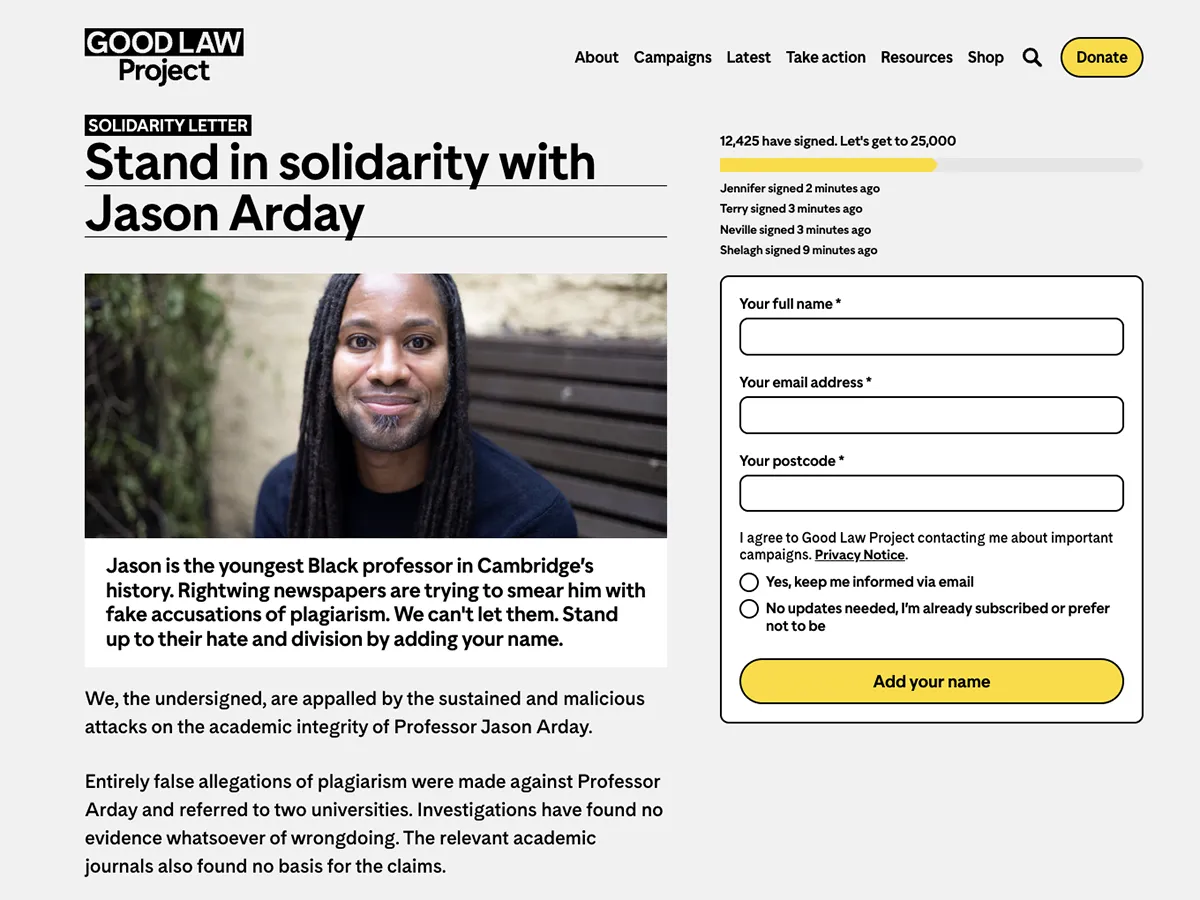
Skip to Content Subscribe My Account Manage My Subscriptions FAQ Newsletters Canada Canadian True Crime Canadian Politics Health World Israel & Middle East Financial Post NP Comment Longreads Puzzmo Diversions Comics NP News Quiz New York Times Crossword Horoscopes Modern Life Eating & Drinking Style Sponsored Play for Ontario Travel Travel Canada Travel USA Travel International Cruises Travel Essentials Culture Books Celebrity Movies Music Theatre Television Business Essentials Advice Lives Told Tails Told Shopping Buy Canadian Home Living Outdoor Living Kitchen & Dining Tech Style & Beauty Personal Care Entertainment & Hobbies Gift Guide Travel Guide Deals Savings National Post Store More Sports Hockey Baseball Basketball Football Soccer Golf Tennis Driving Vehicle Research Reviews News Gear Guide Obituaries Place an Obituary Place an In Memoriam Classifieds Place an Ad Celebrations Working Business Ads Archives Healthing Epaper Manage Print Subscription Profile Settings My Subscriptions My Offers Newsletters Customer Service FAQ Newsletters Canada World Financial Post NP Comment Longreads Puzzmo Diversions Modern Life Shopping Epaper Manage Print Subscription HomeNP CommentEric Kaufmann: It costs Canada millions to discriminate against white male academicsThe groups who benefit from diversity-based recruitment in the Canada Research Chairs program have the lowest research impactLast updated 1 week ago Photo by Getty Images/iStockphotoThe case of Jason Arday shows that when a system of prestige institutions drops its standards on the basis of identity characteristics, the effects can be tragic. Cambridge University claims that Arday is an exception, but the Macdonald-Laurier Institute’s new report, “The Equity-Excellence Tradeoff: a Study of EDI in the Canada Research Chairs Program,” suggests that he is the rule: equity, diversity and inclusion (EDI) hiring damages academic excellence at scale. Nowhere is this more evident than in the prestigious Canada Research Chairs program.Enjoy the latest local, national and international news.Exclusive articles by Conrad Black, Barbara Kay and others. Plus, special edition NP Platformed and First Reading newsletters and virtual events.Unlimited online access to National Post.National Post ePaper, an electronic replica of the print edition to view on any device, share and comment on.Daily puzzles including the New York Times Crossword.Support local journalism.Enjoy the latest local, national and international news.Exclusive articles by Conrad Black, Barbara Kay and others. Plus, special edition NP Platformed and First Reading newsletters and virtual events.Unlimited online access to National Post.National Post ePaper, an electronic replica of the print edition to view on any device, share and comment on.Daily puzzles including the New York Times Crossword.Support local journalism.Create an account or sign in to continue with your reading experience.Access articles from across Canada with one account.Share your thoughts and join the conversation in the comments.Enjoy additional articles per month.Get email updates from your favourite authors.Create an account or sign in to continue with your reading experience.Access articles from across Canada with one accountShare your thoughts and join the conversation in the commentsEnjoy additional articles per monthGet email updates from your favourite authorsSign In or Create an AccountorWhile academic researchers have debunked the unrigorous “diversity is our strength” claims of EDI champions like consulting firm McKinsey & Company, ours is the first quantitative study to show that EDI is not merely neutral, but can actively reduce organizational performance. This occurs through “diversity hiring” less capable individuals and funding scholar-activism.The National Post newsletter that doesn’t hold back, giving readers the unvarnished truth on media, politics and culture.By signing up, you consent to receive the above newsletter from Postmedia Network Inc.A welcome email is on its way. If you don't see it, please check your junk folder.The next issue of Right? will soon be in your inbox.We encountered an issue signing you up. Please try againExisting scholarship and Harvard’s internal statistics establish that, on average, Black and Hispanic students are admitted to elite universities with lower test scores. They also generally perform less well on Advanced Placement (AP) tests in high school, as do females. Among faculty, women on the whole publish significantly fewer academic papers than men.As in the Arday case, the hiring bar is considerably lower for subaltern minorities and women. New work from sociologists Jukka Savolainen and Kevin McCaffree examining all candidates hired from 2019 to 2024 by the top 50 American sociology departments reveals that white males averaged eight publications while Black females averaged just two. Forty per cent of white men had published in the top two journals compared to four per cent of Black women.Furthermore, my re-analysis of data on American academic promotions from a prominent paper in Nature Human Behaviour shows that Black, Hispanic and female academics scored significantly lower on the industry standard h-index (papers multiplied by citations) than White, Asian and male academics.The systematic hiring of lower-achieving minorities and women affects the performance of organizations and programs. In order to assess this, we examined the prestigious federal Canada Research Chairs (CRC) program. This is the pinnacle of Canada’s research system, spending $300 million annually on renewable seven-year awards of between $100,000 and $200,000 per year.Beginning in 2003, and accelerating after 2017, the CRC program implemented an aggressive regime of diversity targets in which institutions that did not meet their quotas for female, minority and Indigenous chairs were threatened with losing their chair allocations. Canada’s Constitution allows for race and sex discrimination, thus CRC openings routinely state that able-bodied straight white males need not apply.The effects have been dramatic. In 2000, 80 per cent of CRCs were white men. By 2025, just 20 per cent were. Between 2017, when unvarnished EDI was implemented, and 2025, the female share doubled from 30 to 60 per cent while the Black and Indigenous component jumped from two per cent to between 10 and 15 per cent.We measured the research productivity of Black, Indigenous and female scholars between 2016 and 2025 and discovered that whites and Asians averaged an h-index of 34, Blacks 23 and Indigenous scholars 15. Men averaged 38 to women’s 28. Blacks, First Nations and women are significantly less productive even after controlling for length of career, tier of chair, discipline and year of award. This echoes American results. Moving from a white or Asian chair to a Black or Indigenous chair, or from a male to a female, results in 12 to 15 per cent less research impact.The effect on the CRC program has been severe. The Canadian government pays chairs to produce research, and — taking into account differences in citing practices by discipline — the h-index is the best unbiased indicator of its impact. Assigning a dollar value to each h-index point, we estimate that EDI hiring costs the CRC program $18 million a year, or six per cent of its budget.Arday was Black, but also a scholar-activist. That made him doubly attractive to Cambridge’s progressive Faculty of Education. This highlights a further problem with EDI: the huge sums poured into activist “research.” In the social sciences and humanities, the average CRC chair description now contains two EDI terms.We calculate that money diverted to scholar activism in the social sciences and humanities costs a further six per cent of the CRC budget — and this excludes the tab for administering EDI. This means that around 12 per cent — $36 million of the program’s $300 million annual budget — is wasted on equity and diversity. The EDI “tax” across the Tri-Council agencies’ entire budget of $4.5 billion, not to mention the wider higher education sector, is enormous.The problem is beginning to be addressed in America but is out of control in Canada. In the U.S., the proportion of EDI keywords in government-funded research soared until 2020-21, began to decline in 2024 and plunged in 2025 as the Trump administration cracked down on EDI-themed research. In Canada, there is no political pressure, so it continues to explode: between 2021 and 2025, the share of CRC chair descriptions using an EDI term rose from 38 to 53 per cent. The same is happening in Britain. Arday is a symptom of this unchecked grievance-industrial complex.The Trump administration has many flaws, but its focus on EDI in higher education is a policy success that Canada and other western countries would do well to follow.National PostEric Kaufmann is a professor of politics at the University of Buckingham, and a senior fellow at the Macdonald-Laurier Institute. Join the Conversation This website uses cookies to personalize your content (including ads), and allows us to analyze our traffic. Read more about cookies here. By continuing to use our site, you agree to our Terms of Use and Privacy Policy.
Eric Kaufmann: It costs Canada millions to discriminate against white male academics
The groups who benefit from diversity-based recruitment in the Canada Research Chairs program have the lowest research impact
1,405 words~6 min read