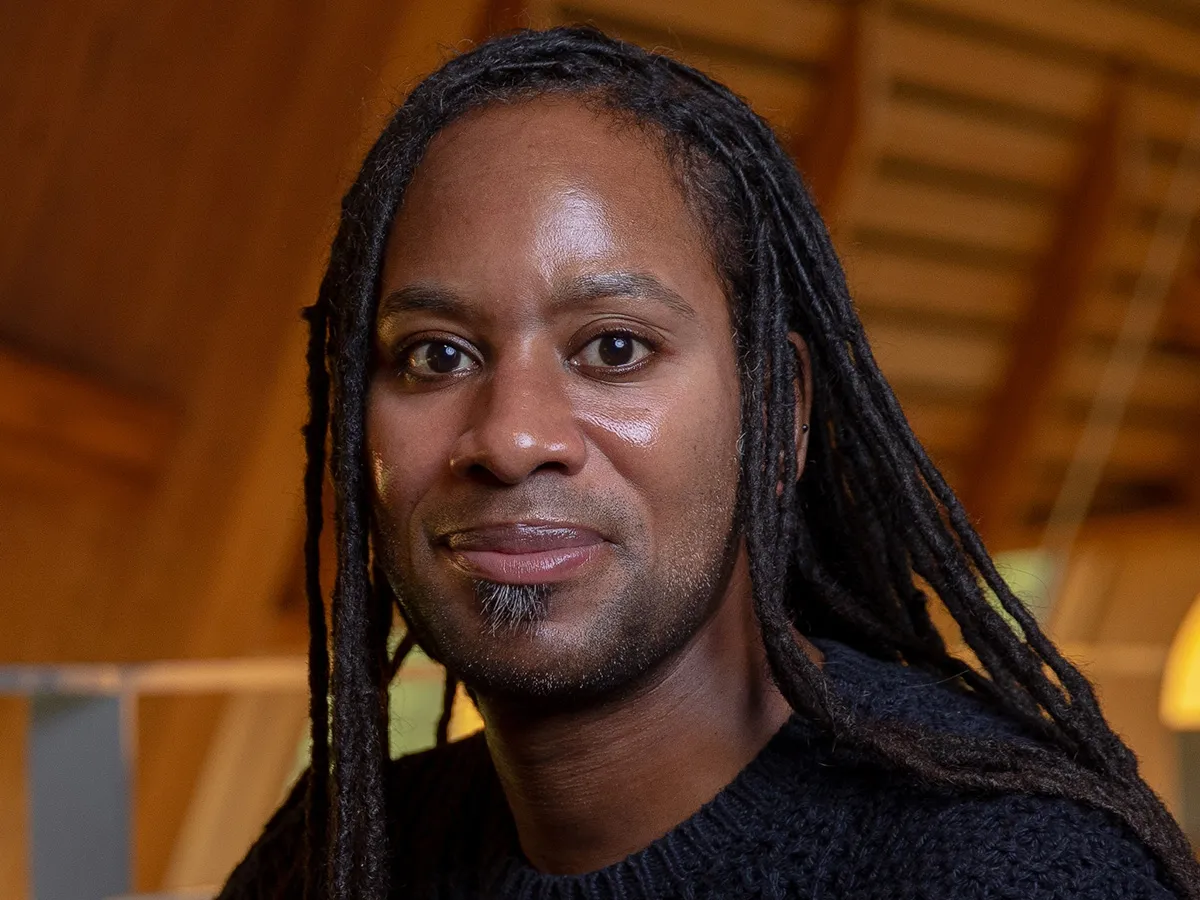
Skip to Content Subscribe My Account Manage My Subscriptions FAQ Newsletters Canada Canadian True Crime Canadian Politics Health World Israel & Middle East Financial Post NP Comment Longreads Puzzmo Diversions Comics NP News Quiz New York Times Crossword Horoscopes Life Eating & Drinking Style Sponsored Play for Ontario Travel Travel Canada Travel USA Travel International Cruises Travel Essentials Culture Books Celebrity Movies Music Theatre Television Business Essentials Advice Lives Told Tails Told Shopping Buy Canadian Home Living Outdoor Living Kitchen & Dining Tech Style & Beauty Personal Care Entertainment & Hobbies Gift Guide Travel Guide Amazon Prime Day Deals Savings National Post Store More Sports Hockey Baseball Basketball Football Soccer Golf Tennis Driving Vehicle Research Reviews News Gear Guide Obituaries Place an Obituary Place an In Memoriam Classifieds Place an Ad Celebrations Working Business Ads Archives Healthing Epaper Manage Print Subscription Profile Settings My Subscriptions My Offers Newsletters Customer Service FAQ Newsletters Canada World Financial Post NP Comment Longreads Puzzmo Diversions Life Shopping Epaper Manage Print Subscription HomeNP CommentChristopher Dummitt: Canada has its own academic fakery problemDEI discrimination is now written into the basic fabric of our institutions, incentivizing its useJason Arday, a Cambridge University professor until he resigned recently amid plagiarism accusations. Photo by Anselm Ebulue via Simon & ShusterCanada has its own Jason Ardays — our versions of the Black British academic who recently committed suicide after it was revealed that he plagiarized much of his academic work and invented a fabulist version of his personal history.Enjoy the latest local, national and international news.Exclusive articles by Conrad Black, Barbara Kay and others. Plus, special edition NP Platformed and First Reading newsletters and virtual events.Unlimited online access to National Post.National Post ePaper, an electronic replica of the print edition to view on any device, share and comment on.Daily puzzles including the New York Times Crossword.Support local journalism.Enjoy the latest local, national and international news.Exclusive articles by Conrad Black, Barbara Kay and others. Plus, special edition NP Platformed and First Reading newsletters and virtual events.Unlimited online access to National Post.National Post ePaper, an electronic replica of the print edition to view on any device, share and comment on.Daily puzzles including the New York Times Crossword.Support local journalism.Create an account or sign in to continue with your reading experience.Access articles from across Canada with one account.Share your thoughts and join the conversation in the comments.Enjoy additional articles per month.Get email updates from your favourite authors.Create an account or sign in to continue with your reading experience.Access articles from across Canada with one accountShare your thoughts and join the conversation in the commentsEnjoy additional articles per monthGet email updates from your favourite authorsSign In or Create an AccountorThe Canadian versions might not be as outlandish — but they almost certainly exist. The system incentivizes their creation.Having concocted a caricature of Canadian society as ghoulishly racist, where skin colour and background are said to continuously limit life chances, those who peddle this story of never-ending systemic racism are determined to find those who persevere despite the odds. Present yourself as a social victim who overcame adversity, and there is a market for your story.Just think of the list of pretendians over recent years — academics, writers, and celebrities who won jobs and accolades based on supposed Indigenous ancestry. Buffy Sainte-Marie claimed a fake Indian identity for decades, her music said to reflect Indigenous roots, before she was outed as an American of English and Italian ancestry whose family had changed its name to combat anti-Italian sentiment after the Second World War. At least one wesbite still describes her as born on a Northern Saskatchewan reserve.The National Post newsletter that doesn’t hold back, giving readers the unvarnished truth on media, politics and culture.By signing up, you consent to receive the above newsletter from Postmedia Network Inc.A welcome email is on its way. If you don't see it, please check your junk folder.The next issue of Right? will soon be in your inbox.We encountered an issue signing you up. Please try againThen there is Thomas King, the so-called American Cherokee writer who moved to Canada and presented himself as a font of Indigenous wisdom and humour. That, too, turned out to be an invention.Universities are no different. The drive to “decolonize” has created a demand for Indigenous voices, and fabulists have flocked to claim the rewards — stable pay, comfortable lives and recognition for identities they don’t own. Carrie Bourassa formerly a professor at the University of Saskatchewan, Mary Ellen Turpel-Lafond, a former judge and UBC law professor and Vianne Timmins, former president of Memorial University in Newfoundland, are among recent examples.Canadian universities now routinely hire by identity. The Canada Research Chairs program, one of the most prestigious sources of academic jobs, mandates that chairs match national population targets for women, the disabled, Aboriginal peoples and “racialized” groups — based not on the applicant pool, but on national population share. More broadly, many universities require candidates to submit DEI statements defending a particular reading of diversity, an explicit criterion on which they’re evaluated. Fail to support the institution’s version of DEI, and you rank lower.The psychological pull to invent an ever more elaborate story of merit and uniqueness must be strong. But for those hired through searches targeted, explicitly or implicitly, by identity, it’s hard not to imagine these candidates having a version of imposter syndrome where they ask themselves, “Was I hired for my work, or because I checked a box?”The Arday case ought to be a wake-up call. Instead, many DEI proponents and their media defenders are drawing the opposite lesson — that his death shows him, yet again, as a victim of racism, hounded by those who vilify him and more proof of how irretrievably racist Britain and Canada remain. Their solution: more identity-based hiring, more DEI re-education. The patient is dying from the medicine? Increase the dose.Arday’s story is tragic, all the more so now that he seems to have taken his own life, and some wonder why one professor’s case has drawn so much attention. It’s a fair question — even when the answers miss the point. There is indeed a great deal of racism in the Arday story. It’s just not the kind his defenders point to.The Arday story betrays the official racism of radical DEI — discrimination now written into the basic fabric of our institutions, especially universities. He was likely hired, lauded and warmly welcomed because of what his identity offered an institution desperate for DEI “wins.” That is the systemic racism at the heart of this case: hiring by identity for supposedly disadvantaged groups, entirely legal in the U.K. and Canada.A 2025 ACS Metropolis Institute poll found that more Canadians favour eliminating discrimination from hiring practices; someone’s race or cultural background shouldn’t determine whether they’re hired. Far from a bastion of unconscious bias, Canada ranks among the least racist places in the world on comparative surveys, with a strong public commitment to liberal anti-discrimination norms.Arday’s case involves an “anti-discrimination” that discriminates against some candidates in favour of others by inserting identity directly into hiring. And here the public disagrees with DEI orthodoxy: in a poll last year, 57 per cent of Canadians surveyed rejected the idea that racial or cultural background should factor into hiring decisions.Do they disagree because they’re racist? Not at all. They disagree because the policy is illiberal — a fact the DEI establishment seems desperate to overlook, or to re-educate out of the public.The Arday case was close to the perfect occasion for that disagreement to surface. His lies were so blatant and unchecked that his story became a rare safe space to voice criticism of identity-based discrimination. That is the real reason for the attention it has drawn — not racism, but a palpable and justified sense that some of our institutions have drifted far from the liberal values they claim to uphold.National Post Join the Conversation This website uses cookies to personalize your content (including ads), and allows us to analyze our traffic. Read more about cookies here. By continuing to use our site, you agree to our Terms of Use and Privacy Policy.
Christopher Dummitt: Canada has its own academic fakery problem
DEI discrimination is now written into the basic fabric of our institutions, incentivizing its use
1,354 words~6 min read