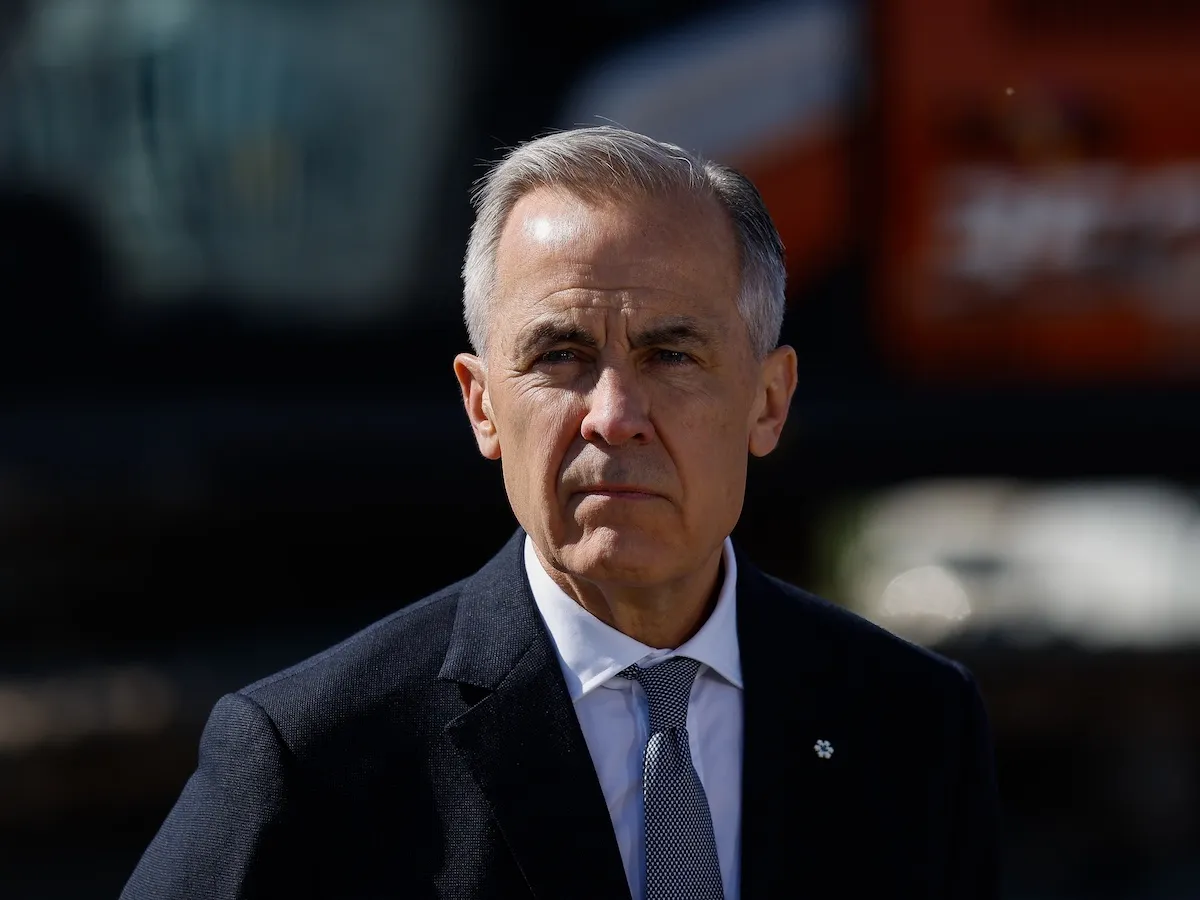
Skip to Content Subscribe My Account Manage My Subscriptions FAQ Newsletters Canada Canadian True Crime Canadian Politics Health World Israel & Middle East Financial Post NP Comment Longreads Puzzmo Diversions Comics NP News Quiz New York Times Crossword Horoscopes Life Eating & Drinking Style Sponsored Play for Ontario Travel Travel Canada Travel USA Travel International Cruises Travel Essentials Culture Books Celebrity Movies Music Theatre Television Business Essentials Advice Lives Told Tails Told Shopping Buy Canadian Home Living Outdoor Living Kitchen & Dining Tech Style & Beauty Personal Care Entertainment & Hobbies Gift Guide Travel Guide Amazon Prime Day Deals Savings National Post Store More Sports Hockey Baseball Basketball Football Soccer Golf Tennis Driving Vehicle Research Reviews News Gear Guide Obituaries Place an Obituary Place an In Memoriam Classifieds Place an Ad Celebrations Working Business Ads Archives Healthing Epaper Manage Print Subscription Profile Settings My Subscriptions My Offers Newsletters Customer Service FAQ Newsletters Canada World Financial Post NP Comment Longreads Puzzmo Diversions Life Shopping Epaper Manage Print Subscription HomeNewsCanadaHarvard and MIT scholars head north as Mark Carney offers millionsCanada’s effort to lure top research talent contrasts with recent U.S. federal funding cutsAuthor of the article:Prime Minister Mark Carney speaks about the trade dispute with the United States at the Davie Shipyard in Levis, Quebec, Canada on Aug. 24, 2026. Photo by ANDREJ IVANOV / AFP via Getty ImagesCanada has awarded 64 global scholars with C$504 million ($362 million) in funding to relocate their work to Canadian universities and advance projects in areas such as health and artificial intelligence.Enjoy the latest local, national and international news.Exclusive articles by Conrad Black, Barbara Kay and others. Plus, special edition NP Platformed and First Reading newsletters and virtual events.Unlimited online access to National Post.National Post ePaper, an electronic replica of the print edition to view on any device, share and comment on.Daily puzzles including the New York Times Crossword.Support local journalism.Enjoy the latest local, national and international news.Exclusive articles by Conrad Black, Barbara Kay and others. Plus, special edition NP Platformed and First Reading newsletters and virtual events.Unlimited online access to National Post.National Post ePaper, an electronic replica of the print edition to view on any device, share and comment on.Daily puzzles including the New York Times Crossword.Support local journalism.Create an account or sign in to continue with your reading experience.Access articles from across Canada with one account.Share your thoughts and join the conversation in the comments.Enjoy additional articles per month.Get email updates from your favourite authors.Create an account or sign in to continue with your reading experience.Access articles from across Canada with one accountShare your thoughts and join the conversation in the commentsEnjoy additional articles per monthGet email updates from your favourite authorsSign In or Create an AccountorSome 48 of the researchers were poached from the US, including from elite institutions such as Harvard University and the Massachusetts Institute of Technology. The other 16 researchers are coming from 12 other countries, including the UK, Germany, China and Japan.“While certain countries are cutting research and turning their back on academic freedom, we’re doubling down on science and we’re doubling down on research,” Industry Minister Melanie Joly said in Vancouver on Thursday.Get a dash of perspective along with the trending news of the day in a very readable format.By signing up you consent to receive the above newsletter from Postmedia Network Inc.A welcome email is on its way. If you don't see it, please check your junk folder.The next issue of NP Posted will soon be in your inbox.We encountered an issue signing you up. Please try againCanada’s effort to lure top research talent contrasts with recent U.S. federal funding cuts that, combined with tightening immigration policies and clashes between the Trump administration and top-tier universities, have led some scholars to look for opportunities elsewhere.Joly noted that 23 of the research chairs are also Canadians returning home.The announcement is part of an initiative Prime Minister Mark Carney’s government unveiled last year to boost Canadian universities, earmarking C$1.7 billion over 12 years to recruit more than 1,000 researchers. The bulk of that money — C$1 billion — was dedicated to attracting as many as 100 world-leading research chairs to schools across the country.Robert Asselin, chief executive officer of U15 Canada, which represents the country’s leading research universities, said the government’s ability to attract these scholars reflects the strength of Canada’s post-secondary institutions. He also said policy changes in the US left scientists feeling less supported, helping Canada’s effort to attract them.“That was absolutely a reason why they wanted to come to Canada. So we seized the opportunity and I’m really happy this happened,” Asselin said.Among the new research chairs is Sara Seager, a renowned planetary scientist whom the University of Toronto already announced would be leaving MIT to return to her alma mater. Canada has also signed MIT professor James LeBeau, a materials scientist.Brian Kuhlman, a researcher from the University of North Carolina at Chapel Hill, whose work was referenced in connection with the 2024 Nobel Prize in Chemistry, will be joining the University of British Columbia as a research chair.Also heading to UBC is Curtis Huttenhower, a professor of computational biology and bioinformatics at Harvard whose research focuses on the intersection of microbes and human health.The Canadian government also promised last year an accelerated immigration pathway for H-1B visa holders after the Trump administration decided to charge $100,000 for the visas. It has yet to roll out that program.Other major world economies are also seeking to attract top scholars open to leaving the US. The European Union has also launched its own €500 million ($583 million) initiative to attract global researchers and scientists.The new research chairs will receive funding over eight years to work on projects in priority fields set out by the Canadian government, including in health, advanced digital technologies and the environment.“New chairs and their teams will advance transformational research projects that can be applied and/or commercialized by connecting with receptors in industry, government and society, while also developing the next generation of highly qualified personnel,” the government said about the initiative last year.The government is set to announce the next round of chairs in the coming months.Our website is the place for the latest breaking news, exclusive scoops, longreads and provocative commentary. Please bookmark nationalpost.com and sign up for our daily newsletter, Posted, here. Join the Conversation This website uses cookies to personalize your content (including ads), and allows us to analyze our traffic. Read more about cookies here. By continuing to use our site, you agree to our Terms of Use and Privacy Policy.
Harvard and MIT scholars head north as Mark Carney offers millions
Canada’s effort to lure top research talent contrasts with recent U.S. federal funding cuts
1,092 words~5 min read